

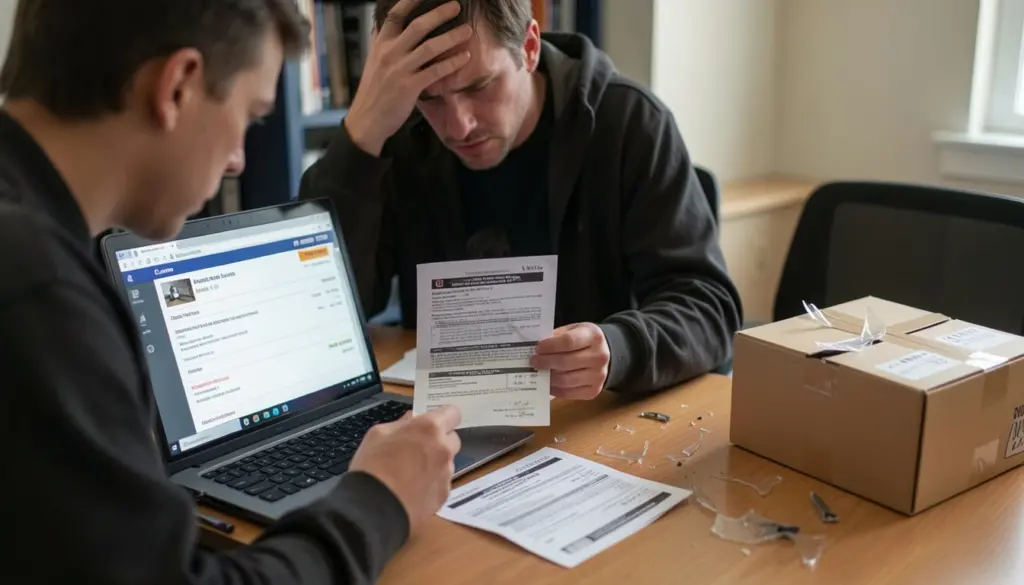
Most people only think about their consumer rights after something goes wrong — a product breaks within days of purchase, an online order never arrives, or a subscription renews without any warning. By then, they’re already frustrated and unsure where to begin.
This guide changes that. Whether you’re dealing with a faulty appliance, a misleading online listing, or a business that’s refusing to issue a refund, you have more legal protection than you might realize. This article explains what your rights are, how consumer protection law actually works, and exactly what steps to take when a seller lets you down.
If you have a problem right now, here’s where to start:
- Gather your receipt, order confirmation, and any written communication with the seller.
- Contact the seller directly in writing, stating the problem and the remedy you want.
- If the seller doesn’t respond or refuses, escalate to your national consumer protection agency or an online dispute resolution platform.
What Are Consumer Rights? — Key Principles
Consumer rights are legal entitlements that protect individuals when they buy goods or services. They exist because the relationship between a buyer and a seller is rarely equal — sellers often know far more about a product than the person purchasing it.
The modern consumer rights movement traces its roots to a 1962 speech by U.S. President John F. Kennedy, who identified four foundational rights: safety, information, choice, and the right to be heard. Over the decades, a fifth right — the right to redress — was formally added and is now central to consumer protection law worldwide.
These five core rights form the backbone of nearly every consumer protection system:
Safety — Products must not pose unreasonable risks to health or physical safety. Governments maintain product recall mechanisms and general product safety regulations to enforce this.
Information — Sellers must disclose accurate, complete information about what they’re selling. Deceptive advertising, hidden fees, and misleading labeling all violate this right.
Choice — Consumers should have access to a competitive marketplace. Monopolistic practices and anti-competitive behavior are regulated to protect this.
Right to be heard — Consumers should have a voice in policy decisions that affect them, and their complaints should receive proper consideration.
Redress — When something goes wrong, consumers have the right to a fair remedy — whether that’s a refund, repair, replacement, or compensation.
How Consumer Protection Law Works
Consumer protection law is enforced through a combination of government agencies, specialist courts, and alternative dispute mechanisms. The specific rules depend on where you live, but the underlying logic is consistent: sellers have defined obligations, and buyers have enforceable rights.
In the United States, the Federal Trade Commission (FTC) is the primary federal agency responsible for protecting consumers from unfair or deceptive commercial practices. It handles everything from misleading advertising to telemarketing fraud and has the authority to issue injunctions, impose fines, and order restitution for affected consumers.
For financial products specifically — credit cards, loans, mortgages — the Consumer Financial Protection Bureau (CFPB) holds enforcement authority in the U.S.
In the European Union, the Consumer Rights Directive harmonizes buyer protections across member states, setting minimum standards for online purchases, contract disclosures, and cancellation rights. The European Consumer Centres Network (ECC-Net) provides free practical assistance to EU consumers dealing with cross-border disputes.
At a national and local level, most countries have their own consumer protection legislation. Pakistan, for example, has provincial consumer protection acts — including the Punjab Consumer Protection Act — that establish consumer courts with jurisdiction over disputes involving faulty goods or misleading sellers.
If you’re unsure who enforces consumer rights in your country, search for your country’s name plus “consumer protection authority” or “consumer court” — most national agencies maintain publicly accessible complaint portals.
Common Buyer Rights in Practice
Understanding your statutory rights in practical, everyday situations makes the difference between successfully resolving a dispute and accepting an outcome that isn’t fair to you. If terms like “breach of contract” or “damages” come up during a dispute, our guide to common legal terms explains what they mean and how they apply.
Refunds, Repairs, and Replacements
When a product is defective, doesn’t match its description, or isn’t fit for its intended purpose, you are generally entitled to one of three remedies: a refund, a repair, or a replacement. These three options are often called the “three Rs” of consumer redress.
The specific remedy available — and the order in which they apply — varies by jurisdiction. In many countries, the seller has the right to attempt a repair or replacement first before a full refund is required. If the repair fails or the replacement is also defective, a refund typically becomes mandatory.
Implied vs Express Warranty
An express warranty is a specific promise made by the manufacturer or seller — for example, “this product is covered for two years against manufacturing defects.” These are written or spoken commitments.
An implied warranty exists automatically under the law, even if nothing is written down. The most common is the implied warranty of merchantability — the basic expectation that a product will function as it’s supposed to. If you buy a blender and it stops working after two uses, the implied warranty protects you even if the seller made no written promises about quality.
Sellers cannot simply disclaim implied warranties in jurisdictions where they are legally mandated.
Cooling-Off Period for Online Purchases
Distance selling rules — which govern purchases made online, by phone, or through mail order — give buyers additional rights because you can’t physically inspect a product before buying.
In the EU, buyers have the right to cancel most online purchases within 14 days of receiving the goods, without needing to give any reason. This is the cooling-off period. Similar rules exist in many other jurisdictions, though the exact timeframe and product categories covered vary.
Some categories are excluded from cooling-off rights — personalized items, perishable goods, and digital downloads that have already been accessed, for example. Check the laws in your country for precise details.
Deceptive Advertising and Unfair Practices
If you were misled into buying something — through false claims about a product’s features, fake reviews, or hidden charges not disclosed at checkout — you may have grounds for a complaint based on unfair or deceptive commercial practices. Most consumer protection laws explicitly prohibit this behavior, and in serious cases, enforcement agencies can pursue the business directly.
Step-by-Step: How to Document and File a Consumer Complaint
Filing an effective complaint comes down to two things: clear communication and solid evidence. Here’s how to do both.
Step 1 — Gather Your Evidence
Before contacting anyone, collect the following:
- Proof of purchase (receipt, invoice, order confirmation email)
- Product description or listing (screenshot the original listing if it’s online)
- Photos or video of the defect, damage, or problem
- All written communication with the seller (emails, chat logs, text messages)
- Your warranty documents, if applicable
- Any advertised claims that weren’t delivered (screenshots, brochures)
This evidence checklist is your foundation. Without it, your complaint rests on your word against the seller’s.
Step 2 — Contact the Seller in Writing
Always contact the seller in writing — email is fine — rather than by phone alone. This creates a paper trail. Your message should:
- State the problem clearly and factually
- Specify the remedy you want (refund, repair, or replacement)
- Set a reasonable deadline for their response (typically 7–14 days)
Sample complaint email:
Subject: Complaint — Faulty [Product Name] — Order #[XXXXX]
Dear [Seller/Company Name],
I am writing regarding [product name] purchased on [date] for [amount], order reference [number].
The item [describe the defect or problem clearly — e.g., “stopped functioning after three days of normal use” or “does not match the description on your website”]. I have attached photographs and my purchase receipt for reference.
Under [applicable consumer protection law or statutory rights], I am entitled to a [refund / repair / replacement]. Please confirm how you intend to resolve this matter within [7/14] days of this message.
If I do not hear from you within this period, I will escalate this matter to [relevant consumer protection agency or small claims court].
Yours sincerely, [Your Name] [Contact Details]
Step 3 — Keep Records of Every Interaction
From this point, document everything. Note dates and times of phone calls, save all email correspondence, and keep notes of any verbal promises made by the seller.
Typical Timelines
Most sellers are legally required — or commercially motivated — to respond within 7–14 days. In many jurisdictions, if a refund is owed, it must be processed within a specific period (in the EU, within 14 days of cancellation for distance sales). If the seller misses these windows, that delay itself strengthens your escalation case.
Remedies and Escalation — From Merchant Resolution to Courts
Not every complaint gets resolved at the first stage. Knowing when to escalate — and how — keeps you in control of the process.
Stage 1 — Direct resolution with the seller. This is always the first step. Most disputes are resolved here, especially when your complaint is documented and your rights are clearly stated.
Stage 2 — Consumer protection agency or ombudsman. If the seller refuses a legitimate remedy or doesn’t respond, file a complaint with your national consumer protection authority. In the U.S., that’s the FTC or your state attorney general’s office. In the EU, use the ECC-Net or your national consumer authority. Many countries have a consumer ombudsman for specific sectors (energy, telecommunications, financial services).
Stage 3 — Online Dispute Resolution (ODR). For e-commerce disputes, ODR platforms allow disputes to be resolved without going to court. The EU operates an official ODR portal specifically for online purchases from EU-based sellers.
Stage 4 — Small claims court. If all else fails, small claims court is designed for exactly this type of dispute — it’s relatively low cost, doesn’t require a lawyer, and handles amounts typically up to a defined threshold (which varies by jurisdiction). Courts in this category can award a refund, repair cost, or compensation for additional losses caused by the defective product.
When evaluating whether to escalate to court, ask: Is the amount in dispute worth the time and filing fee? Do I have solid documentation? Has the seller clearly refused a remedy I’m legally entitled to? If yes to all three, small claims is a reasonable path.
Special Cases: Digital Goods, Subscriptions, and Cross-Border Purchases
Digital commerce introduces rights and challenges that don’t exist in the physical world.
Digital Products and Downloads
Rights for digital goods vary more widely than for physical products. In the EU, the Consumer Rights Directive covers digital content — including apps, e-books, and streaming services — and buyers are entitled to remedies if the digital product doesn’t work as described or is not fit for purpose.
One key difference: once you’ve downloaded or started streaming a digital item, you may lose your cooling-off right. The seller must typically disclose this at checkout and get your explicit agreement to waive the cancellation period.
Subscription Auto-Renewals
Subscription traps — where a free trial converts automatically to a paid plan without clear disclosure — are increasingly regulated. In many jurisdictions, sellers must clearly disclose renewal terms before purchase, send a reminder before renewal, and provide an easy cancellation process. If these requirements weren’t met, you may be entitled to a refund of the auto-renewed charge.
If you’re disputing an unexpected subscription charge, contact your bank as well — many financial institutions will reverse charges that violate disclosed terms.
Cross-Border Purchases
If you’ve bought from a seller in another country, enforcement is more complicated. Within the EU, ECC-Net provides free guidance and mediation for cross-border disputes between EU residents and sellers based in different EU countries. For purchases from sellers outside your jurisdiction, your practical options narrow — which is one reason to favor sellers with clear return policies and established dispute resolution processes when shopping internationally.
How to Avoid Problems — Practical Prevention Tips
Most consumer disputes are avoidable. These habits significantly reduce the likelihood of problems:
Before you buy: Read the return and refund policy before completing a purchase. Look for the seller’s physical address and contact information — a missing address is a red flag. Check independent reviews, not just those on the seller’s own website. For large purchases, use a credit card where possible — many cards offer chargeback rights as an additional layer of protection.
During the transaction: Screenshot product listings and pricing at the time of purchase. Save all order confirmations and receipts in a dedicated folder. Read subscription terms carefully, particularly auto-renewal clauses.
After purchase: Register products for warranty purposes. Keep the original packaging until you’ve confirmed the product works correctly. If a company contacts you unexpectedly about account issues or prize winnings, treat it as a potential scam — these are among the most common deceptive practices reported to consumer agencies.
FAQs
How long do I have to return an online purchase?
In the EU, you have 14 days from receiving the item to cancel a distance sale for any reason. Other countries have different rules — check your local consumer protection law for the exact period and any product exclusions.
What is the difference between a warranty and a guarantee?
A warranty is a formal written commitment from the manufacturer or seller about a product’s performance, usually time-limited. A guarantee is often a broader promise that the product will function as expected. Separately, implied warranty protections exist under the law regardless of any written promises.
What evidence do I need for a successful consumer complaint?
At minimum: proof of purchase, a description or image of the defect, and a record of your complaint to the seller. Photos, order confirmations, and saved correspondence significantly strengthen your case.
Can I get compensation for a product that caused harm?
Yes — if a product caused personal injury or property damage due to a manufacturing defect or safety failure, product liability law may entitle you to compensation beyond just a refund. In serious cases, consult a consumer rights lawyer.
What are my rights with digital products and subscriptions?
Digital goods must work as described. Subscriptions must clearly disclose their terms, including auto-renewal conditions. If these weren’t properly disclosed, you may be entitled to a refund of charges.
When should I escalate to small claims court?
Escalate when the seller has clearly refused a remedy you’re legally entitled to, you have solid documentation, and the amount in dispute justifies the filing fee and time involved. Small claims court is designed to be accessible without legal representation.
What is a cooling-off period, and when does it apply?
A cooling-off period gives you the right to cancel a purchase within a set number of days without giving a reason. It most commonly applies to distance sales (online, phone, mail order) and certain door-to-door sales. Exclusions typically include perishable goods, personalized items, and accessed digital downloads.
How do I avoid common consumer scams?
Verify sellers before purchase, use secure payment methods, read terms carefully, and be skeptical of unsolicited contact about prizes or account problems. Report suspected scams to your national consumer protection agency — in the U.S., that’s the FTC at reportfraud.ftc.gov.