

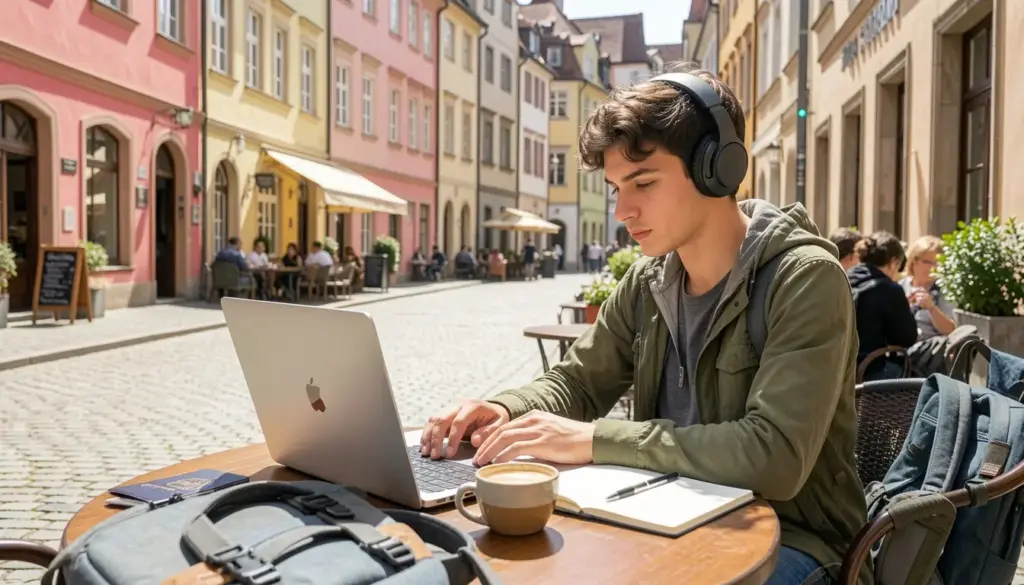
A growing number of professionals have quietly ditched the office commute — not for another desk job, but for a laptop in Lisbon, a coworking space in Chiang Mai, or a café in Medellín. The digital nomad lifestyle represents a fundamental shift in how people think about work, location, and daily routine.
This isn’t a trend reserved for tech bros or travel influencers. Freelancers, remote employees, consultants, and online business owners across dozens of industries have made location independence a practical reality. If you’ve been curious about what this lifestyle actually involves — and whether it could work for you — this guide covers everything from daily logistics to income strategies and how to get started.
What Is the Digital Nomad Lifestyle?
A digital nomad is someone who earns income through internet-based work and chooses not to be tied to a fixed location. They might work from different cities each month, spend several weeks in one country before moving to the next, or settle in a low-cost destination for months at a time while maintaining clients or an employer back home.
The key distinction between a remote worker and a digital nomad is mobility. A remote employee might work from home permanently — same city, same apartment, same routine. A digital nomad uses that same remote setup but combines it with travel. The work is online; the location is a personal choice.
This lifestyle is enabled by a specific type of work: anything that can be done entirely through a laptop and a stable internet connection. The rise of cloud-based tools, video conferencing, and global payment platforms has made it significantly easier to maintain professional output from virtually anywhere.
How the Digital Nomad Lifestyle Works
The daily reality of living as a digital nomad looks very different from how it’s often portrayed online. It’s not a permanent vacation. Most digital nomads maintain consistent work schedules, attend client calls, meet deadlines, and manage their professional obligations just like anyone else — they just do it from different time zones.
A typical day might involve waking up in a rented apartment or coliving space, heading to a local coworking space for focused work, handling client communication through tools like Slack or Zoom, and then exploring the city in the afternoon or evening. Some nomads stay in one place for weeks or months; others move frequently. The pace varies entirely by personal preference and work demands.
Time zone management is one of the more underestimated practical challenges. If you have clients or a team in New York and you’re working from Southeast Asia, you may need to schedule calls during your evening hours. Experienced nomads build their routines around this reality rather than fighting it — often batching communication windows and protecting deep work time during quieter local hours.
Income generation follows two broad patterns. Some nomads are full-time remote employees — their employer doesn’t require them to be in a specific location. Others are self-employed through freelancing, consulting, running online stores, or monetizing content. Many combine multiple income streams for financial stability.
Popular Jobs for Digital Nomads
Location independence is possible across a surprisingly wide range of fields. The common thread is that the work happens entirely online.
Freelancing remains one of the most accessible paths. Writers, graphic designers, web developers, video editors, social media managers, and translators all regularly find work through platforms like Upwork and Fiverr, or through direct client relationships. Freelancers set their own rates and schedules, which gives them significant flexibility.
Remote employment is increasingly common as companies have expanded their policies around distributed teams. Software engineers, product managers, customer support specialists, digital marketers, and data analysts often find fully remote roles that allow them to work from anywhere with a reliable connection.
Online businesses offer another route. Dropshipping, digital products, affiliate marketing, online courses, and SaaS products can generate passive income streams that continue running regardless of where you are. Building a sustainable online business takes time, but it offers the most geographic freedom once established.
Content creation and consulting round out the picture. Coaches, educators, and niche experts can serve clients globally through video calls and digital platforms, with no need for a physical office.
Benefits of the Digital Nomad Lifestyle
The appeal is real, even when stripped of the romanticized version sold on Instagram. Several genuine advantages come with this way of working.
Geographic freedom means you can choose your environment based on personal preference, cost of living, climate, or culture — not because of where your employer happens to be located. Spending a winter in a warm coastal city or a summer in the mountains becomes a realistic option rather than a fantasy.
Cost-of-living flexibility is one of the most practical financial advantages. By choosing to live in countries with a lower cost of living — such as Portugal, Thailand, Mexico, or Georgia — professionals earning income in stronger currencies like US dollars or euros can significantly stretch their earnings. A salary that feels modest in San Francisco can support a comfortable life in Tbilisi.
Schedule flexibility (depending on your work type) allows for a different relationship with time. Without a mandatory 9-to-5 structure, many nomads find they can work during their most productive hours, reduce commuting time, and integrate personal activities more naturally into their days.
Personal growth and cultural exposure are harder to quantify but often cited as transformative by long-term nomads. Living and working in different countries builds adaptability, perspective, and a global professional network.
Challenges and Realities to Consider
A complete picture requires an honest look at what makes this lifestyle genuinely difficult.
Financial unpredictability is a real concern, especially for freelancers and business owners. Income can fluctuate month to month, and building financial reserves takes discipline. Healthcare, retirement savings, and taxes become personal responsibilities that a traditional employer would otherwise handle.
Internet reliability directly affects your ability to work. Not every destination has the infrastructure needed for video calls, large file uploads, or real-time collaboration. Researching connection speeds before committing to a location — and always having a backup plan like a local SIM with mobile data — is essential.
Loneliness and social instability affect many people who live this lifestyle long-term. Building genuine friendships becomes harder when you’re constantly moving. Coworking spaces and coliving communities help, but maintaining deep relationships while traveling requires intentional effort.
Administrative complexity grows with time abroad. Visa requirements vary significantly by country and passport. Some countries now offer specific digital nomad visas, but many nomads still navigate standard tourist allowances and must plan exit and re-entry dates carefully. Tax obligations can become complicated when you’re spending time across multiple countries, and professional advice is often worth the investment.
Burnout is another underreported challenge. The combination of constant decision-making about logistics, adjusting to new environments, and maintaining work output can become exhausting. Many experienced nomads slow down their movement over time, choosing slower travel with longer stays.
Tools and Setup for Remote Work Travel
A reliable remote work setup doesn’t require much hardware, but it does require thoughtful preparation.
Hardware essentials include a lightweight, powerful laptop, noise-canceling headphones for calls in public spaces, and a portable travel router for use in accommodations with poor Wi-Fi. A portable battery pack and universal power adapters round out the physical kit.
Connectivity planning involves researching local SIM options before arriving in a new country, identifying coworking spaces as a backup for unreliable accommodation Wi-Fi, and using a VPN to secure connections on public networks and access region-restricted services.
Software and productivity tools form the backbone of a digital workspace. Cloud storage platforms like Google Drive and Dropbox keep files accessible from any device. Collaboration tools like Slack, Notion, and Zoom maintain team communication. Project management apps like Trello or Asana help track client work and deadlines. A reliable password manager and two-factor authentication are basic security requirements.
Financial tools matter as much as productivity software. Multi-currency bank accounts (like Wise or Revolut) reduce foreign transaction fees significantly. Invoicing and payment tools like PayPal or Stripe allow international transactions without friction.
Best Places to Live as a Digital Nomad
Certain destinations have built genuine reputations among remote workers — and for good reason.
Southeast Asia — particularly Thailand (Chiang Mai, Bangkok), Bali in Indonesia, and Vietnam — offers low costs of living, strong food cultures, warm weather, and well-established nomad communities. Coworking infrastructure is excellent in major cities.
Southern and Eastern Europe — Portugal (Lisbon, Porto), Spain (Barcelona, Valencia), Georgia (Tbilisi), and the Czech Republic (Prague) — attract nomads who want a European lifestyle at lower price points. Portugal even introduced a dedicated digital nomad visa.
Latin America — Mexico City, Medellín, and Buenos Aires — offers attractive cost structures, reliable internet in urban centers, and proximity to US time zones, which makes client communication easier for North American-based workers.
When evaluating a destination, consider the cost of a comfortable apartment, average internet speeds, visa policies for your nationality, healthcare access, and the general safety and livability of the city. Nomad-specific resources like Nomad List provide data-driven comparisons across hundreds of cities.
How to Start a Digital Nomad Lifestyle
Starting this lifestyle is less about a single dramatic move and more about building the right foundation first.
Step 1 – Build a Remote Income Source
Before booking any flights, establish a reliable way to earn money online. If you’re employed, explore whether your current role can be done remotely — many employers are open to negotiation, especially if you’ve demonstrated strong remote performance. If you’re building from scratch, freelancing in a skill you already have (writing, coding, design, consulting) is the most direct starting point. Give yourself time to build this before you leave.
Step 2 – Choose Your First Destination
Your first destination doesn’t need to be exotic. Start with a place that has reliable infrastructure, a manageable cost of living, and a reasonable time zone offset from your clients or employer. Many people begin with cities that already have established nomad communities — you’ll find it easier to meet people and navigate practical challenges.
Step 3 – Set Up Your Work Infrastructure
Test your full work setup before traveling. Ensure your software tools, communication apps, and access to files all function as expected from a new network. Set up a professional home base: cloud storage, a dedicated work email, and a clean video call background (even a virtual one) go a long way toward maintaining professionalism on the move.
Step 4 – Plan Finances and Logistics
Calculate your real monthly expenses — accommodation, food, transport, coworking memberships, travel insurance, and buffer savings. Research the visa situation for your chosen destinations. Open a multi-currency account to avoid excessive banking fees. Decide whether you’ll maintain a home base or go fully nomadic. Starting with a three-month trial in one location lets you test the lifestyle without overcommitting.
Tips for Staying Productive While Traveling
Long-term productivity as a digital nomad requires habits that compensate for the lack of a stable office environment.
Establish a consistent routine. Without external structure, it’s easy to lose track of time. Setting regular work start and end times — even in a new city — creates the predictability your brain needs to stay focused.
Separate work and leisure physically. Working from your bed or a noisy bar erodes both work quality and rest quality. Coworking spaces are worth the cost for focused, professional work environments.
Communicate proactively with clients and teammates. When you’re across multiple time zones, communication gaps are interpreted as absence. Regular check-ins and transparent availability windows build trust with the people you work with.
Protect your health. Travel disrupts sleep, diet, and exercise routines. Nomads who stay healthy long-term treat these as professional priorities, not afterthoughts. Travel insurance with medical coverage is essential — not optional.
Know when to slow down. Moving constantly is exciting early on, but exhausting over time. Spending two to three months in a single city rather than hopping locations every week allows you to settle into a rhythm and actually enjoy where you are.
FAQs
What is the digital nomad lifestyle? It’s a way of working where you earn income through internet-based work and travel or live in different locations rather than being tied to a single city or office.
How do digital nomads make money? Through freelancing, remote employment, online businesses, content creation, consulting, or passive income streams. Most nomads rely on one primary income source with smaller supplementary streams.
Can beginners become digital nomads? Yes, but the most successful transitions start with building a remote income source before leaving home. Jumping into the lifestyle without stable work leads to financial stress quickly.
How much money do you need to live as a digital nomad? It depends heavily on location. In Southeast Asia or Eastern Europe, $1,500–$2,500 per month covers a comfortable lifestyle. In Western European cities or major Latin American hubs, plan for $2,500–$4,000 or more.
Which countries are best for digital nomads? Thailand, Portugal, Georgia, Mexico, Indonesia, and Colombia consistently rank among the most practical options — balancing cost, infrastructure, and quality of life.
Is the digital nomad lifestyle sustainable long-term? For many people, yes — particularly those who adopt slower travel, build stable income, and invest in their health and social connections. Those who treat it as non-stop travel often burn out within a year or two.
Do digital nomads need a special visa? It depends on the country and how long you stay. Several countries now offer official digital nomad visas. For shorter stays, tourist allowances often apply — but you need to track your days carefully and comply with each country’s rules.