

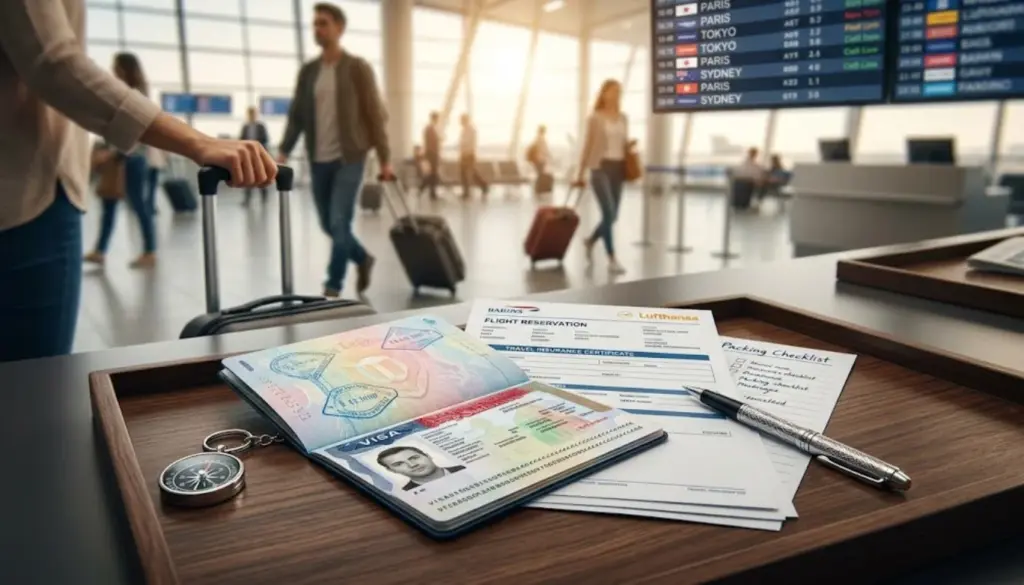
Flying internationally for the first time is exciting — and overwhelming in equal measure. Between passport requirements, visa applications, airport procedures, and packing decisions, it’s easy to feel like you’re missing something important.
The good news is that international travel preparation follows a clear, repeatable process. Once you understand what needs to happen and when, the uncertainty disappears. This guide walks you through every step — from gathering your documents to walking off the plane at your destination — organized as a practical checklist you can actually follow.
Why First Time International Travel Requires Preparation
Domestic travel is forgiving. Forget your ID? Many airlines accept alternatives. Arrive late? You might still make it. International travel operates by stricter rules.
At every checkpoint — check-in, security, immigration, customs — officers verify your documents, travel authorization, and purpose of visit. A missing visa, an expired passport, or an incomplete customs declaration can result in denied boarding or detention at the border. These aren’t rare edge cases; they happen to unprepared travelers regularly.
Beyond legal requirements, financial mistakes, poor packing decisions, and tech issues can turn an otherwise smooth trip into a stressful experience. Preparation done right means you spend your energy enjoying the destination, not scrambling to fix avoidable problems.
Complete International Travel Checklist (Overview)
Here’s a quick snapshot of what the full checklist covers:
- 1 month before: Documents, visas, travel insurance, vaccinations
- 1–2 weeks before: Packing, currency, apps, itinerary confirmation
- 1–2 days before: Check-in, luggage weight, emergency contacts, local SIM or eSIM
- Day of travel: Documents in hand, airport arrival timing, boarding pass ready
Each section below expands on these steps in full detail.
Travel Documents You Must Prepare
This is the most critical section. Missing or incorrect documents are the number one reason first-time international travelers face serious problems.
Passport validity: Most countries require your passport to be valid for at least six months beyond your travel dates. Check your expiration date immediately. If renewal is needed, apply as early as possible — processing times vary by country and season.
Visa requirements: Whether you need a visa depends entirely on your nationality and destination. Some countries offer visa-on-arrival or visa-free entry. Others require you to apply weeks in advance through an embassy or consulate. Check the official embassy website of your destination country to confirm requirements. Never rely solely on travel blogs for this — policies change.
Types of visas: Tourist visas, e-visas, and visa-on-arrival are the most common for leisure travel. E-visas are applied for online and approved digitally, which makes the process faster. Apply well before your travel date, regardless of visa type.
Document copies: Make two physical photocopies of your passport, visa, travel insurance, and flight tickets. Store one set separately from the originals (in checked luggage). Also, save digital copies in cloud storage or email them to yourself — if your bag is stolen, you’ll still have access to everything.
Additional documents to carry:
- Return flight ticket (often required at immigration)
- Hotel booking confirmation or the host’s address
- Travel insurance certificate
- Yellow fever vaccination card (required for certain destinations)
- International driving permit (if you plan to rent a car)
Booking & Travel Planning Essentials
Before anything else is confirmed, your flights and accommodation should be locked in. Delays in booking — especially during peak travel periods — can significantly increase costs.
Flight tickets: Book through a reputable airline or travel platform and save your booking reference. Note your baggage allowance during booking, not after — checked luggage policies vary significantly between airlines and fare classes.
Accommodation: Confirm your hotel or accommodation address in writing. You’ll often be asked for it at immigration. If you’re staying with a host, have their contact details printed or saved offline.
Travel itinerary: Create a simple day-by-day itinerary covering your major plans, key addresses, and local emergency numbers. You don’t need every hour mapped out, but having a rough plan helps if immigration officers ask about your activities. It also keeps you organized once you arrive.
Share your itinerary with a trusted person at home. If something goes wrong, they’ll know your schedule and location.
Packing Smart for International Travel
Beginners typically make one of two mistakes: they overpack until their bag exceeds the weight limit, or they underpack and find themselves buying essentials abroad at inflated tourist prices.
Carry-on essentials: Your carry-on bag should hold everything you’d need if your checked luggage were delayed or lost — which happens more often than airlines advertise. Pack one change of clothes, your toiletries (within liquid limits), chargers, medications, and all travel documents in your carry-on.
Checked luggage rules: Most international airlines allow one checked bag at 20–23 kg for economy class, but this varies. Overweight baggage fees can be substantial, so weigh your bag at home before leaving. Liquids above 100ml must go in checked luggage. Sharp objects, certain lithium batteries, and flammable items are restricted — check the airline’s prohibited items list if unsure.
Smart packing tips:
- Roll clothes instead of folding to save space
- Use packing cubes to stay organized
- Pack versatile clothing that works across multiple outfits
- Keep medications in their original labeled packaging
- Bring a small padlock for hostel lockers or luggage zippers
- Include a universal power adapter — outlets differ by country
Money, Currency & Payment Preparation
Financial preparation is one of the most overlooked areas of pre-departure planning, and the mistakes here tend to be costly.
Currency exchange: Avoid exchanging money at the airport if possible — the rates are typically worse than those at banks or dedicated exchange services in the city. Research the local currency, current exchange rates, and whether your destination is primarily cash-based or card-friendly. Some countries still operate largely on cash; others accept cards almost everywhere.
Cards vs. cash: Bring a mix of both. Credit cards with no foreign transaction fees are ideal for purchases. Debit cards connected to services like Wise or similar international accounts often offer better exchange rates than traditional bank cards. Notify your bank before traveling — many banks flag international transactions as fraud and freeze the card without warning.
ATMs abroad: International ATMs are the most convenient way to get local currency. Use ATMs attached to reputable banks rather than standalone machines in tourist areas, which may charge high fees or use unfavorable rates. Withdraw a moderate amount at one time to minimize fees per transaction.
Budget awareness: Research the rough cost of meals, transport, and activities at your destination. Having a daily budget estimate prevents overspending in the first few days when everything feels exciting.
Health, Insurance & Safety Preparation
Skipping travel insurance is one of the biggest mistakes a first-time traveler can make. A single medical emergency abroad — hospitalization, emergency evacuation, or even a delayed flight requiring an unplanned hotel night — can cost thousands of dollars out of pocket.
Travel insurance: Purchase a policy that covers medical emergencies, trip cancellation, lost luggage, and travel delays. Compare policies from reputable providers and read the coverage limits carefully. Purchase insurance as early as possible — some trip cancellation benefits only apply if you buy coverage shortly after booking.
Vaccinations: Some destinations require specific vaccinations as an entry requirement. Yellow fever vaccination, for example, is mandatory for entry into certain African and South American countries. Others are strongly recommended by health authorities even if not strictly required. Check the vaccination requirements for your destination at least 4–6 weeks before travel, as some vaccines require multiple doses over time.
Health precautions: Pack a small travel health kit: pain relievers, antihistamines, antidiarrheal medication, rehydration salts, bandages, and any prescription medications you take regularly. Bring enough prescription medication for the full trip plus a few extra days as a buffer.
Emergency contacts: Save the local emergency number of your destination, the address of the nearest embassy or consulate of your home country, and your travel insurance emergency hotline. Store these in both your phone and a printed copy.
Technology & Apps You Should Set Up Before Travel
Getting these ready before you leave saves significant frustration once you’re abroad, especially if you arrive without reliable internet access immediately.
Google Maps offline: Download offline maps for your destination city before your flight. This allows navigation without mobile data — essential in the first hours after landing.
Translation apps: Download a language translation app with offline capability if you’re traveling to a country where you don’t speak the local language. Google Translate supports offline downloads for most major languages.
SIM card / eSIM: Research your connectivity options before leaving. Buying a local SIM card at the destination is usually the most affordable option for longer trips. For shorter trips or greater convenience, an international eSIM — which can be activated digitally before or during travel — is increasingly practical. Check whether your phone supports eSIM if you go that route.
Other useful apps to set up:
- Your airline’s app (for boarding passes and real-time flight updates)
- A currency converter app
- A secure password manager (for accessing accounts while traveling)
- A VPN (useful in countries with internet restrictions)
- Accommodation app or booking confirmation saved offline
What Happens at the Airport (Step-by-Step Guide)
The airport process is what most first-time international travelers are most anxious about. Here’s exactly what to expect.
Check-In
Arrive at the airport at least three hours before an international flight. Most airlines open check-in counters 2–3 hours before departure. Online check-in is usually available 24–48 hours before the flight — doing this in advance means you only need to drop your bag at the counter if you have checked luggage.
At check-in, the airline agent will verify your passport and visa (if required), check your luggage, and issue your boarding pass. Keep your boarding pass accessible — you’ll need it at multiple points.
Security Screening
Airport security screening is consistent across most international airports. Remove your laptop and liquids bag from your carry-on and place them in a separate tray. Remove your belt, jacket, and shoes if instructed. Walk through the scanner calmly. If flagged for additional screening, cooperate with the officer — it’s routine.
Immigration
Immigration is the official process of entering or departing a country. On departure, an officer reviews your passport and travel documents and may ask basic questions about your destination and purpose of travel. Answer clearly and honestly. Upon arrival, immigration procedures are more thorough — the officer will review your passport, visa, and return ticket, and may ask about your accommodation and length of stay.
First-time travelers are sometimes nervous here. The key is to have all your documents organized and answer questions directly. Most interactions are brief.
Boarding
After clearing security and any immigration checks at departure, proceed to your gate. Check the departure board regularly — gates can change. Board during your assigned boarding group or zone. Have your boarding pass and passport ready for the gate agent.
Common Mistakes First-Time Travelers Should Avoid
Learning from other people’s mistakes is far less expensive than making your own.
- Not checking visa requirements early enough: Visa processing can take weeks. Starting late can mean missing your trip entirely.
- Letting the passport expire or nearly expire: Six-month validity is required by most countries — not just validity through your travel dates.
- Skipping travel insurance: Even a single missed flight requiring a rebooking can cost more than most insurance policies.
- Not notifying the bank: Cards get frozen for international transactions. One quick call or app notification before you leave prevents this.
- Overpacking checked luggage: Weight fees are avoidable. Weigh your bag at home.
- Arriving at the airport too late: Three hours for international flights is the standard recommendation. Traffic, long queues, and extended security screening are real possibilities.
- Carrying only one payment method: Cards get declined, lost, or frozen. Always carry some cash as a backup.
- Not having offline access to maps and documents: You won’t always have internet immediately after landing. Download what you need before you fly.
Final Pre-Departure Checklist (Quick Summary)
One month before:
- Passport valid for 6+ months
- Visa applied for and was approved
- Flights and accommodation booked
- Travel insurance purchased
- Vaccination requirements checked
One to two weeks before:
- Packing list created and luggage weighed
- Currency exchanged or an international card set up
- Bank notified of travel dates
- Apps downloaded and set up
- Offline maps and documents saved
One to two days before:
- Online check-in completed
- Boarding pass saved (app or printed)
- Carry-on essentials packed
- Emergency contacts saved and printed
- Itinerary shared with someone at home
Day of travel:
- Arrive at the airport 3 hours before departure
- Passport, visa, and boarding pass in an accessible place
- Phone charged, power bank packed
- Luggage weight confirmed within airline limits
FAQs
What documents do I need for my first international trip?
At minimum: a valid passport, visa (if required by your destination), return flight ticket, and accommodation confirmation. Carry copies of everything separately from the originals.
How early should I start preparing for international travel?
Start at least 4–6 weeks before your departure date. Visa applications and vaccination schedules can take that long or more.
Do I need travel insurance for international travel?
It’s not always legally required, but it’s strongly advisable. Medical emergencies, trip cancellations, and lost luggage can be very costly without coverage.
How does immigration work for first-time travelers?
At departure, an officer reviews your passport and may ask about your destination. Upon arrival, they’ll check your visa, passport, and documents, and may ask about your purpose of visit and accommodation. Have everything organized and answer directly.
Should I exchange currency before I travel or after I arrive?
Exchanging through a bank or dedicated currency exchange service before or after arriving in the city usually gives better rates than airport exchange counters. Bringing a small amount of local currency for immediate expenses is a smart buffer.
What should I absolutely have in my carry-on?
Your passport, boarding pass, all travel documents, one change of clothes, chargers, medications, and any valuables. Never check your passport or essential documents in luggage.
How do I stay connected abroad?
Buy a local SIM card at your destination for the best rates on longer trips. For short trips or more convenience, an international eSIM is a practical option. Download offline maps before leaving as a backup, regardless.