

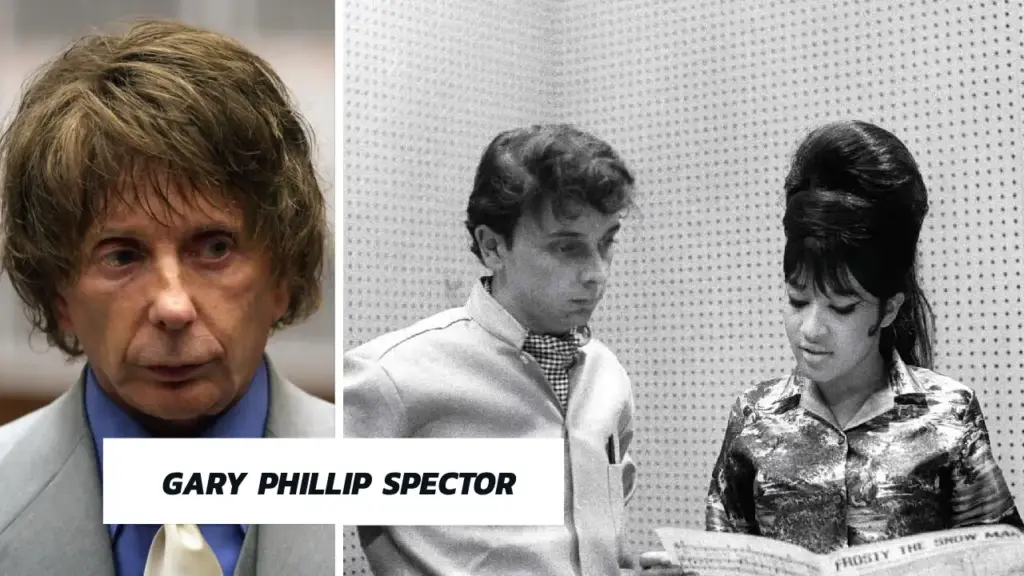
When Phil Spector surprised his wife Ronnie with twin boys on Christmas 1971, no one could predict how those children would navigate the shadow of their famous—and infamous—parents. Gary Phillip Spector, now 58, has spent decades deliberately staying out of the spotlight his parents dominated.
You’re about to discover how the adopted son of rock and roll’s most controversial couple built a quiet life in Colorado, far from the music industry chaos that defined his childhood.
Gary Phillip Spector is the adopted twin son of music producer Phil Spector and Ronettes singer Ronnie Spector, born May 12, 1966. Adopted at age five without Ronnie’s knowledge, he grew up amid family turmoil and now lives privately in Colorado Springs with his wife Julia and daughter Amy, working as a driver and technician.
Early Life and the Shocking Adoption
Gary Phillip Spector was born on May 12, 1966, in Los Angeles, California. His biological parents remain unknown to this day—a detail that adds to the mystery surrounding his early years.
In 1971, everything changed. Phil Spector made a decision that would fracture his marriage and reshape Gary’s identity. Without consulting his wife, the legendary producer adopted five-year-old twins Gary and Louis. Ronnie Spector later described the moment to People magazine: “We were in the car and all of a sudden we pulled up to the mansion and these twins is running around.”
Phil called it a Christmas present. Ronnie called it unacceptable. “Everything was a surprise, and no woman wants live children as a surprise,” she explained in interviews.
The adoption added complexity to an already troubled household. Phil and Ronnie had previously adopted Donte Phillip Spector in 1969, but the surprise twins became a breaking point. The adoption symbolized Phil’s controlling behavior—a pattern that would define Gary’s childhood.
Growing Up in Music’s Most Troubled Household
Life inside the Spector mansion mixed wealth with fear. Phil Spector had created the revolutionary “Wall of Sound” production technique and worked with artists like The Righteous Brothers and The Beatles. His wife Ronnie, fronted The Ronettes, whose 1963 hit “Be My Baby” reached No. 2 on the Billboard Hot 100.
But behind closed doors, the situation deteriorated. Ronnie’s 1990 memoir Be My Baby: How I Survived Mascara, Miniskirts And Madness detailed years of psychological control. She described being imprisoned in the mansion, forbidden from performing, and isolated from friends and family.
In 1972, with her mother’s help, Ronnie escaped—literally walking out barefoot. The divorce was finalized in 1974. For Gary and his siblings, this meant growing up split between two worlds: their mother rebuilding her life in New York and their father’s increasingly erratic behavior in California.
Reports from family members paint a difficult picture. In 2003, Gary’s older brother Donte told media outlets that Phil “kept them captive” and described their childhood as being “caged animals to be let out for Dad’s amusement.” Gary later defended his father to some degree, stating Phil “was not a people person… [but] he shows in his own way that he cares.”
Education and Career Path Away from Fame
Gary attended Fairfax High School in Los Angeles, a school known for its artistic diversity. Rather than following his parents into entertainment, he pursued practical skills. He studied court stenography at Los Angeles City College, then continued his education at Colorado Technical University, focusing on Computer Information Systems and Computer Science.
His career choices reflect a deliberate rejection of the spotlight. Gary works as a driver at C.E. England and has held positions as a lot technician. These jobs provide stability and anonymity—exactly what he sought after a chaotic childhood.
The contrast couldn’t be sharper. While Phil Spector’s fortune reached an estimated $50 million before his death, Gary chose middle-class normalcy. His career path wasn’t about money or status. It was about control over his own life.
The Extended Spector Family
Gary’s family tree is complex and often tragic. His twin brother, Louis Phillip Specto,r shares his desire for privacy but pursues creative interests as an artist and writer. Their older adopted brother Dont,e has also maintained a low profile since speaking publicly about their childhood.
Phil’s later relationship with Janis Zavala produced biological twins Nicole Audrey Spector and Phillip Spector Jr. Phillip Jr. died of leukemia in 1991 at just nine years old—a loss that devastated the family. Nicole became a writer and editor, carving out her own professional identity.
After Ronnie’s escape and divorce from Phil, she married Jonathan Greenfield in 1982. Together, they had two sons, Jason Charles and Austin Drew Greenfield. Ronnie devoted herself to raising them in Connecticut, creating the stable family environment she’d been denied with Phil.
Building a Private Life in Colorado
On March 12, 2018, Gary married Julia Spector in a private ceremony. Details about their relationship remain scarce—exactly as Gary prefers. Julia worked as an administrative office assistant and sales coordinator before their marriage.
Together, they have a daughter named Amy, born in March (year not publicly disclosed). The family resides in Colorado Springs, Colorado, more than 1,000 miles from Los Angeles and the memories it holds.
Gary’s commitment to privacy is total. He maintains no social media presence. He avoids interviews and public appearances. When his mother, Ronnie, died in January 2022 from cancer at age 78, Gary grieved privately. When his father died in prison in January 2021 at age 81, serving time for the 2009 murder of actress Lana Clarkson, Gary again stayed silent.
This privacy isn’t avoidance—it’s intentional. Gary watched his father’s descent from musical genius to convicted murderer play out in headlines for years. He saw how fame destroyed his parents’ marriage and complicated his childhood. His response was to build something different.
Life After Phil Spector’s Murder Conviction
The 2003 murder of actress Lana Clarkson at Phil’s mansion shocked the world. After two trials, Phil was convicted in 2009 and sentenced to 19 years to life in prison. The case dominated news coverage, rehashing decades of troubling behavior—the guns, the threats, the control.
For Gary and his siblings, the conviction confirmed what they’d experienced privately for years. Phil’s legacy became forever split: pioneering producer and violent criminal. Gary has never publicly commented on his father’s conviction or imprisonment.
When Phil died in prison in January 2021, reportedly leaving behind his $50 million estate, Gary did not speak to the media. This silence speaks volumes about his priorities—family over inheritance, privacy over publicity.
Why Gary Chose Anonymity
You might wonder why someone connected to music royalty would choose such complete obscurity. The answer lies in what Gary witnessed growing up.
He saw his mother trapped in a mansion, unable to pursue her career. He experienced his father’s controlling behavior firsthand. He watched fame and wealth fail to bring happiness or stability. When the world learned his father was a murderer, Gary had already spent decades understanding that celebrity doesn’t equal fulfillment.
His choice to work as a driver and technician isn’t a failure—it’s success on his own terms. His marriage to Julia and the life they’ve built for Amy represent the stability he never had as a child. Colorado Springs offers something Los Angeles never could: normalcy.
The Spector Legacy Today
Gary’s story adds important context to the Spector family legacy. While Phil’s production work influenced artists from The Beatles to modern indie bands, and Ronnie’s vocals continue inspiring new generations of singers, Gary represents something equally valuable—the courage to walk away.
His life challenges the assumption that children of famous parents should pursue similar paths. It demonstrates that healing from childhood trauma sometimes means complete reinvention. Gary didn’t inherit his father’s musical genius or his mother’s stage presence. He inherited their complexity and chose to process it privately.
Public perception of Gary remains minimal because he’s designed it that way. Occasional magazine profiles piece together fragments—a birth date here, an address there—but Gary controls his narrative through absence. In an era of constant social media sharing, his digital silence is radical.
Where Gary Phillip Spector Is Now
Today, Gary Phillip Spector is 58 years old and living his carefully constructed life in Colorado Springs. He goes to work. He comes home to his wife and daughter. He exists outside the music industry that defined his parents’ lives and destroyed their marriage.
His exact net worth remains unknown, but estimates suggest modest means—certainly nothing approaching his father’s millions. This financial simplicity appears intentional. Gary’s wealth isn’t measured in dollars but in the peace he’s cultivated.
Reports suggest he’s a devoted father to Amy, giving her the stable childhood he lacked. His marriage to Julia has lasted years without public drama—a stark contrast to his parents’ toxic relationship. His work provides purpose without pressure.
This is Gary’s triumph: building an ordinary life from extraordinary circumstances. While his parents’ names appear in Rock and Roll Hall of Fame exhibits and true crime documentaries, Gary appears nowhere. He’s become exactly what he chose to be—invisible, content, free.
Final Thoughts
Gary Phillip Spector’s story reminds us that not everyone connected to fame wants it. His path from surprise adoption to Colorado privacy demonstrates remarkable resilience. He survived a childhood marked by control, witnessed his father’s criminal conviction, lost his mother to cancer, and emerged choosing simplicity over spectacle.
You won’t find Gary on Instagram. He won’t give interviews about his famous parents. He’s built walls not from fear but from wisdom—understanding that protecting your peace sometimes means disappearing from public view entirely.
In choosing anonymity, Gary Phillip Spector found what his parents never could: a life defined by his own choices, free from the spotlight’s glare. That might be the greatest legacy of all.