

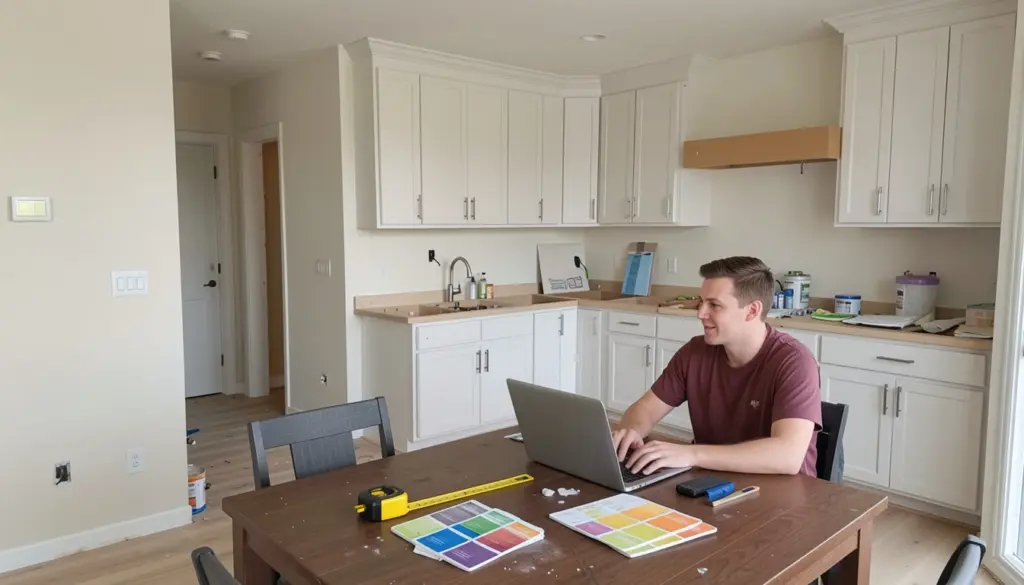
Most home renovation projects don’t fail because of bad contractors or wrong materials. They fail because the budget was built on guesswork. A homeowner estimates $15,000 for a kitchen update, and by week three, the number has crept past $22,000 — with no end in sight.
The good news is that this is entirely avoidable. A well-structured home improvement budget gives you a clear picture of what you can spend, where the money goes, and how to protect yourself when surprises show up (and they will). This guide walks you through the full process — from calculating your spending limit to tracking costs on the ground — so you can approach any renovation with confidence.
What Is a Home Improvement Budget (And Why It Matters)
A home improvement budget is a detailed financial plan that outlines how much you expect to spend on a renovation or repair project — and how you’ll cover those costs. It includes everything from materials and labor to permits, disposal fees, and a reserve for unexpected expenses.
Without a budget, you’re essentially starting a project without a finish line. You spend freely at first, then scramble to cut corners at the end, which often leads to poor decisions and incomplete work. A clear budget forces you to think through the full scope of the project before the first nail is hammered.
Planning before spending also helps you make smarter decisions about which projects to prioritize, whether to hire a contractor or go DIY, and how financing fits into the picture.
Step 1 – Determine How Much You Can Afford
Before you look at a single cost estimate, you need to know your actual spending limit. This is the foundation everything else rests on.
Start by reviewing your available financial resources. How much do you have in savings that you’re comfortable putting toward home improvement? If you’re considering financing, what monthly payment can you manage without straining your household budget? Lenders may approve you for more than you should comfortably spend — don’t let that number drive the decision.
A commonly used guideline is to keep total home renovation spending within 10–15% of your home’s current market value. Spending significantly more than that can make it harder to recoup costs when you sell. If your home is worth $300,000, for example, a major renovation budget in the $30,000–$45,000 range keeps you within a reasonable return window.
For financing, options include home equity loans, personal loans, and mortgage refinancing. Each comes with different interest rates and repayment terms. Factor the total repayment cost — not just the monthly payment — into your budget ceiling.
The output of this step is a single number: the maximum you’re willing to spend. Write it down. Everything that follows gets built inside that boundary.
Step 2 – Use the 1–3% Rule as a Starting Point
If you’re budgeting for ongoing home maintenance rather than a full remodel, the 1–3% rule gives you a practical starting point. The guideline suggests setting aside 1–3% of your home’s value each year for maintenance and minor repairs.
For a $250,000 home, that means budgeting between $2,500 and $7,500 annually. Older homes or those in harsh climates tend to need the higher end of that range, while newer construction in mild environments may stay closer to 1%.
This rule works well for routine upkeep — roof maintenance, HVAC servicing, plumbing fixes, and general wear. It doesn’t scale well for major renovations like a full kitchen or bathroom overhaul, where project-specific cost estimation is more reliable.
Think of the 1–3% rule as a baseline health budget for your home. It won’t cover everything, but it keeps you from being blindsided by normal aging costs.
Step 3 – Break Down Your Renovation Costs
This is where most homeowners underestimate. They think about the big line items — cabinets, flooring, fixtures — and forget that a long list of supporting costs adds up just as fast. A proper cost breakdown covers every category.
Labor Costs
Labor typically represents 30–50% of a renovation budget, depending on project complexity and your location. Skilled trades — electricians, plumbers, tile setters — charge more per hour than general laborers, and specialized work often takes longer than expected.
Get at least two or three contractor estimates before finalizing your budget. Quotes can vary significantly, and understanding why you helps assess quality versus cost. Keep in mind that the lowest bid isn’t always the best value.
Material Costs
Material costs depend heavily on the choices you make. A bathroom renovation using mid-range tile and standard fixtures costs very differently from the same space done with custom stone and designer fittings. Before you commit to a budget number, browse actual product prices — not just average ranges from articles.
Factor in waste allowance when ordering materials. Tile and hardwood typically require an extra 10–15% to account for cuts, breakage, and pattern matching.
Permits and Fees
Many structural, electrical, and plumbing changes require permits. Fees vary by municipality and project scope but can range from a few hundred to several thousand dollars. Skipping permits to save money often leads to larger problems — failed inspections, insurance issues, or costly corrections when you sell.
Check with your local building department before finalizing the budget. Some general contractors handle permit applications as part of their service; others don’t.
Hidden Costs to Expect
Hidden costs are the ones that feel like surprises but are actually predictable if you know where to look. Common examples include:
Demolition and disposal — removing old fixtures, flooring, or walls costs money in both labor and dump fees. Structural issues discovered mid-project, like water damage or outdated wiring behind walls, require immediate attention and add to your total. Temporary accommodations (if a kitchen or bathroom is out of commission for weeks) and cleaning services after construction are also frequently overlooked.
Accounting for these upfront prevents the panic of mid-project discoveries blowing your numbers apart.
Step 4 – Prioritize Your Home Improvement Projects
If you’re working with a limited budget, not every project can happen at once. Prioritization helps you get the most out of what you have.
Start by separating needs from wants. Needs include anything that affects safety, structural integrity, or basic function — a leaking roof, failing HVAC system, or outdated electrical panel. These come first, regardless of how unglamorous they are.
Wants are the improvements that add comfort or aesthetic appeal — a renovated master bathroom, an updated kitchen, a new deck. These are worth doing, but they can wait if the budget is tight.
Within your want list, consider return on investment. Kitchen updates and bathroom renovations consistently rank among the highest ROI home improvement projects. Curb appeal improvements — landscaping, exterior paint, and new garage doors — also perform well. Highly personal upgrades like custom closets or luxury outdoor kitchens tend to recover less of their cost at resale.
A simple prioritization method: list every project you’re considering, mark each as a need or a want, and rank wants by estimated ROI. Work down the list until you hit your budget ceiling.
Step 5 – Add a Contingency Fund (Avoid Budget Disasters)
Every renovation budget should include a contingency fund — money set aside specifically for unexpected costs. The standard recommendation is 10–20% of your total project budget.
For a $20,000 renovation, that means holding back $2,000–$4,000 as a financial buffer before the project begins. This isn’t pessimism; it’s standard practice in construction and project management.
Why do unexpected costs happen? Walls get opened and reveal plumbing that needs replacing. Tile arrives cracked. A subcontractor runs behind schedule and extends rental equipment costs. Prices for materials shift between the estimate and the purchase.
A 10% contingency is appropriate for well-defined projects with a clear scope. Choose 15–20% for older homes, complex projects, or any work that involves opening walls or floors where hidden conditions are more likely.
The contingency fund is not extra spending money. If you finish the project without touching it, great — that money stays in savings. Its only purpose is to prevent a cost overrun from stopping the project or pulling from other financial commitments.
Step 6 – Create a Simple Budget Plan You Can Follow
Once you’ve gathered cost estimates and set a contingency, you can build your working budget. Keep it simple enough that you’ll actually use it.
A basic budget plan includes: the total approved budget, a breakdown by cost category (labor, materials, permits, other), the contingency reserve, and a running total of committed and actual spend.
Here’s an example for a $10,000 bathroom renovation:
- Labor: $3,500
- Materials (tile, vanity, fixtures, lighting): $3,800
- Permits and fees: $400
- Demolition and disposal: $500
- Miscellaneous (adhesive, caulk, hardware): $300
- Contingency (15%): $1,500
- Total: $10,000
Notice that the contingency is built into the total, not added on top. This is intentional — it forces you to fit everything within a true ceiling.
If your first draft exceeds your limit, review materials first. Swapping to mid-range alternatives often saves hundreds without sacrificing the final look.
Step 7 – Track Your Spending and Stay on Budget
Creating a budget is only useful if you track against it throughout the project. Most overruns happen gradually — small extra purchases, untracked labor adjustments, minor additions that feel too small to record. They add up.
A simple spreadsheet with columns for category, budgeted amount, committed spend (signed contracts and orders), and actual spend (paid invoices) gives you a real-time view of where you stand.
Budget tracking apps like Mint, YNAB, or project-specific tools like Houzz can simplify the process if you prefer not to manage a spreadsheet manually. Even a notes app with a running total beats tracking nothing.
Review your numbers at least once a week during active construction. If you spot a category running over, make adjustments elsewhere before the overage compounds. The earlier you catch a drift, the easier it is to correct.
Common Home Improvement Budget Mistakes to Avoid
Underestimating costs. The biggest and most common mistake. Budget based on actual quotes, not rough online averages. Labor rates and material prices vary significantly by region and timing.
Ignoring project scope. A vague project scope leads to scope creep — the gradual expansion of what the project includes. Define exactly what is and isn’t included before any work begins, and put it in writing with your contractor.
No contingency fund. Treating the budget as exact leaves no room for reality. Even simple projects encounter surprises. A budget without a reserve isn’t a plan — it’s a best-case scenario.
Paying everything up front. Reputable contractors typically ask for a deposit (often 10–30%) with remaining payments tied to project milestones. Paying in full before work is complete removes your leverage if problems arise.
Skipping the research phase. Getting only one estimate, not comparing material prices, or starting without permits all create avoidable financial risk. The planning phase costs nothing but time — and it protects everything that follows.
Letting emotion drive decisions mid-project. Once you’re in the middle of a renovation, it’s easy to agree to upgrades that weren’t in the original plan. Every change order should be evaluated against your remaining budget before you say yes.
FAQs
How do I start a home improvement budget if I’ve never done one before?
Begin with what you can afford — not what the project costs. Set your maximum spend, then gather contractor estimates and material prices to build a realistic plan within that number. Use the step-by-step process in this guide to cover each cost category.
What is the 1–3% rule for home maintenance?
It’s a guideline suggesting homeowners set aside 1–3% of their home’s value each year for maintenance and upkeep. A $300,000 home would have an annual maintenance budget of $3,000–$9,000 under this rule.
How much contingency should I include in my renovation budget?
10–20% is the standard range. Use 10% for straightforward, well-scoped projects and move toward 20% for older homes or complex renovations with more unknowns.
Should I budget differently for small vs large projects?
The structure is the same, but the stakes are higher for large projects. Larger budgets benefit from more detailed cost breakdowns and stricter tracking. Small projects (under $2,000) can often be managed with a simple checklist and receipt tracking.
Is it cheaper to renovate all at once or in phases?
Doing all work at once often costs less per project because contractors can mobilize efficiently and certain costs (like permits or setup) aren’t duplicated. Phased renovations make sense when budget limits require it — just plan each phase as if it’s a standalone project to avoid undoing work later.
Do I need a professional estimate before finalizing my budget?
Yes, for any project involving structural, electrical, or plumbing work. For cosmetic projects, detailed research and material pricing can get you close, but a professional estimate removes guesswork and gives you a contractual reference point.