

Not every renovation pays off. Some projects can cost tens of thousands of dollars and barely move the needle on your appraisal, while a few targeted improvements can meaningfully boost what buyers are willing to pay. The difference between a smart upgrade and an expensive mistake usually comes down to one thing: understanding return on investment before you pick up a hammer.
Whether you’re planning to sell in the next six months or simply want to build long-term home equity, knowing which improvements align with buyer demand—and which ones reflect only your personal taste—is the foundation of any sound renovation strategy. This guide breaks down the upgrades that genuinely increase resale value, the ones that commonly disappoint, and a practical framework for deciding where to spend your money.
What Makes a Home Upgrade Increase Value?
A home upgrade adds value when buyers are willing to pay more for it than it costs to complete. That sounds straightforward, but the reality is more nuanced. Several factors determine whether a project will improve your property’s market value.
Return on investment (ROI) is the most useful measure. If a $15,000 bathroom renovation adds $20,000 to your selling price, that’s a strong return. If a $50,000 luxury kitchen adds only $30,000, you’ve over-improved for your market.
Buyer demand matters just as much as your personal preferences. A renovation that appeals to a broad pool of buyers—neutral finishes, functional layouts, energy efficiency—will consistently outperform something highly specific or trend-dependent. Real estate professionals often emphasize that upgrades aligned with what buyers in your area are actively seeking will always outperform personal passion projects.
Finally, there’s the distinction between functional and cosmetic improvements. Functional upgrades—better insulation, updated electrical, a new roof—address problems buyers would otherwise factor into a lower offer. Cosmetic updates improve visual appeal and first impressions. The most effective renovation strategies combine both, prioritizing function first, then appearance.
Top Home Upgrades That Deliver the Highest ROI
Kitchen Improvements
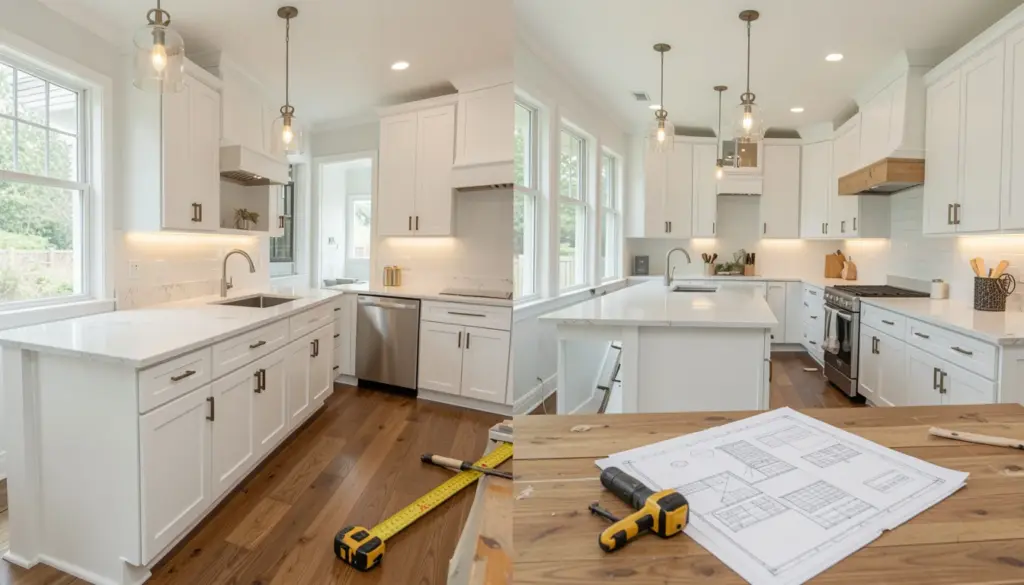
The kitchen remains one of the highest-leverage rooms in any home, but the type of remodel matters considerably. A minor kitchen remodel—refreshed cabinet fronts, new hardware, updated appliances, and modern countertops—typically yields a stronger percentage return than a full luxury overhaul. That’s because a complete gut renovation in an average-priced home can easily exceed what the local market will support.
Focus on changes that look fresh and feel current without crossing into over-improvement. Replacing dated laminate with quartz countertops, swapping tired cabinet doors for clean shaker-style fronts, and updating lighting fixtures are changes that buyers notice and value. Open layouts also rank highly in buyer preference—if removing a non-load-bearing wall between the kitchen and living area is feasible, it can significantly improve perceived space and flow.
Bathroom Renovations
Bathrooms offer some of the most reliable returns in residential renovation. A mid-range bathroom update—new vanity, modern fixtures, re-tiled shower, and updated lighting—consistently ranks among the top-performing projects in cost-versus-value analyses conducted annually by industry publications.
Primary bathrooms carry the most weight with buyers, but an outdated secondary bathroom can also drag down overall impressions. The key is keeping finishes clean and broadly appealing. Heated floors, freestanding tubs, and rainfall showers are attractive, but they add cost without necessarily adding proportional value unless your home is already in a premium price bracket.
Energy-Efficient Upgrades
Energy efficiency has moved from a niche selling point to a mainstream buyer expectation. Upgrades like additional insulation, energy-efficient windows, smart thermostats, and high-efficiency HVAC systems reduce monthly operating costs—something buyers increasingly factor into what they’re willing to pay upfront.
Solar panel installations require more careful analysis. In markets with high electricity costs and available incentives, solar can add meaningful value. In others, the upfront cost may not be fully recovered at resale. HVAC replacement, by contrast, tends to offer a more predictable return because buyers see a functioning, modern system as one less major expense to worry about after purchase.
Curb Appeal Enhancements
First impressions drive buyer psychology more than most sellers realize. Studies consistently show that homes with strong curb appeal sell faster and for more money than comparable properties with neglected exteriors. Yet curb appeal improvements are often among the least expensive changes you can make.
Repainting or replacing a front door, refreshing exterior paint, cleaning and repairing the driveway, and adding simple landscaping can dramatically change how a home reads from the street. A well-maintained exterior signals to buyers that the interior has been similarly cared for—which affects both perceived value and negotiating confidence.
Flooring and Interior Updates
Flooring is one of the first things buyers notice and one of the most impactful interior upgrades you can make before a sale. Replacing worn carpet with hardwood or quality luxury vinyl plank (LVP) flooring consistently ranks high in buyer preference surveys. Hardwood, in particular, is viewed as a premium feature in most markets.
Interior paint is the single cheapest high-impact improvement available. Fresh, neutral paint throughout a home makes it feel larger, cleaner, and better maintained. Repainting in modern, broadly appealing tones—warm whites, soft grays, greige—removes the visual noise of dated colors and lets buyers envision their own belongings in the space.
Low-Cost Upgrades That Still Add Significant Value
Not every improvement requires a major construction project. Several relatively inexpensive changes can meaningfully improve buyer appeal and support a higher asking price.
Lighting upgrades are underrated. Swapping outdated fixtures for modern alternatives and replacing incandescent bulbs with warm LED lighting makes rooms feel brighter, more contemporary, and better designed. Adding recessed lighting to a dark kitchen or living room can transform how a space feels.
Hardware and fixture updates in kitchens and bathrooms—faucets, cabinet pulls, towel bars—are low-cost and disproportionately impactful. Buyers notice when fixtures look dated, and updated hardware signals a well-cared-for home.
Deep cleaning and decluttering, while not renovations in the traditional sense, directly affect how appraisers and buyers perceive a property. A spotlessly clean, well-organized home photographs better, shows better, and appraises better than an identical home in a cluttered state.
Exterior Improvements That Boost Property Value
Beyond landscaping and paint, several exterior upgrades can meaningfully influence property value depending on the home’s current condition.
Roof replacement is one of the highest-ROI projects for homes with aging roofs, not because buyers will pay a premium for a new roof, but because a failing roof is a significant negotiating liability. A home with a recently replaced roof removes a major buyer objection.
Garage door replacement consistently ranks as one of the top-returning projects in national cost-versus-value reports. A new garage door is relatively affordable and has an outsized impact on curb appeal, particularly for homes where the garage faces the street.
Siding replacement is worth considering when the existing siding is visibly deteriorating or severely dated. Fiber cement siding, in particular, tends to offer solid resale returns and is valued for its durability and low maintenance profile.
Entryway upgrades—a new front door, upgraded lighting, house numbers, and a clean porch—complete the curb appeal picture at relatively low cost. A steel or fiberglass entry door replacement typically returns a high percentage of its cost at resale.
Upgrades That Do NOT Increase Value (Avoid These Mistakes)
Understanding what not to do is just as valuable as knowing what works. Several common renovation decisions fail to deliver the returns homeowners expect.
Over-customization is one of the most common mistakes. A bathroom tiled entirely in a distinctive, niche pattern or a home theater built to precise specifications may be meaningful to you, but it actively narrows the pool of interested buyers. The more specific the upgrade, the less broadly it appeals—and the lower the return.
Luxury over-improvement happens when renovation spending exceeds what the local market can support. Installing a $60,000 kitchen in a neighborhood where homes sell for $300,000 means that the kitchen will never be fully recovered in the sale price. Appraisers and buyers are anchored to comparable sales, not renovation invoices.
Swimming pools are frequently cited as low-ROI additions in most markets. They add significant construction cost, ongoing maintenance expense, safety concerns (particularly for buyers with young children), and insurance implications. In hot climates, a pool may be a modest selling point; in temperate regions, it can actually reduce the pool of interested buyers.
Trend-driven renovations age poorly. Statement tile, highly specific design aesthetics, or features that feel current today may feel dated in five years. Timeless, broadly appealing design choices consistently outperform trendy ones in resale scenarios.
How to Choose the Right Upgrades for Your Home
Budget vs ROI Analysis
Before committing to any renovation, map out the expected cost alongside a realistic estimate of value added. A rough ROI matrix—listing each potential project by estimated cost and expected resale impact—helps clarify priorities. Focus first on projects that address genuine deficiencies (deferred maintenance, outdated systems) before moving to cosmetic enhancements.
For most homeowners, the clearest path to strong returns involves mid-range improvements rather than luxury ones. The law of diminishing returns applies sharply to home renovation: spending twice as much rarely produces twice the value.
Timeline: Selling Soon vs Long-Term Living
Your timeline changes the calculus considerably. If you’re selling within six months, focus exclusively on high-ROI improvements with fast impact—paint, curb appeal, minor kitchen and bathroom updates, and flooring. Avoid projects that won’t be completed before listing or that will disrupt daily life during the selling process.
If you’re planning to stay for five or more years, you have the flexibility to make improvements you’ll actually enjoy, while still being mindful of eventual resale. Energy-efficient upgrades, in particular, deliver returns through reduced utility costs during occupancy and increased buyer appeal at resale.
Local Market Considerations
National averages are useful reference points, but local market conditions shape what buyers in your specific area value. In warmer climates, outdoor living improvements carry more weight. In high-cost urban markets, smart home features and energy efficiency may be more valued than in rural areas. Consulting with a local real estate agent before major renovations provides insight into what buyers in your specific market are actively prioritizing—which can differ meaningfully from national trends.
Cost vs Value: How to Prioritize Renovations
A simple prioritization framework helps cut through the noise. Think of upgrades in three tiers:
Tier 1 — High impact, essential: Address deferred maintenance and functional deficiencies first. A leaking roof, outdated electrical panel, failing HVAC, or structural issues will either kill a sale or heavily discount your negotiating position. These aren’t glamorous upgrades, but resolving them protects your asking price.
Tier 2 — High impact, strategic: Mid-range kitchen and bathroom updates, flooring replacement, fresh exterior and interior paint, and curb appeal improvements. These directly influence buyer perception and appraisal outcomes without requiring luxury-level spending.
Tier 3 — Lower impact, personal preference: Pools, home theaters, highly customized features, and luxury finishes beyond what the local market supports. These may enhance your enjoyment of the home but should not be expected to deliver strong financial returns.
Applying this framework prevents the common mistake of spending heavily on tier-three items while ignoring tier-one problems that undermine the home’s value at appraisal.
FAQs
Which home upgrades add the most value?
Kitchen and bathroom updates, curb appeal improvements, flooring replacement, and energy-efficient upgrades consistently rank highest for resale ROI. Minor kitchen remodels often outperform major ones because they avoid over-improvement relative to the home’s market value.
What are the cheapest ways to increase property value?
Fresh interior paint, updated lighting and fixtures, professional landscaping cleanup, and a new front door offer among the highest returns relative to cost. These changes are visible, impactful, and affordable.
Do energy-efficient upgrades increase resale value?
Yes, particularly HVAC replacement, added insulation, and energy-efficient windows. Buyers increasingly factor monthly operating costs into their purchasing decisions, and modern, efficient systems reduce buyer hesitation about future expenses.
What home improvements should I avoid before selling?
Avoid over-customization, luxury upgrades that exceed your market’s price ceiling, swimming pool installation, and trend-driven design choices. These often cost more than they return and can narrow your buyer pool.
Does curb appeal really affect home value?
Consistently and significantly. Homes with strong curb appeal attract more buyers, sell faster, and support higher offers. Simple improvements—fresh exterior paint, a new front door, clean landscaping—are among the most cost-effective value-adding projects available.
How do I know which upgrades are right for my specific market?
Speak with a local real estate agent or appraiser before committing to major projects. Local comparable sales data reveals what buyers in your area value most, which may differ from national averages. Regional climate, neighborhood price ceilings, and buyer demographics all shape what improvements make financial sense for your specific property.