

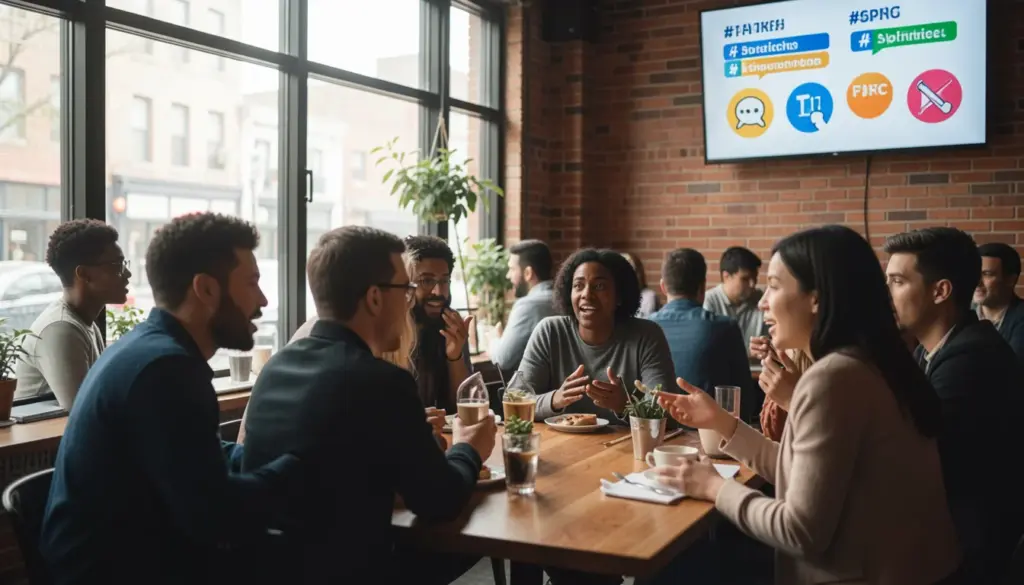
Scroll through any social platform for five minutes, and you’ll encounter a glimpse of the world’s cultural conversation — a trending sound from one continent, a political debate from another, a fashion aesthetic that jumped from a niche online community to mainstream retail in weeks. Social media has become one of the most consequential forces shaping how people communicate, form identities, and understand the world around them.
The relationship between social media and culture isn’t simply about entertainment or distraction. It runs deeper, touching the way societies form opinions, how norms spread and shift, and how communities define themselves. This article examines the mechanisms behind that influence — how platforms like TikTok, Instagram, YouTube, and X (formerly Twitter) don’t just reflect culture but actively participate in constructing it.
The Rise of Social Media in Modern Culture
For most of human history, cultural transmission was slow. Stories, customs, and ideas moved through communities by word of mouth, then through print, then through broadcast media. Each new medium accelerated the process, but none collapsed it as dramatically as social media.
The shift began in the early 2000s — though the roots of social media stretch further back than most recognize, from early bulletin board systems and Usenet groups to the first social networking sites of the late 1990s — as platforms built around user-generated content replaced passive media consumption with active participation. Instead of receiving culture from a centralized source — a television network, a newspaper editorial board — people became producers themselves. Anyone with an internet connection could publish, comment, share, and remix. This transition from broadcast media to participatory media fundamentally changed the logic of how culture works.
What made this transition particularly significant was scale. Facebook reaching two billion users, YouTube hosting hundreds of hours of video uploaded every minute, TikTok’s algorithm distributing content globally without regard for geography — these aren’t just large numbers. They represent the construction of a shared digital public sphere that overlaps with, and sometimes overrides, local cultural contexts.
How Social Media Shapes Cultural Trends
Viral Content and Trend Cycles
Understanding how trends form on social media requires understanding a concept that didn’t exist in traditional media: algorithmic amplification — the process by which platforms automatically distribute content to increasingly large audiences based on engagement signals. On platforms like TikTok and Instagram, content isn’t distributed based on the size of an audience a creator has built. It’s distributed based on how long people watch, whether they share, and whether they comment. This means a piece of content from an unknown creator can reach millions within hours if it generates the right responses.
The result is a trend cycle that moves at a pace traditional culture has never experienced. A dance format, a phrase, a visual aesthetic, or a comedic structure can saturate the digital landscape within days and be treated as culturally dated within weeks. Meme culture illustrates this particularly well — the language of internet memes has become a genuine communication shorthand, with references spreading across platforms and eventually entering everyday speech and advertising.
This rapid cycling creates something interesting: a culture that is simultaneously global and fragmented. A viral challenge might reach 50 countries simultaneously, yet niche online communities — whether built around music genres, hobbies, political ideologies, or aesthetic sensibilities — develop their own rich internal cultures that outsiders barely notice.
Role of Influencers in Trend Formation
Influencer culture is one of social media’s most visible contributions to modern cultural life. Influencers function as cultural intermediaries — figures whose taste, behavior, and recommendations carry weight with specific audiences. A beauty influencer’s product choice can shift consumer purchasing decisions across an entire industry. A fitness creator’s approach to training can change how millions of people think about their bodies. A creator who popularizes a particular fashion aesthetic can bring niche styles into mainstream visibility.
What distinguishes influencers from traditional celebrities is perceived proximity. Their content often feels personal, unfiltered, and relatable — even when it’s carefully constructed. This sense of authenticity makes their cultural influence more immediate than that of distant public figures. Audiences feel like they’re participating in a relationship, which makes the cultural transmission more effective.
The Impact of Social Media on Communication and Social Interaction
Social media hasn’t just changed what people communicate about — it has changed how they communicate. Digital communication norms that began online have migrated into everyday language and interaction in ways that are now difficult to separate from broader linguistic culture.
Acronyms, emoji conventions, and meme references that originated on platforms like Twitter or Reddit now appear in workplace communications, journalism, and political speech. The compression of language into short, high-impact formats has influenced how people write and think. The expectation of immediate response, cultivated by messaging platforms, has altered interpersonal dynamics and attention patterns.
There’s also the phenomenon of networked communication — the idea that social media collapses the distinction between public and private conversation. A comment left in a relatively small online community can be amplified and redistributed to a completely different audience with a different context. This has shaped a particular kind of self-awareness in digital communication, where people are conscious (sometimes hyperconsciously so) that their words exist in a persistent, searchable, shareable form.
Social Media and the Formation of Digital Identity
Perhaps one of the subtler but more profound effects of social media is its role in identity formation. The platforms where people spend significant time are not neutral spaces — they actively shape how individuals understand themselves and present to others.
Curated self-presentation is now a standard part of how people, particularly younger generations, construct identity. An Instagram profile, a TikTok account, or even a Twitter presence represents a crafted version of the self — selections of images, interests, opinions, and affiliations chosen to communicate something about who a person is or wants to be. This is not fundamentally different from how identity has always worked, but the scale, permanence, and feedback mechanisms of social media add new dimensions to the process.
The feedback dimension is particularly important. Metrics like likes, shares, and follower counts provide immediate quantifiable responses to self-expression. Research suggests this can influence self-perception, with people adjusting their behavior, appearance, and expressed opinions based on what generates engagement. The result is a form of identity construction that is unusually sensitive to social feedback and that operates in a more public arena than most previous forms of self-expression.
Online communities also provide identity anchors. A person might identify strongly with a particular fandom, a political community, a music subculture, or an aesthetic group they encountered entirely through social platforms. These affiliations are culturally real — they shape values, preferences, and social bonds — even when they originate in digital spaces.
Social Media’s Role in Politics and Public Opinion
The relationship between social media and political culture is one of the most consequential and contested aspects of the platforms’ influence. At its best, social media has expanded political participation, given voice to marginalized groups, and created mechanisms for rapid public accountability. At its most troubling, it has contributed to polarization, misinformation, and the fragmentation of shared public discourse.
Digital activism represents one of the more historically significant expressions of social media’s political influence. Hashtag movements — #BlackLivesMatter, #MeToo, and others — began as online phenomena and translated into real-world organizing, policy debates, and cultural reckonings. The speed with which these movements could mobilize public attention was unprecedented, demonstrating that social platforms could function as genuine tools for social change.
At the same time, the way algorithms distribute political content tends to favor engagement over accuracy. Content that provokes strong emotional reactions — outrage, fear, tribal loyalty — generates more clicks and shares, which means platforms often amplify polarizing perspectives. This dynamic doesn’t cause political division on its own, but it does create conditions in which extreme positions receive disproportionate visibility compared to moderate ones.
The broader effect on public opinion formation is significant. When people consume information primarily through social feeds curated by algorithms and social networks, the information environment they inhabit can diverge substantially from that of their neighbors. This shapes not just what people believe, but how they reason about evidence and evaluate credibility — with real consequences for democratic culture.
Global Cultural Exchange Through Social Platforms
Social media has accelerated cultural globalization in ways that would have been difficult to predict two decades ago. A music genre developed in one country can gain a following across continents without any traditional distribution infrastructure. A comedic format native to one culture can be adopted, remixed, and adapted by communities with entirely different cultural contexts.
K-pop’s global expansion is perhaps the clearest example of this dynamic. What was once a distinctly South Korean cultural product became, through YouTube and fan communities on platforms like Twitter and TikTok, a truly international phenomenon with devoted audiences on every continent. The cultural exchange runs in multiple directions — K-pop fandoms in Western countries have adopted certain Korean linguistic terms and cultural references, while Korean creators incorporate global musical and visual influences.
This cross-border cultural diffusion has genuinely expanded exposure to diverse perspectives, artistic traditions, and social ideas. It has created communities of shared interest that transcend national boundaries. But it has also raised legitimate questions about cultural homogenization — whether algorithmic globalization tends to flatten local distinctiveness in favor of universally shareable content formats.
Positive and Negative Cultural Effects of Social Media
Any honest analysis of social media’s cultural impact requires holding both its contributions and its costs in view simultaneously.
On the positive side, social media has democratized cultural production and distribution in meaningful ways. Creators from backgrounds that were historically excluded from mainstream media now have direct access to large audiences. Minority communities have platforms to share their experiences and culture on their own terms. Social connectivity across geography has enabled communities of interest to form and sustain themselves in ways that simply weren’t possible before.
Social media has also been a vehicle for rapid social progress in certain areas, by making previously invisible experiences visible. Personal testimonies shared widely on platforms have shifted public understanding of issues ranging from mental health to disability to racial injustice, contributing to cultural shifts that traditional media either ignored or addressed inadequately.
The negative effects are equally real and deserve careful attention. The spread of misinformation through social platforms has distorted public understanding of public health, climate change, elections, and countless other issues. Cancel culture — the rapid, often asymmetric mobilization of online communities to punish perceived transgressions — has created a cultural climate of caution and self-censorship that affects artistic expression and public discourse. Platform governance and content moderation policies have struggled to keep pace with these dynamics, raising ongoing questions about how platforms balance free expression against community safety. The comparison dynamics built into platforms designed around visual performance have contributed to documented increases in anxiety and body image issues, particularly among adolescents.
The impact on youth culture deserves particular attention. Young people who grew up with social media as an ambient feature of their social lives have had their understanding of social norms, peer relationships, and self-worth shaped by these platforms from early ages. That influence — on everything from communication patterns to political attitudes to mental health outcomes — is still being studied, but early evidence suggests it is substantial.
FAQs
How does social media influence modern culture?
Social media shapes culture through several mechanisms: algorithmic amplification of viral content, influencer-driven trend formation, global distribution of ideas and aesthetics, and the platforms’ role in public discourse. The combination of scale, speed, and participatory structure makes it one of the most powerful cultural forces currently operating.
What are the positive effects of social media on culture?
Social media has democratized cultural production, given underrepresented communities platforms for authentic expression, accelerated awareness of social justice issues, and enabled global communities built around shared interests. It has also made cultural exchange more accessible than at any previous point in history.
What are the negative cultural impacts of social media?
Key concerns include the spread of misinformation, increased political polarization through algorithmic amplification of extreme content, negative effects on self-perception due to comparison dynamics, and the erosion of nuanced public discourse in favor of emotional reactions.
How does social media affect youth culture specifically?
Young people’s social development, identity formation, communication styles, and understanding of social norms are increasingly shaped by social platforms. Research has identified connections between heavy social media use and anxiety, particularly around social comparison and the performance of identity online.
Can social media drive real cultural change?
Yes. Movements that began as online conversations — around racial justice, gender equality, political accountability, and other issues — have translated into genuine social and policy changes. The speed with which social platforms can mobilize attention and organize people represents a genuinely new mechanism for cultural transformation.
Why do trends spread so quickly on social media?
Algorithmic distribution prioritizes engagement over audience size, meaning compelling content can reach massive audiences rapidly regardless of who created it. Combined with the low friction of sharing and the social incentives to participate in trending conversations, this creates conditions where ideas and formats propagate far faster than in traditional media environments.