

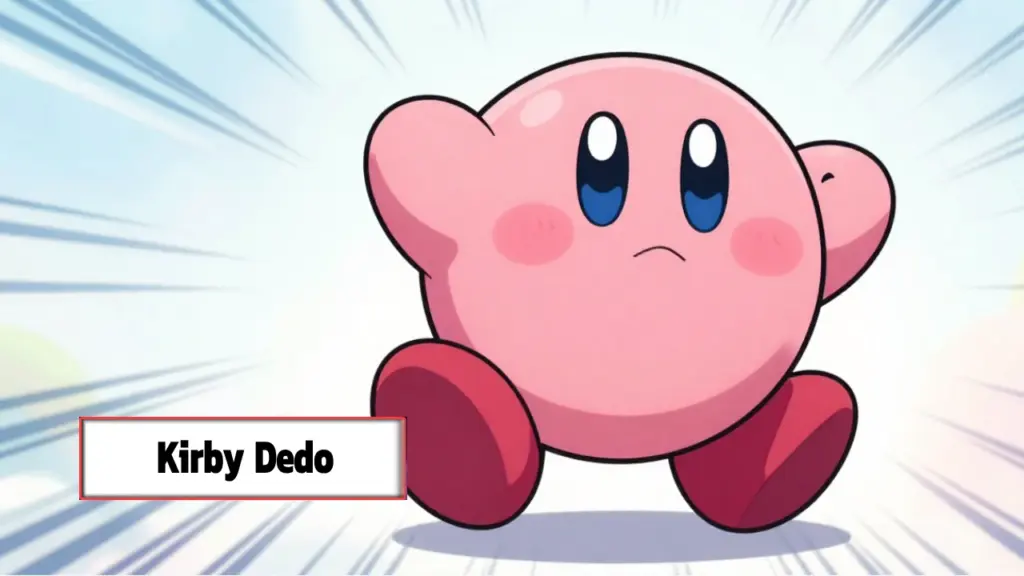
You’re scrolling through TikTok when something stops you cold—Nintendo’s adorable pink mascot, but with realistic human fingers. Welcome to Kirby Dedo, the internet phenomenon combining gaming nostalgia with linguistic absurdity. The phrase merges “Kirby” (Nintendo’s beloved character) with “dedo” (Spanish for “finger”), creating one of 2024’s strangest yet most enduring memes.
Kirby Dedo is a viral internet meme that originated in Spanish-speaking communities around late 2023 to early 2024. It features fan-created images and videos of Kirby—typically a fingerless character—depicted with exaggerated or realistic human fingers. The phrase combines Nintendo’s iconic mascot with the Spanish word for “finger,” creating humorous cognitive dissonance that spread across TikTok, Twitter, and Reddit, accumulating over 20 million views and spawning collectible merchandise.
What Is Kirby Dedo?
Kirby Dedo exists in two distinct forms online. First, it’s a visual meme showing Kirby with human fingers—drawings that range from slightly unsettling to hilariously absurd. Second, some confuse it with King Dedede, Kirby’s penguin-like rival, whose name sounds similar to “dedo.” But the meme specifically refers to Kirby with fingers, not the established Nintendo character.
The humor works because of contrast. Kirby’s design has remained essentially unchanged since Masahiro Sakurai created him in 1992 for Kirby’s Dream Land. He’s round, pink, and notably fingerless—his stubby arms don’t have defined hands. Adding realistic fingers breaks everything that makes Kirby cute, creating comedy through the visual violation of expectations.
The Origins: How a Linguistic Joke Became Global
The meme emerged from Spanish-speaking online communities around late 2023. Someone noticed how “Kirby” paired with “dedo” sounded catchy when spoken aloud. The phrase started as linguistic wordplay—just people enjoying how two unrelated words fit together.
But it evolved quickly. Fans began creating visual content to match the phrase. Early images appeared on Reddit and Twitter, showing Kirby with oversized fingers or pointing in exaggerated ways. The concept hit critical mass in 2022 when TikTok creators started producing short animations and filters. The hashtag #KirbyDedo reached 20 million views, demonstrating how short-form video accelerated the spread.
By 2024, the meme had crossed linguistic boundaries entirely. English-speaking communities adopted it despite not speaking Spanish. The phrase became globally recognized among gaming and meme enthusiasts, with countless variations appearing across platforms.
Why Kirby Dedo Works: The Psychology Behind the Virality
Several factors converged to make this meme unstoppable. Cognitive dissonance creates the primary appeal—your brain expects Kirby to look one way, and fingers violate that expectation. Psychologists note that humans are drawn to things that challenge what we know, especially when the challenge is harmless and amusing.
The cross-cultural element amplified the spread. Japanese character meets Spanish vocabulary creates an inherently international joke. It works whether you speak one language, both, or neither—the visual punchline translates universally.
Simplicity drove participation. Anyone with basic drawing skills could create their own version. This accessibility meant the meme continuously regenerated with fresh content. Bad drawings often worked better than polished ones, lowering the barrier for creative contribution.
Nostalgia added fuel. Kirby has three decades of cultural presence. Adults who grew up playing his games now reinterpret him through modern internet humor. The mix of childhood innocence with absurdist comedy creates emotional resonance that pure novelty can’t achieve.
How Kirby Dedo Spread Across Platforms
Each social platform contributed differently to the phenomenon’s growth. Twitter served as the initial launchpad, where the first viral posts in 2021 accumulated over 300,000 likes. Users shared reaction images—Kirby pointing with his new fingers became shorthand for “look at this” or “pay attention.”
Reddit communities dedicated to memes and Nintendo franchises amplified the content. Subreddits posted edited images, sparking artistic challenges where creators tried increasingly creative interpretations. Some made Kirby’s fingers disturbing, others made them comedic.
TikTok transformed the meme from static images to dynamic content. Creators produced skits where Kirby interacted with the world using his fingers. Music remixes accompanied finger-focused animations. The platform’s algorithm favored this content because it generated high engagement—people watched, laughed, and shared.
Instagram and Pinterest became hubs for fan art. Artists created detailed illustrations, minimalist designs, and even horror-inspired versions. The visual nature of these platforms suited the meme perfectly, allowing it to reach audiences who might not frequent gaming spaces.
The Merchandise Revolution
What started as digital jokes became physical products. Fan creators on Etsy, Redbubble, and independent shops began selling Kirby Dedo merchandise. Finger puppets emerged as the breakout product—small plush Kirbys designed to slip onto your finger, literally becoming a “dedo.”
These puppets sold for $10-$150, depending on craftsmanship. Limited edition versions attracted collectors. Stickers, patches, and prints followed. T-shirts featured captions like “Kirby Dedo Style” or simply showed the character pointing.
Some creators sold over 1,000 units within months of launching. The merchandise proved the meme had staying power beyond typical viral content’s short lifespan. When people spend money on a joke, it stops being just a joke—it becomes a cultural artifact.
Late 2023 saw controversial Kirby Dedo NFTs emerge on Ethereum. While divisive, they demonstrated how thoroughly the meme had penetrated internet culture. Major outlets, including Vice and Kotaku, published analyses in 2024, giving the phenomenon mainstream recognition.
Kirby Dedo vs. King Dedede Confusion
One common misconception needs clarification. King Dedede is an official Nintendo character—a penguin-like creature who serves as Kirby’s rival. He appeared in the original Kirby’s Dream Land and has been the series’ mainstay for over 30 years.
The name “Dedede” phonetically resembles “dedo,” which created confusion. Some people assumed “Kirby Dedo” referred to the relationship between Kirby and King Dedede. It doesn’t. The meme specifically involves Kirby having fingers, completely separate from the established Nintendo character.
This confusion actually helped the meme spread. People searching for information about King Dedede encountered Kirby Dedo content, exposing them to the joke and expanding the audience.
The Cultural Significance: What This Meme Reveals
Beyond the laughs, Kirby Dedo demonstrates how modern fandoms operate. Fans don’t passively consume content anymore—they remix, reinterpret, and transform it. This participatory culture creates communities around shared creative acts.
The meme shows how internet culture bridges languages and geographical boundaries. A Spanish word paired with a Japanese character became globally recognized through English-language platforms. This multilingual mixing reflects our increasingly connected digital spaces.
It also highlights how simple ideas achieve virality. You don’t need complex narratives or high production value. A character with fingers—that’s the entire concept, yet it generated millions of views and sustained engagement for years.
What’s Next for Kirby Dedo
Unlike many viral trends that disappear after months, Kirby Dedo maintained relevance into 2025. The meme continues evolving through creative reinterpretation. New variations appear regularly, keeping the concept fresh.
Nintendo hasn’t officially acknowledged the phenomenon. Historically, they’ve had mixed responses to fan creations—sometimes embracing them, sometimes issuing takedowns. So far, Kirby Dedo exists in the legally gray area of derivative parody. Many argue it falls under fair use, though as popularity grows, official recognition (positive or negative) could arrive.
The meme’s future likely involves continued presence in niche communities rather than mainstream dominance. It’ll remain a reference point for internet culture enthusiasts, gaming communities, and meme historians documenting the 2020s digital landscape.
The Bottom Line
Kirby Dedo represents internet creativity at its purest. Take one beloved character, add one unexpected element, and watch communities transform it into something entirely new. The meme works because it’s simultaneously cute and disturbing, simple and layered, local and global.
Whether you’re laughing at a Kirby finger puppet, sharing reaction images, or creating your own interpretation, you’re participating in collaborative digital culture. And that’s what makes these phenomena valuable—not the joke itself, but the connections it creates and the creativity it inspires.
The next time you see Kirby with disturbingly realistic fingers on your feed, remember: you’re witnessing how the internet transforms nostalgia into new forms of shared expression, one finger at a time.