

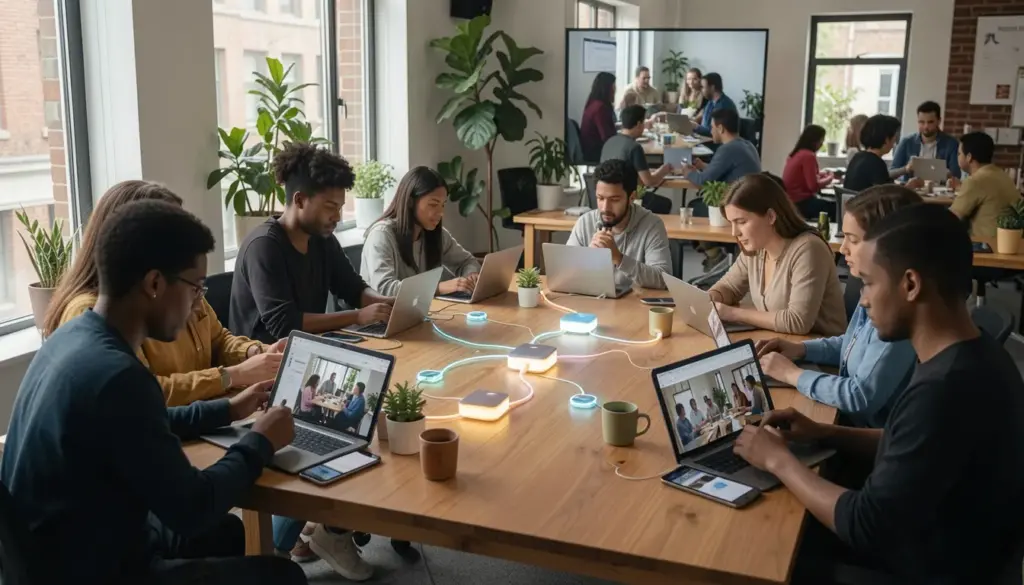
People have always gathered around shared interests — whether in neighborhood clubs, professional associations, or hobby groups. The internet didn’t change that instinct; it simply gave it a much wider stage. Today, millions of people participate in social media communities every day, exchanging ideas, asking questions, offering support, and building relationships across geographic boundaries.
These communities exist on almost every major platform, from Facebook Groups and Reddit threads to Discord servers and LinkedIn Groups. They vary enormously in size, purpose, and structure — but they share a common foundation: people connecting around something they care about. Understanding how these communities work, and what makes them valuable, gives both users and creators a clearer picture of one of the most significant forces shaping digital life.
What Are Social Media Communities?
A social media community is a group of people who gather on a digital platform around a shared interest, goal, identity, or purpose. Members interact through posts, comments, reactions, and direct conversations. Unlike a passive audience that simply consumes content, a community is defined by active member participation — people are there to contribute, not just observe.
What separates a community from a general social media feed is the sense of shared context. Members understand the norms, recognize recurring contributors, and feel connected to something beyond individual posts. This sense of belonging is what keeps people coming back, often far more reliably than algorithmic content recommendations.
Core characteristics of social media communities include:
- A defined focus or theme (a profession, hobby, cause, or lifestyle)
- Ongoing, back-and-forth interaction between members
- Shared rules or norms that shape discussion
- A degree of identity — members consider themselves part of the group
Types of Social Media Communities
Not all online communities are structured the same way. Understanding the differences helps clarify what each type offers and why people choose one over another.
Groups
Groups are the most familiar community format on major social platforms. Facebook Groups and LinkedIn Groups are prominent examples. Members join by request or invitation and participate through posts, comments, and reactions within a contained space. Groups can be public, private, or hidden, and they tend to organize around broad topics — parenting, marketing, fitness, local neighborhoods, and so on.
The group format works well for ongoing conversation and peer-to-peer engagement. Members can ask questions, share experiences, and respond to others’ posts in a way that feels more personal than a public broadcast.
Forums
Forums take a slightly different shape. Rather than a feed of member posts, forums organize discussions into threads — individual topics that members can read, respond to, and vote on. Reddit is the defining example of this format, with thousands of subreddits covering nearly every conceivable subject.
The forum structure encourages depth. A thread on a niche topic can accumulate hundreds of responses, building into a detailed resource over time. Unlike group feeds that move quickly and push older content out of view, forum threads remain discoverable long after the original post — making them valuable as searchable knowledge bases.
Niche and Interest-Based Communities
Niche communities gather around highly specific interests — a particular video game, a regional food culture, a rare medical condition, a specific programming language. These can live within larger platforms (as subreddits or Facebook Groups) or on standalone platforms like Discord, where servers are purpose-built around specific topics.
Discord, in particular, has become a home for tightly focused communities — gaming clans, developer groups, creative collectives, and fan communities. The platform supports text channels, voice chat, and structured permission levels, making it well-suited for communities that want both casual conversation and organized discussion spaces.
Twitter (X) Communities represent a newer variation — spaces where users with shared interests can post and interact within a semi-closed environment separate from the main public feed.
How Social Media Communities Work
The mechanics of a social media community are worth understanding because they explain a lot about why some communities thrive, and others fade.
At the most basic level, communities function through engagement loops: a member posts or asks something, others respond, which prompts further conversation. Each interaction creates a reason for members to return. Over time, these loops build a body of shared content and a network of familiar contributors.
Content sharing is a central driver. Members bring in articles, videos, questions, and opinions. Others react, comment, or share further. This user-generated content becomes the substance of the community — it’s what gives the space its character and value.
Algorithms also play a significant role on most platforms. Platforms like Facebook and LinkedIn use engagement signals to determine which posts surface prominently within a group. Posts that generate quick replies or reactions get more visibility, which shapes what the community collectively sees and discusses. This creates a feedback loop where popular content attracts more attention, while lower-engagement posts fade.
Moderation completes the picture. Most active communities have rules — explicit or informal — about what kinds of posts are welcome, how members should treat each other, and what’s considered off-topic. Without some form of governance, discussions tend to drift or deteriorate.
The Role of Communities in Social Platforms
Platforms prioritize communities for a clear reason: they generate sustained engagement. A user who belongs to several active groups or forums has a reason to return daily. That loyalty benefits the platform through longer session times and more opportunities for content interaction.
Communities also strengthen what researchers call network effects. As more people join and contribute, the community becomes more valuable to each member. A subreddit with a hundred active contributors offers more than one with ten. This self-reinforcing quality is why platforms invest in features that support community building — recommendation systems, group discovery tools, and notification settings.
For platforms, communities represent one of the most stable forms of audience connection. Unlike individual viral posts that spike and disappear, communities create ongoing relationships between users and the platform itself.
Benefits of Social Media Communities
The appeal of online communities runs in multiple directions — users benefit, creators benefit, and so do brands and organizations.
For Users
For individual members, communities offer access to knowledge, support, and connection that would otherwise be hard to find. Someone managing an uncommon health condition can find others in the same situation. A beginner photographer can get feedback from experienced practitioners. A job seeker can tap into a professional network in their field.
Beyond practical value, communities fulfill a social function. They provide a sense of belonging — particularly meaningful for people whose interests or circumstances are underrepresented in their immediate offline environment. The ability to find peers who share the same passion or face the same challenges is one of the most consistently cited reasons people join and stay in online groups.
For Creators and Brands
Content creators who build communities around their work develop something more durable than a simple follower count — they build audience loyalty and retention. A community of engaged readers or viewers is more likely to support new projects, offer feedback, spread content organically, and stick around through quiet periods.
For brands, community offers a direct channel to the people most invested in their products or services. Brand communities — whether on Facebook, Discord, or a dedicated forum — function as feedback loops, customer support spaces, and places where loyal users can advocate for the brand to others. The trust built inside these communities carries significant weight.
Community Management and Moderation
A community without structure tends not to last. Moderation is what keeps a community functional, welcoming, and on-topic.
Moderators — whether volunteers, platform-appointed administrators, or paid staff — set and enforce the rules of the space. They remove spam, address violations, resolve conflicts, and often set the tone for how discussions should feel. In large communities, moderation is a substantial ongoing responsibility. In smaller ones, it might be handled informally by a single founder.
Effective moderation balances two things: maintaining clear standards and avoiding over-control. Communities that are too loosely managed become chaotic and unwelcoming. Over-policed communities can feel sterile, discouraging the authentic conversation that makes them valuable.
Clear community guidelines are essential. Members should know what’s expected before they participate — what topics are welcome, what conduct isn’t tolerated, and how violations are handled. Transparency in rule enforcement builds trust. When members see that moderation is consistent and fair, they’re more likely to invest in the community.
Successful community management also includes actively encouraging participation. Moderators or community leaders who welcome new members, surface great contributions, and initiate discussion create an environment where people feel their presence is valued.
Challenges in Online Communities
Building and sustaining a healthy online community is not without difficulty. Several recurring challenges affect communities of all sizes.
Spam and low-quality content are persistent problems. As communities grow, they attract promotional posts, irrelevant links, and shallow contributions that dilute the quality of discussion. Moderation tools and clear posting guidelines help, but staying ahead of spam requires ongoing attention.
Toxic behavior and conflict can erode a community quickly. Harassment, personal attacks, and hostile debates drive away constructive members. This is especially common when communities grow rapidly, and the shared norms that held smaller groups together haven’t scaled. Proactive moderation and a strong culture of respectful interaction are the best defenses.
Engagement decline is another real challenge. Many communities start with energy and enthusiasm, then gradually go quiet as founding members move on and new members don’t feel enough pull to contribute. Sustaining engagement over time requires consistent effort — new discussions, fresh content, and regular reminders to members that the space is active.
Misinformation is a particularly serious challenge in communities organized around health, politics, or science. False information can spread quickly within trusted peer networks, precisely because members are more likely to believe content shared by fellow community members than by outside sources.
The Future of Social Media Communities
Several clear directions are shaping how online communities will develop.
Niche communities are growing in importance. As major social platforms have expanded, the “everything for everyone” model has become noisier and less satisfying for many users. Smaller, tightly focused communities — where discussions are relevant, and members feel genuinely known — are increasingly where meaningful interaction happens.
Creator-led communities are becoming a significant model. Rather than building audiences on platforms they don’t control, many creators are moving toward owned or semi-owned community spaces — private Discord servers, membership forums, or subscription-based communities where they can interact directly with their most engaged followers. This reduces dependence on platform algorithms and creates a more direct relationship with the audience.
Private and membership-based communities are gaining ground. Platforms like Patreon, Mighty Networks, and similar services allow creators and organizations to build gated communities — spaces where access requires a subscription or invitation. These communities tend to be more engaged because members have actively chosen to join and often paid for the privilege.
The underlying desire driving all of this — to find others who share your interests and to belong to something meaningful — isn’t going anywhere. What’s changing is where and how people satisfy that desire, as both users and platforms get better at creating spaces that serve it well.
FAQs
What is the difference between a social media group and a forum?
A social media group (like a Facebook Group) typically organizes around a feed of member posts, with interaction through comments and reactions. A forum (like a subreddit on Reddit) organizes content into threads — individual discussion topics that remain searchable and can build into detailed resources over time. Forums tend to support more structured, in-depth discussion; groups are often more conversational and fast-moving.
How do algorithms affect what happens inside communities?
On most social platforms, algorithms determine which posts within a community get the most visibility. Posts that receive early engagement — reactions, comments, shares — tend to surface more prominently. This shapes community discussion by amplifying popular content and making it harder for lower-engagement posts to gain attention, even if they’re substantive.
Why do some online communities grow while others fade?
Active communities tend to have a clear focus, consistent moderation, and regular member participation. Communities decline when founding members disengage, new members don’t feel motivated to contribute, or the content quality drops. Sustained growth usually requires deliberate effort — welcoming new members, prompting discussion, and maintaining standards.
What platforms are best for building a community?
The right platform depends on the community’s goals and audience. Facebook Groups work well for broad, general-interest communities. Reddit suits topic-focused discussions with a forum structure. Discord is strong for tight-knit, highly engaged groups who want real-time communication. LinkedIn Groups serve professional audiences. Membership platforms like Mighty Networks are worth considering for creator-led, subscription-based communities.
Are online communities safe?
The safety of any online community depends heavily on how it’s moderated. Well-managed communities with clear rules, active moderators, and a culture of respectful interaction tend to be positive environments. Communities without oversight can attract harmful behavior. Before engaging deeply in any community, it’s worth reviewing its rules, observing how discussions are handled, and assessing the general tone of member interaction.