

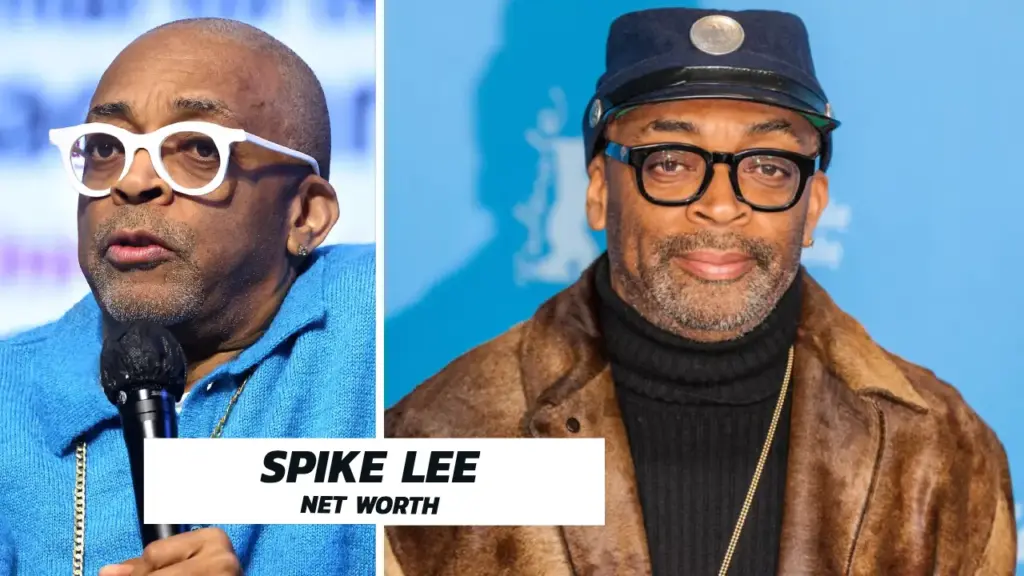
Spike Lee Net Worth: How the Brooklyn Filmmaker Built a $60 Million Fortune
Spike Lee did not inherit wealth, nor did he stumble into Hollywood through luck. He built his fortune the way he builds his films — with precision, intention, and a refusal to compromise. As of 2025, Spike Lee’s net worth is widely estimated at approximately $60 million, with some sources placing the figure between $60 million and $70 million. That number is the result of four decades of directing, producing, writing, brand partnerships, real estate, and a tenured academic career — all stacked on top of one another over time.
This article breaks down every layer of that wealth: where it came from, how it grew, and what makes Spike Lee’s financial story genuinely different from most filmmakers of his generation.
What Is Spike Lee’s Net Worth?
Most major financial sources — including Celebrity Net Worth — consistently place Spike Lee’s net worth at $60 million as of 2025. Some outlets, including Park Magazine NY and Yahoo Entertainment, cite a broader range of $60 million to $70 million, which likely accounts for the appreciated value of his real estate holdings and ongoing residuals from decades of film releases.
What separates Lee from many directors of similar stature is how diversified his income has always been. He has never relied solely on a single studio paycheck. From early in his career, he operated as a writer, director, producer, and entrepreneur simultaneously — a structure that allowed him to retain more financial control over his work and capture a larger share of its profits.
The Foundation: From $175,000 to $7 Million
Spike Lee was born Shelton Jackson Lee on March 20, 1957, in Atlanta, Georgia. His mother, Jacqueline, was a teacher of arts and Black literature. His father, Bill Lee, was a jazz musician and composer. The family relocated to Brooklyn when Spike was a young child, eventually settling in the Fort Greene neighborhood — a community that would shape nearly everything that followed.
Lee attended Morehouse College in Atlanta, where he earned a Bachelor of Arts in mass communications and produced his first student film. He then returned to New York and completed a Master of Fine Arts in film and television at NYU’s Tisch School of the Arts in 1978. His thesis film, Joe’s Bed-Stuy Barbershop: We Cut Heads, became the first student film ever showcased at Lincoln Center’s New Directors/New Films Festival — a distinction that put him on the map before his professional career had even started.
His breakthrough came in 1986 with She’s Gotta Have It, which he shot in just two weeks on a budget of $175,000. The film grossed more than $7 million at the U.S. box office and proved, in concrete financial terms, that independent Black cinema could be commercially viable. That early lesson — that creative control and financial return are not mutually exclusive — became the foundation of everything he built afterward.
40 Acres and a Mule Filmworks: The Business Engine
The single most important financial structure in Spike Lee’s career is his production company, 40 Acres and a Mule Filmworks, which he co-founded with fellow filmmaker Monty Ross in 1983. Every major film in his catalog has passed through this company, giving Lee ongoing ownership stakes, producer credits, and long-term revenue from distribution channels that most hired directors never see.
Since its founding, 40 Acres and a Mule has produced more than 35 films. The company is estimated to generate around $3 million in annual revenue, and that figure does not account for the backend royalties, streaming residuals, and licensing income that accumulate from a catalog spanning four decades. The company’s Fort Greene, Brooklyn office — a three-story building Lee purchased in 1991 for $820,000 — is itself an asset, with comparable buildings on the same block now valued between $2 million and $4 million.
Owning the production infrastructure, rather than simply working within someone else’s, has given Lee a compounding financial advantage that grows with every passing year his films remain in circulation.
Box Office Success and Directorial Earnings
Spike Lee’s films have collectively earned well over $500 million at the worldwide box office in his role as director alone. When all of his career contributions as producer, writer, and actor are included, the total figure crosses $1.8 billion in global receipts, according to industry tracking.
His highest-grossing film remains the 2006 heist thriller Inside Man, starring Denzel Washington and Jodie Foster. The film earned over $186 million worldwide — a commercial hit by any standard, and the clearest demonstration of Lee’s ability to direct mainstream studio productions without abandoning his voice.
Other commercially and critically significant films include:
- Do the Right Thing (1989) — Academy Award nomination for Best Original Screenplay; a cultural watershed that established Lee as a major force in American cinema
- Malcolm X (1992) — Lee directed on a $33 million budget, earning $3 million in salary; a film that has since grown into one of the most important biographical pictures in Hollywood history
- BlacKkKlansman (2018) — Won the Grand Prix at Cannes, was nominated for Best Picture and Best Director at the Oscars, and earned Lee his first competitive Academy Award for Best Adapted Screenplay
- Da 5 Bloods (2020) — Released on Netflix to widespread critical acclaim, part of his ongoing streaming partnership
Each film adds not only to his reputation but to the long tail of revenue that comes from streaming rights, DVD sales, licensing deals, and educational distribution.
Brand Work and Commercial Revenue
One of the most underappreciated contributors to Spike Lee’s net worth is his work in advertising. Beginning in 1988, Lee created and appeared in a series of Nike commercials alongside Michael Jordan, playing his character Mars Blackmon from She’s Gotta Have It. The “It’s gotta be the shoes” campaign became one of the most recognizable advertising franchises in sports history and is widely credited with helping turn Air Jordan sneakers into a cultural phenomenon.
That partnership reportedly earned Lee millions over the years. More importantly, it established him as a commercially credible creative figure — one whose cultural fluency brands were willing to pay for, not just studios.
Beyond Nike, Lee has directed commercials for Converse, Jaguar, Taco Bell, Ben & Jerry’s, and Levi’s through the marketing division of 40 Acres and a Mule. His total earnings from advertising work across his career are estimated at approximately $8 million. These engagements have functioned as a consistent secondary income stream that supplements film revenue during periods between major productions.
Netflix Deal and the Streaming Era
In a move that positioned him well for the streaming age, Spike Lee signed a multi-year deal with Netflix to direct and produce films for the platform. His 2020 film Da 5 Bloods, a Vietnam War story centered on Black veterans returning to the country decades later, was his first major release under that arrangement. It received a strong critical reception and introduced his work to a new generation of global viewers.
The Netflix relationship also extends beyond individual films. Lee has expressed interest in using the platform to surface emerging diverse storytellers, functioning as a producer and mentor to new talent rather than just a director for hire. Streaming deals of this nature typically include upfront fees, production budgets, and backend performance clauses — a structure well-suited to Lee’s preference for retaining creative and financial stake in his projects.
Teaching at NYU: Academic Income and Influence
In 1993, Spike Lee joined the graduate film program at NYU’s Tisch School of the Arts — the same institution that gave him his MFA. He has since become a tenured professor and Artistic Director of the program, a position he has held for over three decades.
The financial contribution of his academic role is modest relative to his film income, but it is not negligible. Art professors at NYU’s Tisch program earn in the range of $109,000 annually, and Lee’s stature likely places him at or above that figure. Beyond the salary, his teaching role provides a platform for speaking engagements, university lectures, and institutional credibility that support his broader public presence.
More significantly, his time at NYU has produced a generation of filmmakers who credit his instruction and mentorship as formative. That kind of influence is difficult to quantify financially, but it reinforces the cultural capital that makes his brand valuable to studios, streaming platforms, and advertisers alike.
Real Estate Portfolio
A substantial portion of Spike Lee’s wealth is held in real estate, and the properties he owns tell their own story about his financial judgment over time.
The Upper East Side Townhouse has been his primary New York residence since 1998. The 9,000-square-foot property is actually two connected three-story buildings with a shared central courtyard, located in one of Manhattan’s most expensive zip codes. Lee purchased it from artist Jasper Johns for $16.62 million. He listed it for sale in 2014, asking $32 million, but ultimately did not sell, and continues to own the property. Zillow’s valuation range for the home has been estimated between $19 million and $90 million, depending on market conditions — the latter representing the upper bound of appreciation in that neighborhood.
The Brooklyn Production Studio at 40 Acres and a Mule’s Fort Greene offices was purchased in 1991 for $820,000. Current comparable buildings on that block sell for $2 million to $4 million.
The Bed-Stuy Brownstone, made famous in his semi-autobiographical film Crooklyn, was sold in March 2023 for $4.1 million.
The Martha’s Vineyard Estate is a two-acre property located near the 18th hole of Farm Neck Golf Club. Lee purchased the land in 1989 for $400,000 and subsequently built a four-bedroom home, which is today estimated to be worth $3 million to $4 million.
Across these holdings, his real estate portfolio is worth tens of millions of dollars — assets that appreciate independently of whatever film he is working on at any given time.
Salary Highlights and Film Income
Spike Lee earned $3 million to direct Malcolm X in 1992, and industry observers generally assume his directorial fees on comparable projects — including 25th Hour, Summer of Sam, Love & Basketball, and Inside Man — were at least as high, with likely additional backend compensation from profit participation.
For films where he functions as writer, director, and producer simultaneously, his effective take from a project is considerably larger than any single salary figure would suggest. A director-for-hire earns a flat fee. Lee, by controlling the production company, also earns a producer’s share of any profits the film generates after its release — a revenue stream that extends indefinitely through the life of the project.
Academy Recognition and Its Financial Weight
In 2015, the Academy of Motion Picture Arts and Sciences awarded Spike Lee an Honorary Oscar for his contributions to cinema — the industry’s highest form of institutional recognition. In 2019, he won his first competitive Oscar, taking Best Adapted Screenplay for BlacKkKlansman, after decades of critically acclaimed work that had been overlooked in that category.
The financial consequence of Oscar recognition is real: films with Academy credentials command higher licensing fees, better streaming terms, and more sustained theatrical distribution. For a filmmaker who owns a production company and retains backend rights, awards recognition translates into ongoing revenue over many years.
Lee was also named the recipient of the Ebert Director Award at the 2023 TIFF Tribute Awards — one of several career honors that continue to reinforce his standing as one of the most significant American directors working today.
Knicks Tickets: A Notable Expense
One well-documented aspect of Spike Lee’s personal spending is his famously devoted attendance at New York Knicks home games. A courtside fixture at Madison Square Garden for nearly three decades, his lifetime spending on Knicks season tickets has been estimated at approximately $10 million. It is a meaningful reminder that even a $60 million fortune has real costs attached — and that Lee’s relationship with New York runs deep enough to sustain it regardless.
What Spike Lee Net Worth Actually Reflects
The $60 million figure attached to Spike Lee’s name is accurate in the narrow financial sense, but it understates what he has actually built. His real assets include decades of film rights held through a production company he still owns, an appreciating real estate portfolio in some of New York’s most sought-after addresses, a global brand that commands commercial fees and speaking engagements, and an academic platform that connects him to every new generation of serious filmmakers.
What distinguishes Lee from many directors who earn more in any given year is the structure of his career. He built something durable — a company, a body of work, and a cultural identity — rather than simply collecting paychecks. That structure compounds over time in ways that a single large salary never can.
At 68 years old, with a forthcoming film, Highest 2 Lowest, already in production, featuring Denzel Washington and Jeffrey Wright, Spike Lee’s financial story is still being written. The films keep coming. The rights keep generating income. And the man who shot his first feature in two weeks on $175,000 has never stopped betting on himself.
FAQs
What is Spike Lee’s net worth in 2025?
Spike Lee’s net worth is estimated at approximately $60 million as of 2025, with some sources placing it between $60 million and $70 million when accounting for real estate and ongoing residuals.
What is Spike Lee’s highest-grossing film?
Inside Man (2006), the heist thriller starring Denzel Washington, is Lee’s highest-grossing film with over $186 million at the worldwide box office.
How does Spike Lee make money?
His income comes from directing, writing, and producing films through 40 Acres and a Mule Filmworks; commercial work for brands including Nike, Levi’s, and Taco Bell; a Netflix multi-year deal; a tenured professorship at NYU’s Tisch School of the Arts; real estate holdings; and ongoing royalties and residuals from his film catalog.
Did Spike Lee win an Oscar?
Yes. He received an Honorary Oscar in 2015 and won his first competitive Academy Award for Best Adapted Screenplay for BlacKkKlansman at the 2019 ceremony.
What is 40 Acres and a Mule Filmworks?
It is Spike Lee’s production company, co-founded in 1983, which has produced more than 35 films and is estimated to generate around $3 million in annual revenue, not including backend royalties and licensing income.