

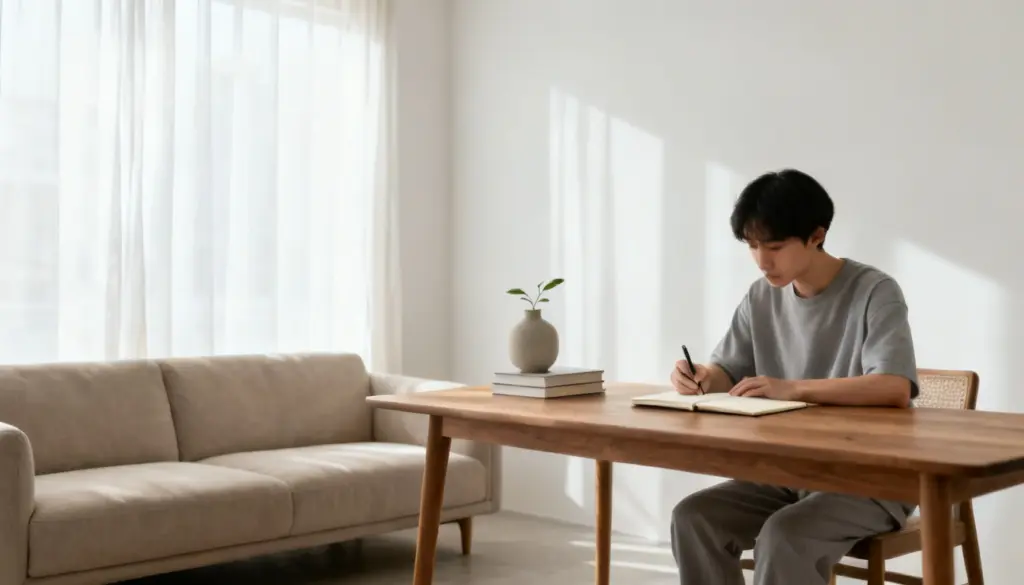
There is a particular kind of exhaustion that has nothing to do with sleep. It comes from too many things, too many choices, too much to manage—a home full of stuff you barely use, a phone full of apps you never open, a schedule packed with obligations that no longer feel meaningful. If any of that sounds familiar, minimalism might be exactly what you are looking for.
But before you picture bare white rooms and living out of a single backpack, stop. That is not what this is about.
A minimalist lifestyle is not about owning as little as possible. It is about owning, doing, and committing to what actually matters to you—and letting go of everything that does not. This guide explains what minimalism really means, why so many people are choosing it, and how you can begin in a realistic, beginner-friendly way without throwing your entire life into a donation bin.
What Is a Minimalist Lifestyle (And What It Is Not)
Minimalism, as a way of living, means making intentional choices about what you allow into your life—your home, your schedule, your attention, and your money. The goal is not deprivation. It is clarity.
The core idea is simple: less but better. Instead of accumulating things, commitments, and habits by default, you start asking whether each one genuinely adds value to your life. If it does, you keep it. If it does not, you let it go.
What minimalism is not: it is not a strict rule set, it is not an aesthetic trend, and it does not require you to live in an empty apartment or give up your possessions. Extreme minimalism—the kind where someone counts their belongings and aims for under 100 items—exists, but it represents one narrow interpretation. Realistic minimalism is far more adaptable. It fits around your actual life, your family, your work, and your values.
The difference between minimalism and simple deprivation is purpose. Deprivation means missing something you want. Minimalism means removing things you do not actually need—and feeling better for it.
Why People Choose Minimalism
People come to minimalism through different doors. Some arrive overwhelmed by clutter. Others are trying to get a handle on their finances. Some are dealing with burnout and looking for a way to protect their time and energy. All of them are looking for more room—physically, mentally, or both.
Mental clarity is one of the most reported benefits. Research in environmental psychology has consistently shown that cluttered spaces increase cortisol levels and reduce the ability to focus. When your surroundings are simpler, your brain has less competing information to process, which makes concentration easier and decisions less exhausting.
Less stress follows naturally. When you own fewer things, you spend less time maintaining, organizing, cleaning, and replacing them. When your schedule has fewer unnecessary commitments, you stop feeling perpetually behind.
Financial benefits are significant and often underestimated. Conscious consumption—buying less and buying better—reduces impulse spending. Over time, this frees up real money that can go toward experiences, savings, or security rather than stuff.
Time freedom is perhaps the most valuable outcome. Minimalism gives you back hours that were previously spent managing excess. That time becomes yours to spend on what genuinely matters to you.
Signs Your Life Needs Simplifying
Most people do not sit down and decide to become minimalists. Instead, they reach a point where something clearly is not working. A few common signs:
You feel drained just looking at certain rooms in your home. There is always something to tidy, sort, or deal with, and it never feels finished. You walk into your closet and somehow still feel like you have nothing to wear. You constantly feel busy but cannot identify what you actually accomplished by the end of the day.
Decision fatigue is another clear signal. When you have too many options—too many clothes, too many apps, too many tasks on your list—even small decisions become exhausting. This is not a personal failing. It is a documented psychological response to cognitive overload.
Overconsumption patterns are worth examining, too. If you regularly buy things to feel better in the short term, or if you find yourself with multiples of items you barely use, it may be a sign that purchasing has become a habit rather than a need.
None of these signs makes you a failure. They simply indicate that your current setup is costing you more than it is giving you.
Core Principles of Minimalist Living
Minimalism does not come with a rulebook, but it does rest on a few consistent principles that guide most people who live this way.
Intentionality is the foundation. Every item you own, every commitment you make, and every habit you maintain should have a clear reason for being there. If you cannot articulate why something has a place in your life, that is worth examining.
Value-based choices mean aligning what you do and own with what you actually care about—not what advertising tells you to want, not what your neighbors have, but what genuinely supports your goals and makes your daily life better. This is what separates minimalism from simply owning less. It is about personal values alignment, not reduction for its own sake.
Quality over quantity shows up in purchases, relationships, and commitments alike. One well-made item that lasts years is more useful—and ultimately less expensive—than five cheap versions of the same thing.
Simplicity as a practice means regularly reviewing what you have allowed into your life and asking whether it still belongs there. Minimalism is not a one-time declutter. It is an ongoing habit of editing.
How to Start a Minimalist Lifestyle (Step-by-Step)
Starting with the right approach matters enormously. Trying to do everything at once is one of the most common beginner mistakes—it leads to overwhelm, then abandonment.
Step 1: Define what you actually value. Before you remove a single item, spend ten minutes writing down what genuinely matters to you. Health, relationships, creative work, financial security—whatever it is. This list becomes your filter for every decision that follows.
Step 2: Start with the easiest wins. Do not begin in your most emotionally loaded spaces. Start with a junk drawer, a bathroom cabinet, or a digital folder. Easy wins build momentum and reduce decision fatigue before you tackle harder areas.
Step 3: Use the “use it or love it” test. For each item, ask two questions: Do you use it regularly? Do you genuinely love it? If the answer to both is no, it probably does not need to stay.
Step 4: Handle emotional attachment honestly. Some things are hard to let go of because they carry memory or meaning, not practical value. It is fine to keep these items—but acknowledge what they are. A box of genuinely meaningful keepsakes is minimalism-compatible. A house full of things you feel guilty about releasing is a different problem.
Step 5: Build simple habits going forward. Decluttering once is not enough. The habit that sustains minimalism is the one-in, one-out rule: when something new comes in, something goes out. This prevents gradual accumulation from reversing your progress.
Decluttering Your Space Without Overwhelm
The room-by-room method is the most practical approach for most beginners. Instead of tackling your entire home, pick one room—or even one area within a room—and finish it before moving on.
Start with lower-stakes areas: bathrooms, kitchens, laundry spaces. These rooms tend to hold fewer emotionally charged items and are easier to make decisions about. Once you have practiced the skill of letting things go, the harder spaces become more manageable.
For each item, create three categories: keep, donate/sell, and discard. Do not create a “maybe” pile. Maybe piles become permanent. If you genuinely cannot decide, set a 30-day box: seal uncertain items and date the box. If you do not open it in a month, you do not need what was in it.
Handling emotional attachment is where most decluttering guides fall short. Acknowledging that some objects carry meaning is not weakness—it is just true. The useful question is not “should I feel attached to this?” but rather: “Is keeping this item actually honoring what it represents, or am I holding onto an object because releasing it feels too final?” Sometimes a photograph of a meaningful item serves the memory just as well as the physical object.
Minimalist Habits for Daily Life
Lifestyle simplification is not just about physical stuff. It includes how you spend your time, how you make decisions, and how you structure your days.
A simplified morning routine removes decisions from the start of your day. Laying out clothes the night before, keeping breakfast simple and consistent, limiting the number of choices you face before noon—these small adjustments reduce decision fatigue and leave more mental energy for things that actually matter.
Mindful consumption means pausing before you purchase. A 48-hour waiting period before buying anything non-essential is one of the simplest habits you can build. Most impulse purchases feel unnecessary by the time the waiting period ends.
Time management in a minimalist context means protecting your schedule the same way you protect your physical space. Saying no to low-value commitments is not antisocial—it is a deliberate choice to have capacity for what genuinely matters.
Digital Minimalism and Mental Clarity
Physical clutter is visible. Digital clutter is everywhere else.
The average person checks their phone over 90 times per day. Most of those checks are habitual, not intentional. Each one is a small interruption that fragments attention and creates a background noise of distraction that rarely gets noticed until it is gone.
Digital minimalism means applying the same principles to your devices, apps, and online habits that you apply to your physical environment. Start by removing apps you have not opened in the past month. Turn off non-essential notifications. Create phone-free windows in your day—during meals, the first hour of morning, or the hour before sleep.
Email and social media deserve particular attention. Unsubscribing from lists that no longer serve you, muting accounts that leave you feeling worse rather than better, and limiting social browsing to intentional windows rather than constant checking—these habits reduce mental noise significantly.
The result is not just less screen time. It is more sustained attention, better sleep, and a clearer sense of what you actually want to spend time on.
A Simple 7-Day Minimalism Starter Plan
This plan is designed for realistic, manageable progress. Each day takes 15–30 minutes.
Day 1 — Clarify your why. Write down three things in your life that feel unnecessarily heavy or complicated. These become your motivation for the week.
Day 2 — Tackle one bathroom cabinet. Remove everything, wipe the shelf, and only return what you use regularly. Discard or donate the rest.
Day 3 — Digital cleanup. Delete unused apps, unsubscribe from five email lists, and organize your home screen to show only the tools you use daily.
Day 4 — Closet edit. Pull out items you have not worn in over a year. Try them on if you are unsure. Create a donation bag and set it by the door.
Day 5 — Simplify one routine. Choose your morning or evening routine and remove one step that you do out of habit rather than for actual benefit.
Day 6 — Kitchen pass. Go through one cabinet or drawer. Remove duplicates and items that have not been used in months.
Day 7 — Reflect and plan. Review the week. What felt lighter? What still feels cluttered? Choose one area to continue working on next week.
By the end of day seven, you will not have a minimalist home. But you will have a clear sense of how the process works, a few spaces that feel noticeably better, and the momentum to keep going.
FAQs
Do you have to get rid of everything to be a minimalist?
No. Minimalism is about keeping what genuinely adds value to your life, not hitting a specific number of possessions. There is no universal rule about how much you should own.
How long does it take to become a minimalist?
There is no fixed timeline. The initial declutter of a typical home can take anywhere from a few weeks to a few months, depending on how much you have accumulated. The lifestyle habits that follow develop gradually over time.
Is minimalism good for mental health?
Research supports the connection between cluttered environments and increased stress and anxiety. Simplifying your physical and digital spaces tends to reduce background cognitive load, which supports clearer thinking and lower stress levels.
Can minimalism save money?
Yes, significantly. Buying less, buying better, and making more intentional purchasing decisions reduces spending on items that get used once or not at all. Many people report meaningful financial improvement within a few months of adopting conscious consumption habits.
What should I not get rid of when decluttering?
Anything you use regularly, anything that carries genuine emotional meaning, and anything you would need to replace immediately if removed. The goal is not to create scarcity—it is to remove what no longer serves you.
What is the difference between minimalism and simple living?
They overlap significantly. Simple living tends to emphasize slowing down and reducing complexity in a broad sense, including food, work, and lifestyle pace. Minimalism is often more focused on intentional ownership and reducing excess. In practice, most people who pursue one end up incorporating elements of both.
How do I handle minimalism when I have kids or a family?
Start with your own spaces—your wardrobe, your desk, your side of the bedroom. Model the habit rather than imposing it. As children get older, involving them in their own space decisions builds healthy habits naturally. A family home does not need to look like a design magazine to benefit from minimalist principles.
What if I declutter and regret removing something?
It happens occasionally, and it is rarely as significant as feared. The items most people regret removing are almost always replaceable at low cost. Most people find that they cannot recall most of what they donated within a month of donating it, which is itself a useful indicator of how much they actually needed it.