

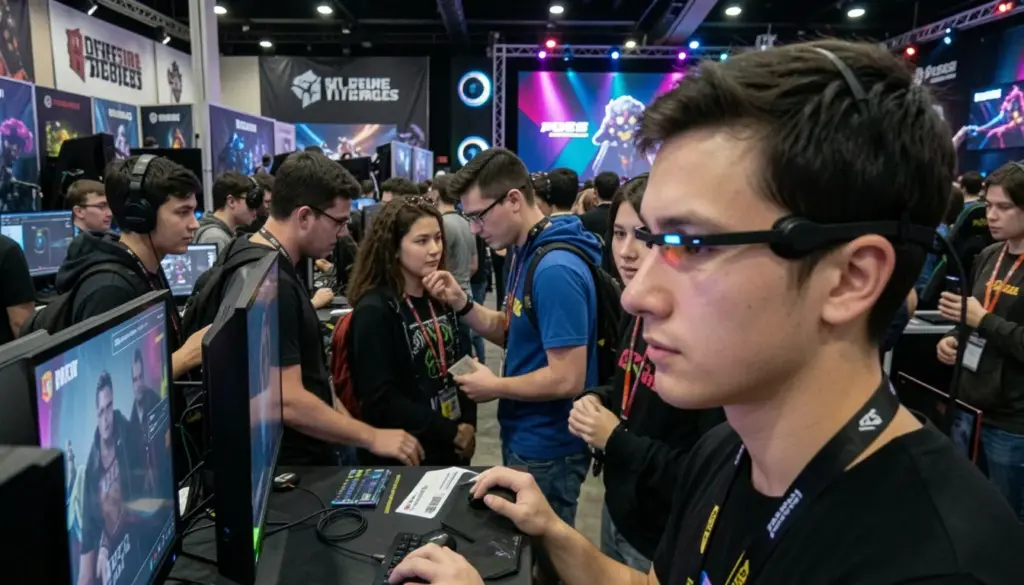
What is EyeXcon, and why is it suddenly appearing across gaming and esports conversations? Behind it is Tommy Jacobs — a creator building not just an event, but a new way for players, developers, and creators to interact with games. Some earn recognition by building something — a community, an event, a concept that other people want to be part of. Tommy Jacobs is one of those names, and EyeXcon is what he built.
If you’ve been seeing this combination of words appearing more frequently in gaming discussions, esports circles, or technology conversations, there’s a reason. EyeXcon has grown from a niche concept into something drawing the attention of indie developers, content creators, competitive players, and gaming enthusiasts who feel that most conventions don’t actually serve them.
This article covers who Tommy Jacobs is, what EyeXcon is in concrete terms, the technology it’s built around, and why it’s become a notable presence in a gaming event space that doesn’t often produce genuinely new ideas.
Who Is Tommy Jacobs?
Tommy Jacobs is a gaming personality known for competitive play, content creation, and founding the EyeXcon gaming brand. But describing him purely as a competitive gamer misses what actually makes him notable.
From a young age, Jacobs was drawn to the underlying mechanics of games — not just playing them, but understanding how they worked and where they could go further. That curiosity didn’t stay private. It pushed him toward modding and controller customization early in his career, where he developed a reputation for hardware experimentation and community-first thinking among competitive players.
What distinguishes him from others in the space is the combination of technical interest and community instinct. His ability to combine strategic play and genuine enthusiasm built an audience that treats his streams as personal conversations — not broadcast content. That level of connection is what makes his involvement in EyeXcon meaningful rather than decorative.
That community-building instinct eventually led him toward something bigger: an event and technology concept designed to give the gaming community something it didn’t already have.
What Is EyeXcon? A Clear Definition
EyeXcon is a gaming brand and convention concept founded by Tommy Jacobs that combines interactive technology — primarily eye-tracking — with community-built gaming events, developer support, and content creation tools.
It is not a single game title. Think of it as three things working together: a gaming convention, a technology platform built around eye-tracking and adaptive gameplay, and a community identity that connects competitive players, indie developers, and content creators under one roof.
EyeXcon is commonly compared to events like PAX, GDC, or TwitchCon, but its structure differs in important ways. Where PAX focuses on consumer entertainment and GDC targets professional developers, EyeXcon is built to serve both simultaneously — while placing technology demonstration and practical career development at the center rather than the margins.
The scope is deliberately broad, which is worth understanding before you expect it to fit neatly into one box.
The Eye-Tracking Technology Behind EyeXcon
The “Eye” in EyeXcon is not incidental. Eye-tracking technology sits at the center of what makes the platform technically distinctive — and it’s what separates EyeXcon’s programming from the standard gaming convention format.
Eye-tracking in gaming works by using infrared sensors or camera-based systems to detect where a player is looking on screen in real time. Hardware companies like Tobii have integrated this into gaming peripherals for years, and game studios have experimented with gaze-based mechanics in titles ranging from first-person shooters to narrative games. EyeXcon builds its technology programming around this category of interaction — showcasing how gaze input can change game design, not just control schemes.
In practice, this means games at EyeXcon can respond to visual focus directly. A character might react when a player stares at them too long. A scene might shift based on where a player’s attention drifts. Plot development can adjust based on what the player actually looks at versus ignores. Compared to traditional controller input, this creates a layer of interaction that feels less mechanical and more behavioral.
Beyond the player experience, eye-tracking data gives developers something concrete: real behavioral evidence of how players explore game environments. Where do eyes go first? What gets ignored? That data helps designers improve level layouts, narrative pacing, and visual hierarchy in ways that traditional playtesting misses.
EyeXcon also showcases hardware designed for this ecosystem — peripherals with customizable LED zones and temperature-adaptive materials intended for long competitive sessions. These aren’t decorative features. They’re functional responses to the physical reality of extended play.
How EyeXcon Differs from PAX, GDC, and TwitchCon
Gaming conventions tend to follow a predictable formula: keynote announcements, product booths, press access, and a tournament bracket running in the background. EyeXcon was built around a different structure from the start.
Where PAX East and PAX West excel at consumer entertainment — big publisher booths, game demos, cosplay culture — they offer limited pathways for indie developers to get serious feedback or industry connections. GDC serves professional developers well, but isn’t designed for competitive players or general audiences. TwitchCon is built around streaming culture, but doesn’t extend much into game development or technology demonstration. EyeXcon sits at the intersection of all three, without fully matching any of them.
When EyeXcon launched, it was built on three concrete priorities: reducing participation barriers so casual fans and professionals could attend the same event without one experience drowning out the other; replacing abstract panel discussions with hands-on workshops that produce actual skills; and giving indie developers tools and visibility that larger conventions structurally can’t offer them.
Programming tracks cover game design, streaming best practices, and career development in esports — not as sideline additions, but as primary programming. The physical layout reflects this, too. An indie demo room can sit next to a high-production keynote or a competitive esports stage, with family-accessible spaces built in so the event doesn’t exclude newer audiences.
EyeXcon also tracks outcomes rather than just attendance. Post-event surveys measure how many indie games move toward launch after developer workshops, how mentorship matches hold up, and whether attendees walk away with relationships that continue past the event itself.
Who EyeXcon Is Built For
Part of what makes EyeXcon’s growth understandable is how deliberately it addresses multiple audiences without compromising what any of them actually need.
- Indie developers get beta testing opportunities, direct feedback from players, and networking access to publishers and platforms that most conventions gate behind industry badges or paid tiers.
- Competitive players get structured tournament formats alongside workshops on performance, strategy, and the professional side of esports — not just a bracket to enter.
- Content creators find tools at EyeXcon that most streaming-focused events don’t offer. Eye-activated camera angle shifts during live gameplay, audience polls tied to where a creator is looking on screen, and integrated viewer interaction tools make the streaming experience more responsive — not just for the creator, but for the audience watching. These aren’t features available in standard broadcast setups.
- Casual and family attendees aren’t treated as overflow. Sensory-friendly sessions, accessible venues, and beginner-oriented programming are built into the schedule deliberately, and voice-assisted controls are being integrated for differently-abled players across EyeXcon’s technology platform.
Tommy Jacobs’ Role in Shaping EyeXcon
Jacobs isn’t just attached to the EyeXcon name — he shapes the direction and feel of what it produces.
His player-first philosophy runs through every layer of the event. User interface design, adaptive sound design, and modular hardware upgrades all reflect a belief that the gaming experience should respond to the player, not the other way around. His creative influence shows up in interactive showcases built around emerging technology rather than established franchises, which keeps the event relevant to where the industry is going rather than where it’s been.
The development approach also reflects his philosophy. Most gaming hardware and event programming comes from top-down decisions made by publishers or event companies. EyeXcon has taken a different approach — inviting gamers into development phases from beta testing through design critique, which has given the brand credibility that purely corporate events rarely achieve. When the audience has been part of building something, they defend it differently.
Why EyeXcon Is Worth Paying Attention To
The gaming event space is crowded. PAX runs multiple editions annually. IndieCade serves the independent developer community. DreamHack has built a global infrastructure for competitive gaming. Events that don’t offer something genuinely different tend to fade after one or two cycles.
EyeXcon has garnered attention because it addresses what most gaming events treat as secondary: practical career outcomes for indie developers, real skill development for competitive players, and a technology framework that goes beyond showcasing products to actually changing how people play and watch games.
Whether you’re a developer looking for a place where your work gets genuine engagement, a competitive player who wants more than a tournament bracket, or a creator searching for tools that match where streaming is going, EyeXcon has positioned itself as a specific answer to each of those needs, not a general one.
The clearest thing you can do from here is to track both sides — the event programming and the technology direction — because the two are developing in tandem. What EyeXcon looks like in three years will depend on the communities it builds right now, and Tommy Jacobs has consistently shown that building community is something he treats seriously.
FAQs
Is EyeXcon only for professional gamers?
No. EyeXcon is designed for casual gamers, hardcore competitors, indie developers, content creators, students, and families. The event includes beginner-friendly sessions, sensory-accessible spaces, and programming tracks for different experience levels — all running simultaneously.
How does EyeXcon compare to PAX or GDC?
PAX focuses on consumer entertainment; GDC targets professional developers. EyeXcon combines elements of both while placing eye-tracking technology and practical outcomes — developer mentorships, career workshops, streaming tools — at the center of programming rather than the periphery. It’s closer in spirit to IndieCade crossed with TwitchCon, but with a technology-demonstration layer that neither event has.
What is eye-tracking technology, and why does it matter for gaming?
Eye-tracking uses cameras or infrared sensors to detect where a player is looking in real time. In gaming, this allows environments, characters, and narrative events to respond to visual attention — creating interactions that go beyond button inputs. Companies like Tobii have been developing this hardware for gaming for years; EyeXcon builds its technology programming around practical applications of this approach.
Where can I follow Tommy Jacobs and EyeXcon updates?
Tommy Jacobs is active across YouTube, Twitch, and social media channels connected to the EyeXcon brand. Searching his name alongside EyeXcon on those platforms surfaces the most current event announcements, content releases, and technology updates.
Does EyeXcon support indie game developers specifically?
Yes. Developer support is one of EyeXcon’s three founding priorities. Indie developers can access beta testing environments, direct player feedback, industry networking, and mentorship connections — resources that larger conventions typically restrict to credentialed industry attendees.