

Starting a weekly meal plan feels overwhelming when you’re facing endless recipes, conflicting nutrition advice, and the pressure to eat perfectly every single day. You want to eat healthier, but the gap between intention and execution feels impossible to bridge.
The truth is, successful meal planning isn’t about perfection. It’s about creating a simple, repeatable system that fits your life and moves you toward your health goals without burning you out.
This guide will walk you through a practical five-step framework for building a weekly meal plan that works. You’ll learn how to choose the right foods, organize your schedule, prep efficiently, and stay consistent without feeling restricted. By the end, you’ll have everything you need to start planning your first week.
What Is a Weekly Meal Plan (and Why It Matters for Your Health)
A weekly meal plan is a structured approach to deciding what you’ll eat throughout the week before you actually need to cook. Instead of making food decisions when you’re hungry and tired, you plan and prepare accordingly.
This simple planning routine creates nutritional consistency. When you decide your meals in advance, you’re more likely to include balanced nutrition across all food groups rather than defaulting to convenience options that might not support your goals.
The benefits extend beyond nutrition. Meal planning saves time by reducing daily decision-making, cuts food waste by helping you buy only what you need, and reduces stress around the constant question of “what’s for dinner?” For people working toward specific health goals—whether that’s weight loss, sustained energy, or simply feeling better—a weekly meal planner provides the structure that makes progress possible.
Step 1 – Define Your Health Goals Clearly
Before choosing a single recipe, you need clarity on what you’re actually working toward. Different health goals require different nutritional approaches, and your meal plan should reflect your specific objectives.
Weight loss typically requires creating a calorie deficit while maintaining adequate protein to preserve muscle mass. Your meal planning for beginners should focus on portion control and choosing nutrient-dense foods that keep you satisfied.
Maintaining current weight means matching your calorie intake to your energy expenditure while ensuring nutritional balance. Your weekly healthy meal planner can focus on variety and sustainability rather than restriction.
Building energy often comes down to stable blood sugar throughout the day. This means planning meals with balanced macronutrients—combining protein, carbohydrates, and fats at each meal to avoid energy crashes.
Muscle gain requires adequate protein at regular intervals and sufficient calories to support training. Your healthy eating plan weekly should include protein-rich foods at each meal and strategic timing around workouts.
Take time to write down your primary goal before moving forward. This clarity will guide every decision you make in the following steps.
Step 2 – Build a Balanced Diet Framework
Understanding basic nutrition principles helps you create meals that actually support your health rather than just filling your stomach.
Understanding Macronutrients
Every meal should include three macronutrients: protein, carbohydrates, and fats. Each plays a specific role in your body.
Protein supports muscle maintenance, keeps you full longer, and helps stabilize blood sugar. Include sources like chicken, fish, eggs, beans, tofu, or Greek yogurt at each meal.
Carbohydrates provide your primary energy source. Focus on complex carbs like whole grains, sweet potatoes, oats, and quinoa rather than refined options. These provide sustained energy and important fiber.
Fats support hormone production, nutrient absorption, and satiety. Include healthy sources like avocados, nuts, seeds, olive oil, and fatty fish.
Portion Control Basics
You don’t need to weigh every gram of food, but understanding general portions helps. A simple approach: fill half your plate with vegetables, one quarter with protein, and one quarter with complex carbohydrates. Add a serving of healthy fat through cooking oil, nuts, or avocado.
This balanced diet plan structure ensures you’re getting variety while naturally managing calorie balance. It’s flexible enough to adapt to different cuisines and preferences while maintaining nutritional quality.
Step 3 – Choose Simple and Healthy Meal Options
The easiest meal plans to maintain are built on simplicity, not complexity. You don’t need thirty different recipes for your first week.
Start with meals you already know how to make and enjoy. If you like scrambled eggs, oatmeal, or smoothies for breakfast, plan those. If grilled chicken with roasted vegetables works for dinner, use that foundation.
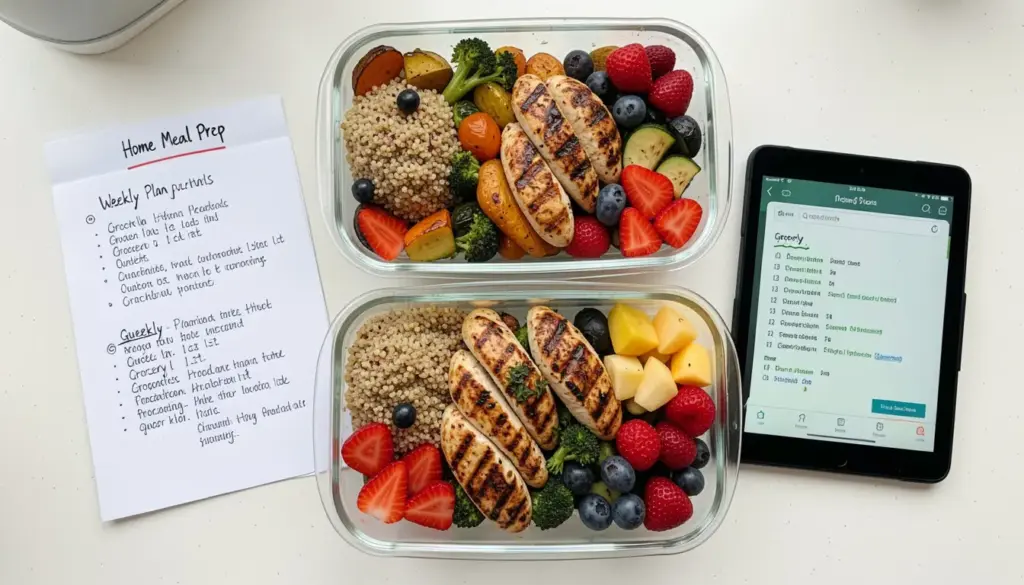
Easy healthy meal prep ideas often involve batch cooking core ingredients that you can mix and match. Cook a large batch of grilled chicken, roast several trays of vegetables, prepare a pot of quinoa or brown rice, and hard-boil eggs. These components become building blocks for multiple meals throughout the week.
Keep your meal prep for the week realistic. If you’ve never cooked elaborate meals before, don’t start with complicated recipes that require twenty ingredients. Choose three to five core recipes you can rotate and vary with different seasonings or side dishes.
Variety comes from changing vegetables, switching protein sources, or trying different herbs and spices—not from completely new meals every single day. This approach reduces cooking time and mental energy while maintaining nutritional quality.
Step 4 – Create Your Weekly Meal Schedule
Now it’s time to map your actual meals to specific days. This is where your simple meal planning tips become concrete actions.
Start by deciding how many meals you need to plan. Most people benefit from planning breakfast, lunch, and dinner, plus one or two snacks. You don’t need to plan every single eating occasion if that feels restrictive—focus on the main meals first.
Look at your weekly schedule. Which days are busiest? Those days need simpler meals or leftovers from batch cooking. Which days have more time? Those can accommodate cooking fresh meals if you enjoy it.
A practical weekly meal plan structure might look like:
- Sunday: prep day—batch cook proteins and grains
- Monday-Wednesday: use fresh prepped ingredients
- Thursday: leftovers or simple assembly meals
- Friday-Saturday: fresh cooking or flexible meals
Build in flexibility. If plans change, you’re not locked into a rigid system. The goal is structure with breathing room, not a prison of your own making.
Consider your meal planning routine as a framework, not a mandate. If you planned salmon but want chicken instead, that’s fine. The planning gives you options ready to go, not obligations you must fulfill perfectly.
Step 5 – Plan Your Grocery List and Prep Time
Your grocery shopping list should flow directly from your meal schedule. Go through each planned meal and write down every ingredient you need, checking what you already have at home first.
Organize your list by store sections: produce, proteins, grains, dairy, and pantry items. This makes shopping faster and reduces the chance of forgetting something.
Smart grocery list planning means buying ingredients that work across multiple meals. If you’re buying fresh basil for one recipe, plan another dish that uses it. Choose vegetables that store well throughout the week rather than those that wilt quickly unless you’re using them immediately.
Batch cooking is your biggest time-saving strategy. Dedicate two to three hours one day (often Sunday) to prepare components for the week. This isn’t about cooking every meal completely—it’s about preparing ingredients that make assembling meals during busy weekdays simple.
Your prep routine might include:
- Washing and chopping vegetables for the week
- Cooking proteins (grilled chicken, baked fish, ground turkey)
- Preparing grains (rice, quinoa, pasta)
- Making one or two sauces or dressings
- Portioning snacks into containers
Invest in quality meal prep containers with compartments. These make it easy to pack balanced meals and see exactly what you have ready.
Sample Weekly Meal Plan for Beginners
Here’s a realistic, easy weekly meal plan showing how these principles work in practice. This sample focuses on simplicity and repetition while maintaining nutritional balance.
Monday
- Breakfast: Greek yogurt with berries, granola, and honey
- Lunch: Grilled chicken salad with mixed greens, cherry tomatoes, cucumbers, and balsamic dressing
- Dinner: Baked salmon with roasted broccoli and quinoa
- Snack: Apple slices with almond butter
Tuesday
- Breakfast: Scrambled eggs with spinach and whole-grain toast
- Lunch: Leftover salmon over mixed greens
- Dinner: Ground turkey stir-fry with bell peppers, snap peas, and brown rice
- Snack: Carrot sticks with hummus
Wednesday
- Breakfast: Overnight oats with banana and walnuts
- Lunch: Turkey and avocado wrap with side salad
- Dinner: Grilled chicken with roasted sweet potato and green beans
- Snack: Greek yogurt
Thursday
- Breakfast: Smoothie with spinach, banana, protein powder, and almond milk
- Lunch: Leftover chicken with quinoa and vegetables
- Dinner: Baked cod with asparagus and wild rice
- Snack: Mixed nuts
Friday
- Breakfast: Scrambled eggs with mushrooms and tomatoes
- Lunch: Tuna salad on whole-grain crackers with cucumber
- Dinner: Turkey meatballs with marinara sauce and zucchini noodles
- Snack: Berries with cottage cheese
Saturday
- Breakfast: Whole-grain pancakes with fresh fruit
- Lunch: Chicken and vegetable soup
- Dinner: Grilled steak with roasted Brussels sprouts and baked potato
- Snack: Dark chocolate and almonds
Sunday
- Breakfast: Veggie omelet with whole-grain toast
- Lunch: Leftover steak salad
- Dinner: Baked chicken thighs with roasted carrots and couscous
- Snack: Protein smoothie
This plan uses repeated ingredients in different combinations, includes variety across the week, and balances all macronutrients while remaining simple enough for beginners.
Meal Planning Tips to Stay Consistent
Creating your first plan is one thing. Sticking with it week after week is another. These simple planning system strategies help you maintain your routine without burnout.
Start small. Don’t try to plan every meal perfectly from day one. Begin with planning just dinners for the week, then add other meals as you get comfortable.
Keep favorite meals in rotation. You don’t need endless variety. Having eight to ten meals you enjoy and rotate regularly makes planning effortless while preventing boredom.
Build flexibility into your structure. Plan for one or two “flex meals” each week where you can eat leftovers, order takeout if needed, or cook spontaneously. This prevents the feeling of being locked into a rigid system.
Prep what actually helps you. Some people benefit from cooking complete meals in advance. Others just need ingredients chopped and ready. Find your personal time-saving strategies rather than following someone else’s system.
Track what works. Keep notes about which meals your family enjoyed, which prep methods saved the most time, and which recipes weren’t worth the effort. This information makes future planning easier.
Adjust based on reality. If you consistently have food left over, you’re planning too much. If you’re always running out mid-week, you need more. Pay attention and adapt.
The goal is building sustainable, healthy eating habits, not achieving perfection. Some weeks will go smoothly. Others won’t. The meal planning routine itself—the habit of sitting down to plan—matters more than flawless execution.
Common Meal Planning Mistakes to Avoid
Learning from typical pitfalls helps you build a realistic meal planning system from the start.
Planning too ambitiously. New meal planners often choose complex recipes requiring obscure ingredients and hours of cooking. Start simple. Choose recipes with seven ingredients or fewer and familiar techniques.
Ignoring your actual schedule. Planning a thirty-minute dinner on your busiest weeknight sets you up for failure. Match meal complexity to available time and energy.
Forgetting about food safety. Some ingredients don’t last all week. Use delicate proteins like fish early in the week. Save frozen options for later. Understand proper storage for different foods.
Not accounting for leftovers. Many recipes serve four to six people. If you’re cooking for one or two, plan to use leftovers strategically rather than letting food go to waste.
Avoiding all flexibility. Life happens. Kids get sick. Work runs late. Friends invite you to dinner. Build breathing room into your plan rather than scheduling every bite.
Comparing your beginner efforts to those of expert meal preppers. Social media shows beautiful meal prep containers and perfectly portioned meals. Your first attempts won’t look like that. Focus on function, not aesthetics.
Tools and Templates to Simplify Meal Planning
The right tools make planning and tracking significantly easier.
Meal planning templates provide structure without requiring you to build a system from scratch. Create a simple weekly template in a spreadsheet or notebook with columns for each day and rows for each meal. Fill it in weekly, adjusting as needed.
Food tracking apps like MyFitnessPal help you understand the nutritional content of your meals if you’re working toward specific goals. You can track macros, calories, and portion sizes while learning what different foods contain.
Digital grocery list apps organize your shopping efficiently. Many allow you to categorize by store section and save frequent purchases.
Recipe organization systems keep your go-to meals accessible. Whether that’s a Pinterest board, a recipe binder, or a notes app on your phone, having quick access to tried-and-true recipes speeds up planning.
Meal prep containers aren’t technically a planning tool, but having the right containers makes execution easier. Choose glass containers with compartments if possible—they last longer and show you exactly what you have prepared.
The best tool is the one you’ll actually use consistently. Don’t overcomplicate with elaborate systems. A simple notebook and pen work perfectly well if that matches your style.
FAQs
How do I create a weekly meal plan if I’ve never done it before?
Start by planning just dinner for one week. Choose three simple recipes you already know how to make and repeat them with slight variations. Once comfortable, add breakfast and lunch planning. Build the habit gradually rather than trying to plan everything perfectly from day one.
What should I include in a balanced meal plan?
Each meal should contain protein, complex carbohydrates, healthy fats, and vegetables or fruits. This combination provides complete nutrition, sustained energy, and satiety. Don’t overthink exact ratios initially—focus on including all components at most meals.
How do I stick to my meal plan when I get busy?
Build flexibility into your plan by including quick assembly meals using prepped ingredients, planning for one or two leftover nights, and keeping backup options like frozen vegetables and canned beans. The plan guides you but doesn’t control you.
Can I meal plan on a budget?
Absolutely. Buy seasonal produce, choose less expensive protein sources like eggs and beans, purchase grains and legumes in bulk, and plan meals that use similar ingredients to reduce waste. Meal planning actually saves money by preventing impulse purchases and food waste.
Do I need to count calories when meal planning?
Not necessarily. Many people successfully manage their health through balanced meal planning and portion awareness without strict calorie counting. However, if you have specific weight goals, tracking calories initially can help you understand appropriate portions.
How do I avoid getting bored with my meal plan?
Rotate eight to ten core meals rather than eating the same thing every week. Vary your vegetables, try different seasonings and spices, alternate protein sources, and allow one or two spontaneous meals weekly. Small variations prevent monotony without requiring constant novelty.
How many meals should I plan per day?
Most people benefit from planning three main meals plus one or two snacks. However, this depends on your eating pattern and goals. Some prefer to plan just the main meals and keep snacks flexible. Choose what reduces stress rather than adding to it.
What’s the easiest way to start meal planning?
Pick one day as your planning day, choose three to five simple recipes, make a grocery list, and shop. Spend a couple of hours prepping basic ingredients. Start there. Don’t worry about perfect systems or complicated schedules in your first week.