

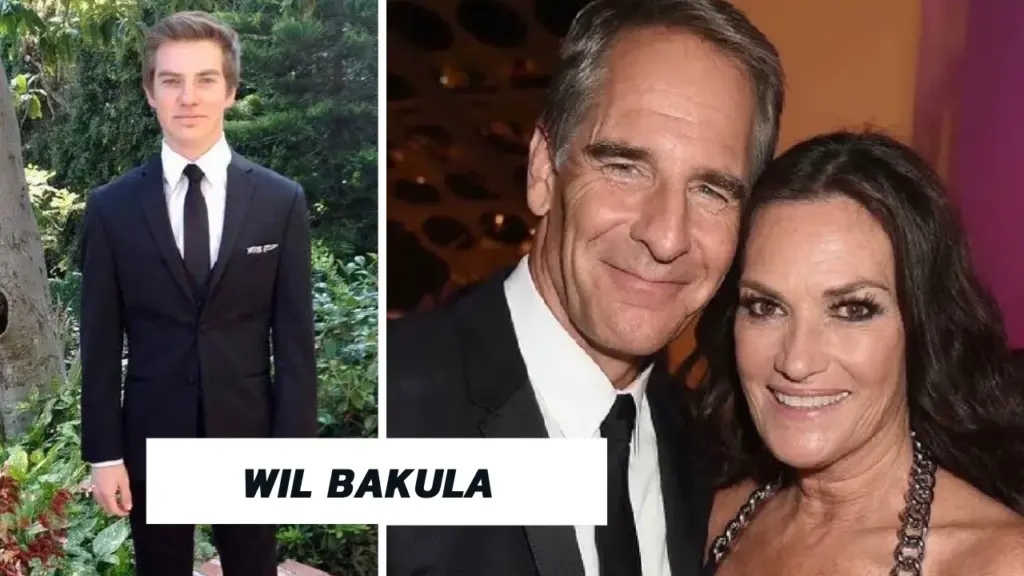
Growing up in the shadow of Hollywood stardom could easily push someone toward the spotlight, but Wil Bakula chose a different path entirely. As the eldest son of acclaimed actors Scott Bakula and Chelsea Field, he had every opportunity to pursue acting—yet he turned to music instead, building an authentic career that reflects personal passion over inherited fame. Unlike many celebrity children who chase red carpets and social media followers, Wil has quietly become one of Portland’s most respected indie musicians through his work with the band Foamboy. His story is about choosing creativity over celebrity, and authenticity over attention.
Wil Bakula is an American musician and producer best known as the eldest son of actors Scott Bakula and Chelsea Field. Born in December 1995, he co-founded the Portland-based pop duo Foamboy with vocalist Katy Ohsiek. Their second album, “Eating Me Alive,” released in 202,4 earned recognition from KCRW and KEXP, with a third album planned for 2026. Unlike his parents’ Hollywood careers, Wil chose music, building an independent identity through jazz-inspired danceable pop and maintaining a deliberately private lifestyle.
Who Is Wil Bakula? Understanding His Background
Born in December 1995, Wil Bakula entered a world already familiar with his family name. His father, Scott Bakula, had become a household name through iconic television roles in Quantum Leap, Star Trek: Enterprise, and NCIS: New Orleans. His mother, Chelsea Field, built her own successful acting career with memorable roles in Masters of the Universe and The Last Boy Scout. Yet despite this Hollywood pedigree, Wil’s parents prioritized normalcy over celebrity culture.
The Bakula household valued creativity, but never forced their children toward entertainment careers. Scott, who won a Golden Globe for Quantum Leap, famously turned down work to spend time with his family—a decision that shaped Wil’s understanding of success. This family philosophy emphasized personal fulfillment over public recognition, teaching him that meaningful work matters more than fame.
Growing up in this environment, Wil developed an early appreciation for music. While his father showcased vocal talents on Broadway and his mother balanced film work with family life, Wil found his own voice through rhythm, melody, and songwriting. This creative foundation would later influence his decision to pursue music rather than follow his parents into acting.
The Educational Journey That Shaped His Artistry
Education played a crucial role in Wil’s artistic development. He attended Loyola High School in Los Angeles, where academic rigor met creative exploration. The school’s emphasis on discipline and personal growth helped him develop both intellectual curiosity and artistic confidence. He participated in musical activities that honed his skills while maintaining strong academic performance.
After graduating from Loyola, Wil made a significant decision—he chose Willamette University in Salem, Oregon, deliberately moving away from Los Angeles and the entertainment industry’s gravitational pull. This choice reflected his desire for independence and authentic artistic development. At Willamette, he immersed himself in music studies while exploring the broader liberal arts curriculum.
During his time at university, Wil completed a notable research project titled “Musicians of Portland and New Orleans: An Investigation into the Cultural Effects on Creative Processes.” This academic work demonstrated his intellectual approach to music, analyzing how geographic and cultural contexts shape artistic creation. The project revealed his thoughtful engagement with music as both an art form and a cultural phenomenon, setting him apart from musicians who rely solely on intuition without a deeper understanding.
His education in Oregon proved transformative. Away from Hollywood’s influence, he could experiment freely, collaborate with like-minded artists, and develop his musical identity without constant comparison to his famous parents. This period laid the groundwork for his future career as a serious musician and producer.
From Chromatic Colors to Foamboy: A Musical Evolution
Wil’s professional music career began at Willamette University when he co-founded Chromatic Colors with vocalist Katy Ohsiek. The band became an experimental outlet where various musicians collaborated on genre-blending projects. Chromatic Colors explored indie, alternative, and electronic sounds, giving Wil space to develop his production skills and musical vision.
During this period, Wil played keyboard, contributed to songwriting, and even co-directed the music video for “Expectations.” His work with Chromatic Colors taught him valuable lessons about collaboration, production, and artistic compromise. The band released an album titled Nature/Nurture, which explored themes of personal growth and identity. They performed across Oregon venues, building a modest but dedicated following.
However, Wil and Katy eventually recognized they needed a more focused direction. As their artistic vision became clearer, they made the bold decision to move beyond Chromatic Colors and create something entirely new—this led to the birth of Foamboy in 2020.
The Foamboy Era: Current Success and Recognition
Foamboy represents Wil Bakula’s current musical identity and most significant artistic achievement. The Portland-based pop duo, consisting of producer Wil Bakula and vocalist Katy Ohsiek, creates what they describe as “post-disco pop” or “jazz-inspired danceable pop with a hyper-personal lyrical edge.” Their sound blends vintage R&B influences with modern electronic production, creating dreamy, introspective tracks that resonate emotionally while remaining thoroughly danceable.
Their debut album My Sober Daydream dropped in 2021 to immediate critical acclaim. The record earned recognition from KCRW, Consequence of Sound, and Week in Pop, establishing Foamboy as one of Portland’s most promising new acts. The album’s success launched the duo into Portland’s indie music scene, leading to performances at beloved venues like Mississippi Studios, Holocene, and Doug Fir Lounge.
In March 2024, Foamboy released their sophomore album Eating Me Alive, which marked a significant artistic evolution. While maintaining their signature dreamy and dance-oriented sound, the album explored darker emotional territory. Katy Ohsiek’s lyrics examined the rise and fall of a complicated relationship, alongside themes of discovering queer identity, rejecting heteronormative narratives, surviving graduate school, and finding peace in letting go.
The album showcased their growth as a full seven-piece band, weaving together electronic and live instruments across diverse tracks—from extended disco numbers to short dreamy interludes, wavy electronic ballads, and distorted psych-inspired pop tunes. Wil carefully crafted the album as a cohesive unit, with songs flowing seamlessly into one another. The record charted on KCRW and several college radio stations nationwide, earning playlist placements on Spotify and Apple Music.
Willamette Week named Foamboy one of Portland’s “Best New Bands,” while the Portland Mercury praised their unique approach to indie pop. That summer, they toured the West Coast and performed at notable festivals including Pickathon, Timberfest, and Belltown Bloom, expanding their audience beyond Portland’s local scene.
In August 2025, Foamboy released the standalone single “Phone,” exploring themes of technology addiction and digital disconnection. The track demonstrated their continued relevance and artistic growth, with Katy imagining the freedom of unplugging from constant connectivity.
Looking ahead, Foamboy is currently preparing their third album, Stupid Hot, slated for release in spring 2026. According to their official website, this new project promises “a turn to more house-inspired dance tracks, with moody synth swells and haunting vocal melodies,” suggesting another exciting evolution in their sound.
The Bakula Family: Hollywood Legacy and Personal Bonds
Scott Bakula: A Father Who Prioritized Family
Scott Bakula, born October 9, 1954, in St. Louis, Missouri, is one of television’s most respected actors. His portrayal of Dr. Sam Beckett in Quantum Leap (1989-1993) earned him a Golden Globe Award and four Emmy nominations, cementing his status as a television icon. Later, he starred as Captain Jonathan Archer in Star Trek: Enterprise (2001-2005) and Special Agent Dwayne Cassius “King” Pride in NCIS: New Orleans (2014-2021).
But beyond his professional achievements, Scott is equally admired for his approach to fatherhood. After his first marriage to Krista Neumann ended in 1995, he openly acknowledged that his demanding Quantum Leap schedule—which kept him “hardly ever home for four and a half seasons”—contributed to the divorce. This experience taught him valuable lessons about work-life balance.
When he began his relationship with Chelsea Field in the early 1990s, Scott made a conscious decision to prioritize family time. He often turned down roles or negotiated schedules that allowed him to be present for his children’s important moments. This commitment to family over fame directly influenced Wil’s values and approach to career decisions.
In 2025, Scott continues performing, currently starring opposite Ariana DeBose in the Off-Broadway musical The Baker’s Wife. His enduring career demonstrates that longevity comes from choosing meaningful work rather than chasing constant visibility.
Chelsea Field: The Actress Who Balanced Career and Family
Chelsea Field, born Kimberly A. Botfield on May 27, 1957, in Glendale, California, built a successful acting career while maintaining her commitment to family. She’s best known for playing Teela in Masters of the Universe (1987) and appearing in action films like The Last Boy Scout (1991) and Commando (1985).
Chelsea met Scott on the set of the film A Passion to Kill in 1993, and they began a relationship that lasted 15 years before they officially married in 2009. During those years, they had two sons together—Wil in 1995 and Owen in 1999. Chelsea appeared alongside Scott in NCIS: New Orleans as attorney Rita Devereaux, a recurring character who eventually became Pride’s wife, mirroring their real-life relationship.
Chelsea’s approach to balancing work and motherhood showed Wil that success doesn’t require constant public exposure. She chose roles strategically, often reducing her workload to focus on raising her children with values of humility, creativity, and independence.
The Bakula Siblings: A Diverse Creative Family
Wil has three siblings, each carving unique paths that reflect the family’s emphasis on individuality:
- Chelsy Bakula (born 1984) is Scott’s daughter from his first marriage to Krista Neumann. She made a brief appearance in Quantum Leap alongside her father but ultimately chose a private life away from Hollywood. Her decision to step back from entertainment at a young age demonstrated that the Bakula children felt no pressure to pursue fame.
- Cody Bakula (born 1991), also from Scott’s first marriage and later adopted by him, similarly preferred life outside the spotlight. He pursued interests in gemology and goldsmithing, building a career based on craftsmanship and specialized skill rather than entertainment.
- Owen Bakula (born 1999), Wil’s younger brother, has embraced the performing arts through dance and theater. He performs with the Columbia City Ballet and advocates for non-binary and gender-inclusive expression in the arts. Owen’s openness about his identity and artistic vision represents the family’s support for authentic self-expression.
Together, the Bakula siblings represent a family that celebrates diversity, creativity, and personal choice over conformity to Hollywood expectations.
Why Wil Bakula Chose Privacy Over Publicity
In an era of oversharing and personal branding, Wil Bakula’s commitment to privacy stands out remarkably. He maintains a minimal social media presence, rarely gives interviews, and avoids the celebrity circuit entirely. This isn’t accidental—it’s a deliberate choice that reflects his values and artistic priorities.
Unlike many celebrity children who leverage their famous surnames for social media influence or reality television opportunities, Wil lets his music speak for itself. He doesn’t use his father’s fame for promotional advantage or name-drop his family connections in press materials. Foamboy’s success comes from their musical merit, not from Wil’s Hollywood lineage.
This approach offers several advantages. First, it allows his work to be judged on its own merits rather than through the lens of his parents’ careers. Critics and fans respond to Foamboy’s music because it’s genuinely good, not because of who Wil’s father is. Second, privacy protects his creative process from external pressure and comparison. He can experiment, fail, and grow without public scrutiny of every artistic decision.
Third, maintaining boundaries between his personal and professional life preserves his mental health and relationships. The constant exposure that comes with modern celebrity culture can be exhausting and invasive. By choosing privacy, Wil protects his family, his romantic relationships, and his personal well-being.
This philosophy aligns with the values his parents instilled. Scott Bakula himself has spoken about protecting his home life from media intrusion, once telling CBS in 2016: “People magazine wanted to do interviews with me at my home. And I said, ‘I can’t, I can’t.’ Where do you stop?” Wil learned early that fame and privacy aren’t mutually exclusive—you can be successful without sacrificing your personal boundaries.
What Sets Wil Apart: Artistic Vision and Musical Style
Wil Bakula’s music defies easy categorization. Foamboy’s sound draws from jazz, R&B, disco, electronic, and psych-pop influences, creating something uniquely their own. As producer, Wil carefully layers vintage-inspired synths, live percussion, and electronic beats, crafting atmospheric soundscapes that balance emotional depth with danceability.
His production style shows meticulous attention to detail. He reportedly creates 30 to 40 chorus or verse ideas for each project, listening daily to his demos until the pieces fit together like a puzzle. This methodical approach ensures that each album flows as a cohesive artistic statement rather than a collection of disconnected tracks.
Wil’s musical influences span generations and genres. You can hear echoes of Steely Dan’s sophisticated jazz-pop, the smooth R&B of Thundercat, the dream-pop aesthetics of Men I Trust, and the electronic experimentation of James Blake. Yet Foamboy never sounds derivative—Wil synthesizes these influences into something distinctly his own.
His collaborations with Katy Ohsiek demonstrate his ability to create space for other artists’ voices. While Wil handles production and instrumental composition, he ensures Katy’s deeply personal lyrics and vocal melodies remain central to each track. This collaborative generosity reflects maturity and artistic confidence—he doesn’t need to dominate every aspect of the creative process.
Looking toward their upcoming album Stupid Hot, Wil is exploring house music influences, suggesting his artistic evolution continues. This willingness to experiment and push boundaries while maintaining a cohesive artistic identity distinguishes him from musicians who simply repeat successful formulas.
The Reality of Being a Working Musician Today
While Wil’s father, Scott Bakula, has an estimated net worth of $16 million from his decades-long acting career, Wil’s financial situation likely looks quite different. As an independent musician in 2025, he faces the challenging realities of the modern music industry—streaming revenue that pays fractions of a cent per play, limited tour income for indie artists, and the constant need to balance artistic integrity with financial sustainability.
However, Wil appears unconcerned with accumulating wealth or achieving mainstream commercial success. His career choices consistently prioritize artistic fulfillment over financial reward. He could easily have pursued acting, leveraged his family name for endorsement deals, or created content for social media platforms to monetize his famous surname. Instead, he chose the harder but more authentic path of building a career based purely on musical merit.
This approach reflects a broader redefinition of success among younger artists. For Wil’s generation, meaningful work, creative freedom, and authentic expression often matter more than traditional markers of achievement like wealth or fame. His willingness to live modestly while pursuing his artistic passion challenges conventional notions of what it means to “make it” in entertainment.
Looking Forward: What’s Next for Wil Bakula
As Foamboy prepares to release Stupid Hot in spring 2026, Wil Bakula stands at an exciting point in his career. The upcoming album’s house-inspired direction suggests continued artistic growth and experimentation. With recognition from influential platforms like KCRW and KEXP, playlist placements on major streaming services, and a growing fan base across the West Coast, Foamboy is positioned for broader success.
Yet success for Wil will likely look different than traditional entertainment industry metrics. He won’t measure achievement by Instagram followers, tabloid coverage, or red carpet appearances. Instead, he’ll gauge success by artistic satisfaction, genuine connection with audiences, and the freedom to continue creating on his own terms.
His career trajectory offers inspiration for anyone navigating the pressure to leverage family connections or chase viral fame. Wil demonstrates that building something authentic takes longer but ultimately proves more rewarding than shortcuts based on inherited privilege. His story shows that you can honor your family legacy while creating your own distinct identity.
As Portland’s indie music scene continues thriving, Wil Bakula remains one of its most intriguing figures—not because of who his parents are, but because of the music he creates and the values he embodies. In choosing substance over spectacle and privacy over publicity, he’s rewriting the narrative of what it means to grow up in Hollywood while staying true to yourself.
Conclusion
Wil Bakula’s journey from Hollywood legacy to independent musician represents a powerful statement about authenticity in modern entertainment. While his father’s fame opened doors, Wil chose to walk through entirely different ones—pursuing music over acting, privacy over publicity, and personal fulfillment over commercial success.
Through Foamboy, he’s built an impressive career that stands on its own merits. With two critically acclaimed albums, upcoming releases, festival performances, and recognition from influential music platforms, he’s proven that meaningful artistic success doesn’t require celebrity culture’s trappings. His dedication to craft over clout, and substance over spectacle offers a refreshing alternative to the attention-seeking behavior that dominates modern entertainment.
Most importantly, Wil Bakula shows us that carrying a famous surname doesn’t define your identity—your choices do. By forging his own path with humility, talent, and unwavering commitment to his artistic vision, he’s created something far more valuable than inherited fame: an authentic life built on personal terms.