

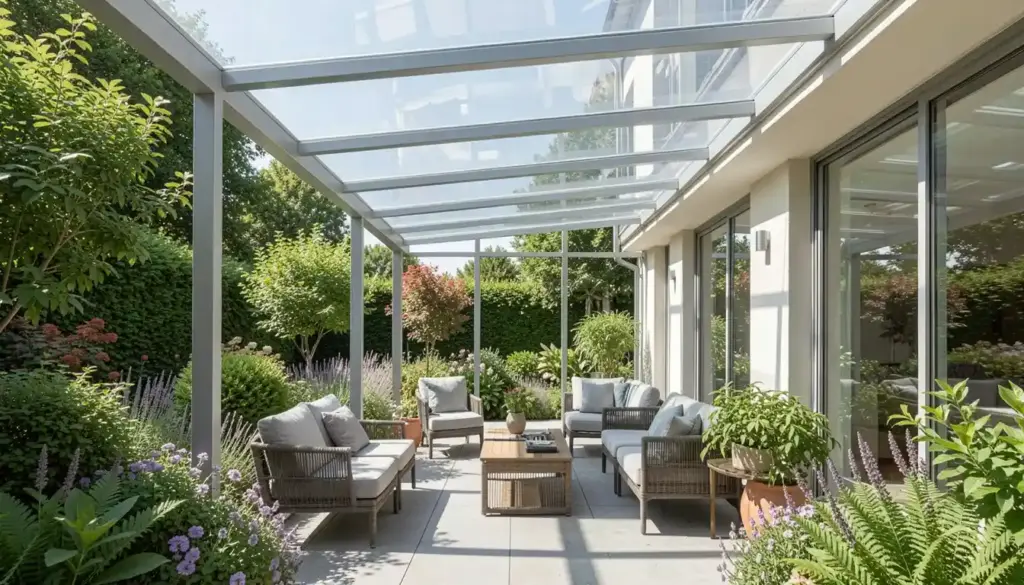
If you have ever stood under a covered patio that felt dark, heavy, and disconnected from the outdoors, you already understand the problem Acryldach solves. It is a roofing solution built around one principle: let the light in without letting the weather in.
The term itself comes from two German words. Acryl refers to acrylic plastic, and Dach simply means roof. Together, they describe a category of roofing systems constructed from acrylic-based materials rather than traditional options like metal, concrete, or clay tile. As modern architecture places increasing value on natural light, energy efficiency, and clean aesthetics, Acryldach has moved from a niche product to a widely used roofing choice for residential, commercial, and agricultural applications.
This guide covers everything you need to know — what Acryldach actually is, how the material works, the types available, installation requirements, honest comparisons, maintenance protocols, and the mistakes that turn a good roof into an expensive headache.
What Is Acryldach Roofing?
Acryldach is a roofing system made from acrylic materials, primarily PMMA (Polymethyl Methacrylate), which is a strong and transparent thermoplastic often used as a lightweight alternative to glass.
In practical terms, an Acryldach roof is designed to cover a space while still allowing daylight to pass through. This makes it fundamentally different from almost every traditional roofing material. Metal, tile, and concrete keep light out entirely. Glass allows light but is heavy and fragile. Acryldach sits in a distinct middle ground — it transmits light at levels close to glass while offering significantly better impact resistance and a fraction of the weight.
Many architects, homeowners, and builders search for Acryldach solutions because modern buildings increasingly require lightweight, energy-efficient, and visually appealing roofing materials. Transparent roofing for patios and skylights, greenhouse roofing that supports plant growth, and waterproof coatings for flat roofs are all common uses of acrylic roofing technology.
The word is used interchangeably across the construction industry to describe rigid acrylic panels, corrugated sheets, multiwall insulation panels, and even liquid acrylic membranes applied to existing flat roofs. What connects all of these is the core material: acrylic polymer.
The Material Behind Acryldach: Understanding PMMA
The performance of an Acryldach system depends almost entirely on the quality and composition of its primary material — PMMA.
At the core of every acryldach system is Polymethyl Methacrylate (PMMA), a thermoplastic known for its glass-like clarity, impact resistance, and lightweight properties. PMMA is much more robust than traditional glass, yet significantly lighter, making it ideal for architectural uses where weight reduction is essential.
Most people already encounter PMMA in everyday life without realising it. It is the same material sold under commercial names like Plexiglass and Perspex. In roofing applications, it is manufactured into sheets, panels, or applied as a liquid coating, depending on the specific product.
Unlike polycarbonate, which tends to yellow over time, PMMA retains its clarity for decades when properly treated. Acryldach panels and coatings are manufactured with UV stabilizers, which protect the material from sun-induced brittleness and fading. Additionally, anti-scratch and anti-fog coatings are often applied to enhance longevity and maintain visibility.
One of the less-discussed qualities of PMMA is its light transmission rate. Acrylic panels allow up to 92% of natural light to pass through. This is close to the optical performance of clear glass, which is why Acryldach is preferred over polycarbonate in applications where visual clarity matters most.
The thermal behaviour of PMMA is also important to understand before installation. Acrylic expands and contracts with temperature changes more than glass or metal does. A panel that is fixed too tightly will develop stress fractures around its fastening points over time. This is one of the most common sources of installation failure and is addressed further in the installation section below.
Types of Acryldach Roofing Systems
Not all Acryldach products are the same. There are several types of acryldach roofing systems to suit different building needs. Understanding the differences helps you choose the right product for your project.
1. Flat rigid acrylic panels
Flat rigid acrylic panels are the most common form. These are solid, flat sheets of PMMA used in modern architectural designs where a sleek, minimal appearance is preferred. They work well for pergolas, entry canopies, and commercial skylights where clarity and aesthetics take priority.
2. Corrugated acrylic sheets
Corrugated acrylic sheets feature a wavy cross-section that adds structural strength without increasing material thickness. Corrugated acrylic sheets add structural strength through their wavy form and are ideal for high-wind regions or places prone to hail. Their shape also improves water runoff, which reduces pooling and long-term staining. These are frequently used on residential patios, carports, and agricultural sheds.
3. Multiwall or twinwall panels
Multiwall or twinwall panels contain internal chambers running through the length of the sheet. Multiwall or twinwall panels are engineered with internal chambers that offer superior thermal insulation while still allowing diffused light to pass through — making them ideal for greenhouses. The chambers trap air, which improves insulating performance significantly. Light is still transmitted, but it becomes diffused rather than direct — a useful feature for spaces where glare reduction matters.
4. Liquid acrylic roof coatings
Liquid acrylic roof coatings take a completely different approach. Rather than installing panels over a frame, these coatings are applied directly to the surface of an existing flat or low-slope roof. Unlike conventional roofing systems, which often have joints and seams, Acryldach creates a continuous surface that minimizes potential leaks. These coatings are particularly useful for roof renovation projects where waterproofing is the primary concern rather than light transmission.
Key Benefits of Acryldach Roofing
Natural Light Without the Penalty
The defining advantage of any Acryldach system is its ability to introduce daylight into covered spaces. One of the biggest advantages of an acryldach is its ability to flood spaces with natural daylight. Unlike opaque roofing materials, acrylic sheets allow sunlight to pass through, reducing the need for artificial lighting during the day. This directly reduces electricity consumption during daytime hours and creates environments that feel open and comfortable rather than enclosed.
Lightweight Construction
Acrylic panels weigh considerably less than glass or concrete alternatives. Heavy roofing materials require strong support structures. Acrylic panels reduce structural stress because they weigh significantly less than traditional roofing systems. As a result, builders can design larger open spaces with fewer supporting beams. This also simplifies installation, reduces labour time, and lowers overall construction costs.
Long-Term Durability
With proper care, acryldach roofs can last 20 to 30 years, especially when they include UV-resistant coatings and are installed professionally. High-quality panels resist yellowing, cracking, and surface degradation even after extended outdoor exposure. Many manufacturers offer warranties of 30 years or more, which reflects confidence in the material’s long-term performance.
Low Maintenance Requirements
Unlike materials that require frequent painting, sealing, or repairs, acrylic sheets are relatively low-maintenance. Basic cleaning with water and mild soap is usually enough to keep the surface looking clear and fresh. Because the material resists mold and mildew, there is no need to worry about long-term staining or damage in most environments.
Energy Efficiency
Beyond reducing artificial lighting needs, Acryldach systems contribute to broader energy performance. Acryldach roofing is made with heat-filtering pigments that enable sunlight to pass in but absorb a part of the infrared energy. In some advanced panel variants, reflective coatings are applied to further reduce heat gain, keeping covered spaces cooler in summer without blocking the light.
Where Acryldach Roofing Is Used
One of the most attractive qualities of this roofing system is its ability to create a comfortable outdoor environment throughout the year. By allowing sunlight to pass through while blocking rain and wind, it transforms patios or terraces into usable living spaces regardless of weather conditions.
Residential applications include patios, pergolas, sunrooms, garden structures, and carport covers. These are spaces where homeowners want shelter from rain without losing the feeling of being outdoors. A traditional solid roof turns a patio into a dim room. An Acryldach installation keeps it feeling connected to the garden.
Businesses also benefit from acryldach roofing systems. Modern commercial buildings often require bright spaces that feel open and welcoming. Shopping malls, restaurants, and office buildings frequently install acrylic skylights or covered walkways. These roofs reduce daytime electricity use by replacing artificial lighting with natural light.
Agricultural use is another strong application area. Plants require consistent sunlight. Therefore, greenhouses often rely on acryldach panels. Acrylic’s transparency lets sunlight in while protecting plants from heavy rain and extreme weather. Twinwall panels are especially well-suited for greenhouse roofing because they combine insulation with light diffusion, protecting plants from temperature extremes while still supporting growth.
Public infrastructure also makes regular use of Acryldach. Bus stops, train stations, and pedestrian walkways often feature transparent roofing panels. These roofs create safer and brighter environments for commuters.
Acryldach vs. Glass vs. Polycarbonate vs. Metal
This is where many buying decisions get made — and where most existing guides are too vague to be useful.
| Feature | Acryldach (PMMA) | Glass | Polycarbonate | Metal |
|---|---|---|---|---|
| Light Transmission | Up to 92% | Up to 91% | 75–88% | 0% |
| Weight | Very light | Heavy | Very light | Moderate |
| Impact Resistance | High | Low (shatters) | Very high | Moderate |
| UV Resistance | High (UV-stabilized) | Moderate | Moderate (yellows faster) | N/A |
| Yellowing Over Time | Minimal (quality panels) | None | Moderate to high | N/A |
| Clarity | Excellent | Excellent | Good (haze over time) | N/A |
| Lifespan | 20–30+ years | 30+ years | 10–20 years | 40+ years |
| Maintenance | Low | Low | Medium | Low–medium |
| Cost | Medium | High | Low–medium | Medium |
| Best For | Patios, skylights, pergolas | Premium glazing, architecture | Budget projects, high-impact | Full weather protection |
The key differentiator between Acryldach and polycarbonate is optical quality over time. Polycarbonate is cheaper upfront but yellows and hazes significantly faster. Acryldach offers clarity similar to glass but with better impact resistance and lighter weight. For most residential and commercial transparency roofing applications, PMMA offers the best balance between performance, appearance, and lifespan.
Glass wins on scratch resistance and absolute optical clarity, but the weight, fragility in hail events, and higher installation costs make it impractical for most patios or large-span applications. Metal is unmatched for full weather protection and longevity, but it completely blocks natural light — which defeats the purpose of choosing Acryldach in the first place.
How Acryldach Roofing Is Installed
Installation quality determines whether an Acryldach roof lasts 30 years or develops problems in 3. The process is not complicated, but it requires specific attention to how acrylic behaves as a material.
The basic process involves selecting the right panel type, building or preparing a structural frame, cutting panels to size, drilling fastener holes, mounting panels to the frame, and sealing all joints and edges. For liquid acrylic coatings, the surface is cleaned and primed before the coating is applied in layers.
Thermal Expansion — The Detail Most People Miss
Acrylic needs breathing room. Allow for thermal expansion — oversized holes, correct edge clearances, and non-binding fasteners are essential because PMMA expands with temperature.
PMMA has a notably higher coefficient of thermal expansion than metal or glass. In a long panel installed on a warm summer day, a significant temperature drop in winter will cause the panel to contract — and if fasteners are fixed too tightly in rigid holes, stress builds at those points. Over time, this produces small cracks that worsen with each seasonal cycle.
The correct approach is to drill fastener holes slightly larger than the fastener shaft and use washers and gaskets designed for glazing-style installations. The goal is a weather-tight system that still allows movement. Over-sealing can trap the panel. Think of the fastening system as a quiet partnership between the panel and the frame — firm enough to hold, flexible enough to allow natural movement.
Fasteners, Seals, and Frame Spacing
Use the right support spacing — too wide a span causes flexing and noise, and increases stress around fasteners. Build a clean slope and drainage path — water pooling stains panels, increases algae risk, and makes the roof look older faster.
Aluminum is the preferred framing material for most Acryldach installations. Most installations rely on frames made of aluminum because it is lightweight, corrosion-resistant, and easy to maintain. Steel is an alternative for heavier-duty applications, while timber frames work for smaller residential pergola structures.
A minimum slope of 5° is generally recommended to ensure water runs off efficiently and does not pool on the panel surface. Edge seals should use silicone-based products compatible with acrylic — avoid sealants containing solvents, which can damage the panel surface.
How to Maintain Acryldach Panels
Maintenance for Acryldach is genuinely simple, but the wrong approach can permanently damage the surface.
Cleaning protocol:
For cleaning, a mixture of water and mild soap applied with a soft cloth or sponge is all that is needed. Avoid using ammonia-based or abrasive cleaners, which can damage the acrylic surface. Always rinse off dust and loose debris before wiping — dragging grit across the panel with a cloth is how micro-scratches accumulate.
Never use paper towels, rough sponges, or dry cloths on dry panels. A soft microfiber cloth with clean water is the most effective tool. Avoid window cleaning sprays, since many contain ammonia or alcohol.
Repair:
For repairs, small cracks can be sealed with acrylic adhesives, while scratched surfaces may be polished with a plastic-safe compound. Severely damaged panels should be replaced to preserve overall integrity.
Inspection routine:
Regular inspections of seals, joints, and mounting screws are recommended to maintain waterproofing and prevent long-term damage. After severe weather events — heavy hail, strong storms — check for hairline cracks around fastener points and inspect edge seals for separation. Catching minor issues early prevents significant water ingress damage later.
Common Mistakes to Avoid
Most Acryldach problems are installation or maintenance errors rather than material failures. Here are the ones that cause the most damage:
- Over-tightening fasteners. Over-tightening creates stress points. Use washers and gaskets designed for glazing-style installs. This is the single most common error made by installers who treat acrylic like metal roofing.
- Ignoring thermal expansion allowances. Rigid fastening in oversized holes without expansion room is a slow-developing problem that reveals itself only after the first winter. By then, hairline cracks have already formed.
- Using the wrong cleaning products. Ammonia-based or solvent-containing cleaners cause surface crazing — a network of tiny cracks just below the surface that permanently clouds the panel. This damage cannot be repaired.
- Choosing low-quality panels without UV stabilization. High-quality, UV-protected panels resist yellowing, but poor-quality acrylic may degrade. Cheap panels may look identical at purchase and show significant yellowing within 3–5 years. Always verify that panels include UV-stabilized coatings before buying.
- Insufficient slope and drainage. Water that sits on an acrylic panel promotes algae growth and accelerates dirt accumulation. Even a modest slope makes a significant difference in long-term appearance.
- Skipping panel edge protection. Unprotected cut edges absorb moisture and are prone to crazing. Edge sealing or protective trim should always be applied to cut edges.
Cost Factors for Acryldach Roofing
A single price figure for Acryldach roofing is not useful because costs vary significantly based on several independent factors. Understanding the drivers gives you a more accurate basis for budgeting.
- Panel type and thickness. Flat rigid panels in a standard 4mm thickness are the most affordable. Twinwall insulating panels, thicker corrugated sheets, and specialty UV-coated products carry progressively higher material costs.
- UV and surface coatings. Premium UV-stabilized panels with anti-scratch coatings cost more upfront but dramatically outperform budget alternatives in longevity. The price gap typically narrows significantly when calculated over 10 years.
- Frame system. Aluminum framing costs more than timber but requires no maintenance, resists corrosion, and extends overall system lifespan. For any installation expected to last longer than 10 years, aluminum framing is the more economical long-term choice.
- Installation complexity. Flat, rectangular patios are straightforward. Curved structures, complex angles, or integration with existing architecture add labour time and material waste, both of which increase costs.
- Project scale. Per-square-metre costs generally decrease for larger projects, as framing and labour costs distribute across a greater area.
While Acryldach involves a higher upfront investment than basic polycarbonate sheets, the lifetime value is higher even if the initial investment is slightly more. A quality Acryldach installation that requires no replacement for 25 years compares favourably with a cheaper polycarbonate system replaced twice in the same period.
Conclusion
Acryldach roofing is a practical, well-established solution for anyone who needs covered space without sacrificing natural light. Built from PMMA — a material that combines the optical clarity of glass with far greater impact resistance and significantly lower weight — it performs reliably across residential, commercial, and agricultural applications.
The benefits are real and measurable: long lifespan, low maintenance, energy savings from reduced artificial lighting, and design flexibility that opaque roofing simply cannot offer. The installation requires more care than metal or tile work, particularly around thermal expansion allowances and fastener selection, but when done correctly, an Acryldach system needs very little attention for decades.
The most important purchasing decision is panel quality. UV-stabilized, properly coated PMMA panels hold their clarity and structural integrity for 20–30 years. Budget panels without adequate UV protection will begin to yellow and degrade far sooner. Paying attention to this single specification at the buying stage protects the long-term value of the entire installation.
If your project involves a patio, carport, pergola, greenhouse, commercial skylight, or any space where daylight matters as much as weather protection, Acryldach is one of the most capable roofing materials available for that purpose today.