

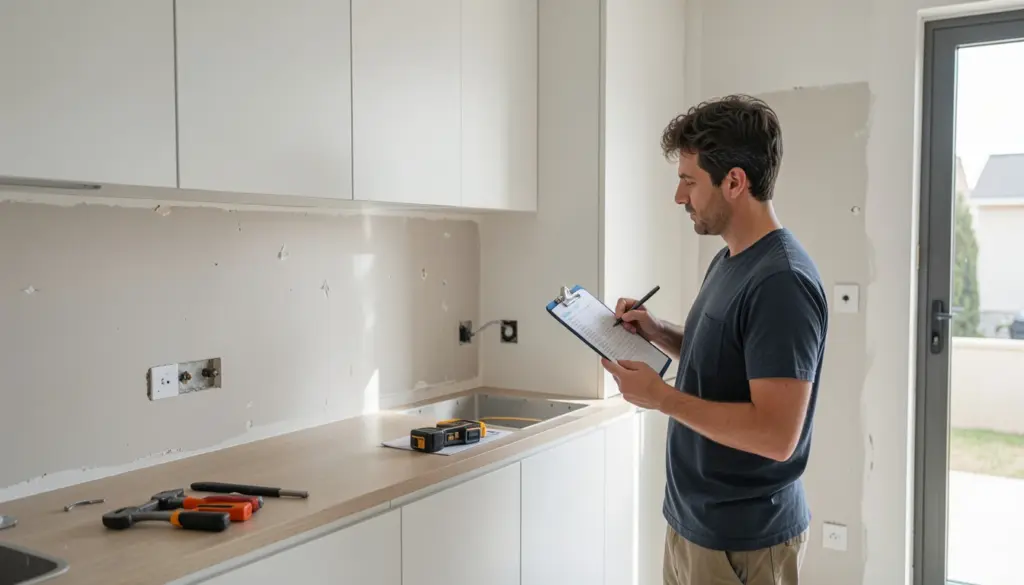
You’ve spent weeks — maybe months — managing a renovation. The dust has settled, the crew has packed up, and your contractor is asking for the final payment. Before you write that check, there’s one critical step most homeowners rush through or skip entirely: the final walkthrough.
A thorough post-renovation inspection is what separates a project that’s truly finished from one that looks finished. Hidden plumbing issues, poor finishing near trim edges, improperly secured fixtures — these are the kinds of defects that cost far more to fix after you’ve signed off. This guide gives you a complete, structured home renovation completion checklist, along with practical guidance on punch lists, contractor communication, and when it’s appropriate — or not — to approve final payment.
What Is a Home Renovation Completion Checklist?
A home renovation completion checklist is a structured tool used to verify that every aspect of a remodeling project meets the agreed-upon scope, quality standards, and building codes before the project is officially closed out.
It serves two equally important purposes. First, it protects you as a homeowner by confirming the work has been completed properly and to specification. Second, it gives your contractor a clear record of what has been verified and accepted, which reduces the risk of disputes after the fact.
Think of it as the difference between a verbal handshake and a written record. Without a formal inspection process, issues can get dismissed, forgotten, or become a source of disagreement months later. With one, you have documentation that protects both parties and gives you confidence before releasing the final payment.
Before the Final Walkthrough: What to Prepare
Walking into a final inspection without preparation is a common mistake. Spend 30 minutes getting organized beforehand, and you’ll catch far more.
Gather your documents. Pull out the original contract, any change orders, approved plans or drawings, and any material specifications you agreed to. These are your benchmarks. If the contract specified a particular tile brand or paint finish, you’ll need to verify it on-site.
Bring the right tools. A smartphone for photos, a written checklist, and a notepad are the basics. A flashlight helps when inspecting under cabinets, inside closets, or around electrical panels. A level is useful for checking shelving and tilework. If the renovation included new appliances or HVAC equipment, have the installation specs handy.
Set the right expectations. Don’t let anyone rush you through this process. A proper walkthrough for a full home remodel can take two to four hours. If your contractor is pushing to move quickly, that’s worth noting — a well-executed project should hold up to a thorough inspection.
The Complete Final Walkthrough Checklist
Work through this checklist systematically, room by room and system by system. Take photos as you go, especially of anything that looks incomplete or incorrect.
Interior Room-by-Room Inspection
In each room, examine the following:
Walls and ceilings — Check for uneven drywall seams, visible nail pops, missed paint coverage near corners and ceiling edges, and any cracking. Texture should be consistent where specified.
Flooring — Walk across every section. Listen for squeaks, feel for unevenness, and inspect grout lines or seams. Check transitions between different floor types, which are common problem spots. Hardwood and laminate should be flush; tile should have no hollow spots (tap gently to check).
Doors and windows — Open and close every door and window. They should move smoothly without sticking. Check that door frames are plumb, latches engage properly, and weatherstripping is seated correctly. Look for gaps between trim and wall.
Paint and finishes — Inspect under natural light if possible. Look for roller marks, brush strokes, drips, or inconsistent sheen. Pay special attention to cut lines near ceilings, baseboards, and door frames — these are where finishing quality shows clearly.
Baseboards and trim — Check that all trim is fully nailed, caulked, and painted. Gaps at corners or where trim meets the wall are signs of rushed work.
Kitchen and Bathroom Checks
These spaces carry the highest concentration of fixtures, finishes, and systems — and are where defects are most common.
Cabinetry — Open every cabinet and drawer. They should operate smoothly with no misalignment. Check that doors hang level, handles are consistent, and interior shelving is properly secured.
Countertops — Inspect seams, edges, and backsplash alignment. Seams in stone countertops should be tight and filled. Check that countertops are secured and don’t shift when pressure is applied.
Tile work — Examine grout lines for consistency. Uneven tile alignment and inconsistent grout spacing are common renovation defects. Check that no tiles are cracked or hollow-sounding, and that tile edges along walls and fixtures are properly finished.
Plumbing fixtures — Run every faucet. Check water pressure and hot water delivery time. Inspect under sinks for drips or loose connections. Flush toilets and check that they refill properly. Test shower and tub fixtures for leaks around seals and handles.
Electrical and Lighting Inspection
Never skip the electrical walkthrough. Issues here range from annoying to genuinely unsafe.
Test every light switch and confirm it controls the correct fixture. Press each outlet with a phone charger or outlet tester. GFCI outlets in kitchens, bathrooms, and outdoor areas should be tested with the test/reset buttons.
Check that all outlet covers and switch plates are installed flush and square. Loose electrical outlets — where the plug moves inside the receptacle — are a common defect that indicates improper installation.
If the project included a panel upgrade or new circuits, verify that the breaker panel is properly labeled. Ask your contractor to demonstrate any new circuits.
Plumbing and Water Systems
Beyond fixture testing covered in the kitchen and bathroom section, inspect the broader plumbing installation.
Check under every sink cabinet for signs of moisture or freshwater stains, which can indicate a slow drip. Look at exposed pipe runs for proper support — pipes should be bracketed at regular intervals, not hanging loosely.
If new drain lines were installed, run water in multiple fixtures simultaneously to check drainage speed. Slow drainage can indicate a grading issue or partial blockage in the new line.
Check water shut-off valves to confirm they’re accessible and operational. Ask the contractor to walk you through where the main shut-off is located, especially if any work was done on the main supply line.
HVAC System and Ventilation
Heating and cooling systems are among the most expensive components in any home — and among the most frequently overlooked during renovation inspections.
Turn the system on in both heating and cooling modes. Walk to each vent and confirm airflow is present. Check that any new ductwork is properly sealed and insulated where it runs through unconditioned spaces. Listen for rattling or vibration, which can indicate loose duct connections.
If a new system was installed, ask to see the equipment manual and verify the unit matches what was specified in the contract. Confirm that the thermostat is wired correctly and responds as expected.
Check bathroom exhaust fans — they should vent to the exterior, not into the attic. Run the fan and hold a tissue near the grille to confirm suction. Verify kitchen range hood ventilation as well.
Exterior and Structural Elements
Don’t neglect the exterior, even if the renovation was primarily interior.
Roofing — If the roof was part of the project, inspect flashing around chimneys, skylights, and vents. Look for any missing or improperly aligned shingles. Check gutters are re-attached and draining away from the foundation.
Siding and cladding — Inspect for proper sealing around windows, doors, and penetrations. Any gaps in caulking are direct entry points for water.
Grading and drainage — The ground around your foundation should slope away from the house. If excavation was part of the project, verify it was backfilled and graded correctly.
Landscaping and hardscaping — Any disturbed lawn, garden beds, or paving should be restored to the condition described in the contract or better.
How to Create and Manage a Punch List
A punch list — sometimes called a snag list — is a formal document that records all incomplete or unsatisfactory items identified during the final walkthrough. It’s a standard part of the construction completion process and a powerful tool for contractor accountability.
Each item on the punch list should include a clear description of the issue, the specific location, and if possible, a photo reference. Avoid vague entries like “paint looks bad.” Instead, write: “Paint on east wall of master bedroom — visible roller marks near ceiling, inconsistent finish compared to adjacent wall.”
Once documented, share the list with your contractor in writing — email is ideal because it creates a timestamp. Agree on a deadline for each item and confirm what “completion” looks like for each one. When items are addressed, conduct a follow-up walkthrough to verify the fix before checking them off.
A well-managed punch list protects both sides. Your contractor knows exactly what’s expected, and you have a clear record of what was reported and when.
Common Problems Found During Final Inspection
Knowing what to look for makes your walkthrough significantly more effective. Here are the most frequently identified defects during post-renovation inspection:
Cosmetic issues — Uneven paint at trim edges, inconsistent grout lines, cabinet doors slightly out of alignment, scuffed flooring near doorways. These are the most common and usually straightforward to fix.
Fixture and fitting problems — Loose towel bars, improperly seated toilet seats, faucet handles that rotate unevenly, and cabinet hinges with incorrect tension.
Poor finishing details — Gaps between trim and wall, caulk missing around tub or shower surrounds, nail holes left unfilled in trim, paint not carried into closets or behind doors.
Functional defects — Doors that don’t latch properly, outlets with loose connections, windows that don’t lock fully, and fans that vibrate excessively.
Water management issues — Slow drainage, drips under sink cabinets, grout cracking around tub surrounds (which indicates movement), improperly sealed shower niches.
Final Sign-Off: When (and When NOT) to Approve the Project
Approving a project prematurely is one of the most common and costly mistakes homeowners make. Once the final payment is released, your leverage drops significantly.
Approve the project when: every item on the punch list has been addressed to your satisfaction, all permit inspections have been passed and closed, and you’ve received all required documentation (see next section).
Delay approval when: the punch list has unresolved items, permits remain open, systems haven’t been tested properly, or you have unresolved concerns about workmanship quality that haven’t been addressed.
Understanding retainage is important here. In many contractor agreements, a percentage of the total contract price — often 5 to 10 percent — is held back until project completion is formally confirmed. This is a standard industry protection for homeowners. If your contract doesn’t include a retainage clause, make sure you’re not releasing 100 percent of payment before a proper final walkthrough is complete.
If significant defects are found and your contractor disputes them, document everything carefully. In extreme cases, a professional home inspector can provide a third-party assessment that carries weight in any formal dispute.
What Documents Should You Receive at Completion
Before you sign off on any renovation, make sure you have the following in hand:
Permits and final inspection approvals — Any work requiring a permit should have a corresponding municipal inspection approval. Your contractor is typically responsible for scheduling these. Ask to see the closed permit record.
Warranty documentation — Structural work, roofing, windows, and installed systems often carry manufacturer warranties. You should receive these directly. Additionally, many contractors offer a workmanship warranty — get it in writing with specific terms and duration.
Equipment manuals and receipts — If new appliances, HVAC equipment, or plumbing fixtures were installed, request the owner’s manuals, model numbers, and purchase receipts. These are essential for future servicing.
As-built drawings or photos — For any work involving in-wall plumbing, electrical runs, or structural changes, ask for documentation of what was installed and where. This is invaluable for future work or emergencies.
Lien releases — If subcontractors were used on the project, ask your general contractor for signed lien releases from each sub. This protects you from legal claims if the GC failed to pay their subcontractors.
FAQs
What is the difference between a punch list and a final inspection?
A final inspection is the walkthrough process you use to assess the entire project. A punch list is the document produced as a result of that walkthrough — it lists specific items that still need to be corrected or completed before the project is officially closed.
Should I hire a professional home inspector after a renovation?
For large or complex projects, particularly those involving structural changes, new electrical panels, or full bathroom and kitchen remodels, a professional home inspector adds a valuable layer of verification. They’re trained to spot issues that untrained eyes typically miss, and their written report carries weight if disputes arise.
Can I withhold final payment if I find issues during the walkthrough?
Yes — and you generally should until defects are resolved. Releasing the final payment before a punch list is cleared significantly reduces your ability to have items fixed. Review your contract for specific payment terms and how completion is defined.
How long does a final renovation walkthrough take?
For a single-room renovation, one to two hours is typically sufficient. A whole-home remodel may require three to five hours to inspect thoroughly. Don’t let anyone pressure you to move faster than you’re comfortable with.
What if my contractor won’t fix the punch list items?
Document everything in writing. If the contractor is unresponsive after a reasonable amount of time, review your contract for dispute resolution procedures. In some cases, the cost to have another contractor fix the items can be deducted from any remaining balance owed.
What permits should I expect to see at project completion?
This depends on the scope of work and your local jurisdiction. Structural modifications, electrical upgrades, plumbing changes, and HVAC installations typically require permits. Ask your contractor at the start of the project which permits will be pulled and follow up to confirm they’ve been closed before sign-off.