

Your home is likely one of your biggest expenses — and for most households, a significant portion of that cost walks straight out through drafty windows, poorly insulated walls, and aging appliances. The good news is that targeted home energy upgrades can meaningfully reduce monthly utility bills while also improving comfort, indoor air quality, and long-term property value.
This guide covers the most practical and cost-effective improvements available to homeowners, from quick weatherproofing fixes to larger investments like HVAC replacement and solar panels. You’ll also find realistic savings estimates and guidance on how to prioritize which upgrades make the most financial sense for your situation.
Why Energy Efficiency Matters in Your Home
The average U.S. household spends over $2,000 per year on energy bills, according to the U.S. Energy Information Administration. A large share of that goes toward heating, cooling, and water heating — all areas where targeted improvements can produce substantial, lasting savings.
Beyond the financial case, energy-efficient homes are more comfortable. Better insulation keeps rooms at a consistent temperature. High-performance windows eliminate cold drafts in winter and reduce heat gain in summer. These changes also reduce your home’s carbon footprint, which matters increasingly to buyers if you ever decide to sell.
Property values reflect energy performance, too. Homes with strong energy ratings tend to sell faster and at higher prices than comparable properties with older, less efficient systems.
Insulation Upgrades That Cut Costs
Insulation is consistently ranked among the highest-return improvements a homeowner can make. Heat moves naturally toward cooler areas, meaning poorly insulated homes lose warmth in winter and gain unwanted heat in summer — forcing your HVAC system to work harder and run longer.
Attic insulation is typically the highest priority. Heat rises, and without adequate coverage at the attic floor, you’re essentially heating the sky. Adding blown-in cellulose or fiberglass batts to bring attic insulation up to the recommended R-38 to R-60 level (depending on your climate zone) can reduce heating and cooling costs by 10–50%, according to the U.S. Department of Energy.
Wall and floor insulation matters most in older homes built before modern energy codes. Spray foam insulation is particularly effective in hard-to-reach spaces because it expands to fill gaps and provides both thermal resistance and air sealing in a single application. Rigid foam board works well on basement walls or when retrofitting exterior walls.
Before scheduling installation, it’s worth getting a home energy audit. A certified energy auditor uses tools like blower door tests and thermal imaging cameras to identify exactly where your home is losing the most energy — so you spend money where it counts.
Window and Door Improvements
Windows and exterior doors account for 25–30% of residential heating and cooling energy use. If your home has single-pane windows from the 1970s or 1980s, upgrading to double or triple-pane units is one of the most impactful changes you can make.
Double-pane windows use two layers of glass separated by an insulating gas (usually argon or krypton), which significantly reduces heat transfer compared to single-pane glass. Triple-pane windows offer even greater thermal efficiency and are a particularly good investment in extreme climates — northern states where winters are severe, or southern states where air conditioning runs for months.
Look for windows carrying the ENERGY STAR® label and rated for your specific climate zone. The U-factor measures how well a window prevents heat from escaping (lower is better), while the solar heat gain coefficient (SHGC) reflects how much solar radiation passes through. Balancing these two values based on your climate makes a meaningful difference in performance.
Don’t overlook the simpler side of this category. Weatherstripping around doors and window caulking are inexpensive fixes that can cost under $50 and produce noticeable results almost immediately. Air leakage through gaps around doors, windows, and wall penetrations can account for up to 40% of heating and cooling losses in older homes.
Energy-Efficient Appliances and Lighting
Home appliances and lighting run constantly in the background, quietly adding to your electricity bill month after month. Replacing outdated equipment with more efficient alternatives is one of the most straightforward paths to reducing energy consumption.
ENERGY STAR® certified appliances — refrigerators, dishwashers, washing machines, dryers, and water heaters — are independently tested and verified to use significantly less energy than standard models. A certified refrigerator, for example, uses about 15% less energy than a non-certified model meeting the federal minimum. Over a 10–15-year lifespan, that adds up.
When replacing appliances, water heaters deserve special attention. Conventional storage tank water heaters keep water hot around the clock, even when you’re not using it. Heat pump water heaters, by contrast, move heat from the surrounding air into the water rather than generating heat directly — making them two to three times more energy-efficient than standard electric models. The upfront cost is higher, but the payback period is typically 3–5 years.
LED lighting is one of the easiest swaps with a fast return. LEDs use 75–80% less electricity than incandescent bulbs and last 15–25 times longer. Replacing every bulb in a typical home with LEDs can save $225 or more per year, according to the Department of Energy. Smart LED bulbs add the ability to control brightness and scheduling through a smartphone, making it easy to avoid unnecessary energy use.
HVAC Optimization and Smart Thermostats
Heating and cooling account for roughly half of a home’s total energy use, which makes HVAC efficiency central to any serious energy reduction effort.
If your furnace or central air conditioner is more than 15 years old, it may be operating at 60–70% efficiency — meaning nearly a third of the fuel or electricity it consumes is wasted. Modern ENERGY STAR® certified HVAC systems operate at much higher efficiency ratings. A high-efficiency gas furnace carries an Annual Fuel Utilization Efficiency (AFUE) rating of 95% or above. Central air conditioners and heat pumps are measured by their Seasonal Energy Efficiency Ratio (SEER), with higher numbers indicating better performance.
Before replacing the entire system, make sure the existing one is running as well as it can. Replacing or cleaning air filters monthly, sealing ductwork leaks, and scheduling annual professional maintenance all contribute to improved performance. The EPA estimates that duct leaks in unconditioned spaces — like attics and crawlspaces — can account for 20–30% of energy losses in a typical home.
Smart thermostats like the Google Nest or Ecobee offer a relatively low-cost way to improve HVAC efficiency without replacing the system itself. These devices learn your schedule, adjust temperatures automatically when you leave or sleep, and provide detailed energy usage reports. The EPA estimates the average smart thermostat saves about 8% on heating and cooling bills — roughly $50 per year. That may sound modest, but it adds up, and the devices typically pay for themselves within 12–24 months.
Zoning systems take this further by dividing a home into separate climate-controlled areas, so you’re not heating or cooling rooms that aren’t being used. These work particularly well in larger homes with distinct living zones.
Renewable Energy and Solar Solutions
For homeowners looking to go further, renewable energy systems — particularly rooftop solar panels — represent the most significant long-term investment in home energy efficiency.
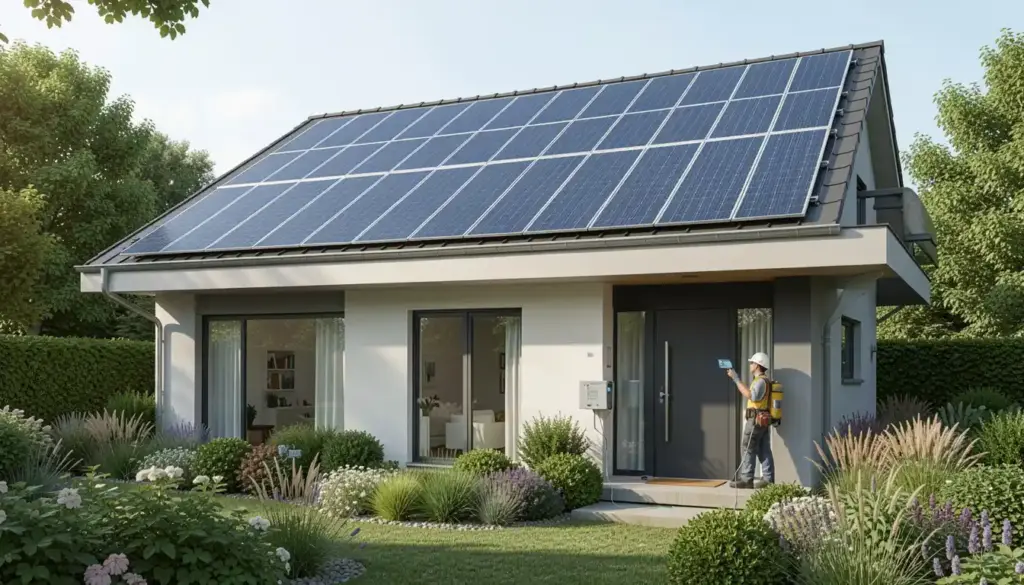
Solar photovoltaic (PV) systems convert sunlight directly into electricity. A properly sized system can offset 70–100% of a household’s electricity consumption, and in states with net metering policies, excess power generated during sunny periods can be sold back to the utility grid, further reducing net costs.
The economics of solar have improved dramatically over the past decade. System costs have fallen by more than 70% since 2010, and the federal Residential Clean Energy Credit currently allows homeowners to deduct 30% of the installation cost from their federal taxes. Many states offer additional incentives on top of this.
The typical payback period for a residential solar installation ranges from 6–12 years, depending on local electricity rates, system size, and available incentives. After that point, the electricity is essentially free for the remaining 15–20+ year lifespan of the panels.
If full solar isn’t feasible, solar water heaters are a more affordable entry point, covering 50–80% of household hot water needs using collected solar energy and a conventional backup system.
Cost-Benefit Analysis: Prioritizing Upgrades
Most homeowners don’t have the budget to tackle every improvement at once, so understanding how to sequence upgrades logically makes a significant difference in total savings over time.
Start with the basics. Air sealing and weatherproofing offer the lowest cost and fastest payback — often weeks to months. Attic insulation, LED lighting, and smart thermostat installation typically follow close behind, each offering payback periods of 1–5 years with minimal disruption.
Mid-tier upgrades — such as replacing an aging water heater, upgrading major appliances, or adding wall insulation — typically cost more but still return their investment within 5–10 years, especially if replacing equipment that was already near the end of its useful life.
High-cost upgrades like window replacement, full HVAC system replacement, and solar panel installation require the most capital but offer the longest-lasting impact. These make the most financial sense when existing equipment has failed or is approaching the end of life, when significant rebates or tax credits are available, or when a home sale is planned and improved energy ratings can increase market value.
A practical approach: schedule a home energy audit first. An auditor will rank your specific home’s inefficiencies by cost-effectiveness, giving you a prioritized roadmap rather than a generic checklist.
Stacking upgrades also produces compounding benefits. Improving insulation reduces the load on your HVAC system, which then runs more efficiently — meaning if you’re planning to replace your furnace, doing insulation work first may allow you to purchase a smaller, less expensive unit.
Finally, check for available incentives before spending. The Database of State Incentives for Renewables & Efficiency (DSIRE) at dsireusa.org lists every available rebate, tax credit, and utility program by state. Many utility companies also offer free energy audits or rebates for specific upgrades, which can substantially reduce out-of-pocket costs.
FAQs
What are the most cost-effective energy efficient home improvements?
Air sealing, weatherstripping, attic insulation, and LED lighting upgrades consistently offer the best return relative to cost. These low-cost interventions can reduce energy bills noticeably within months.
How can insulation help reduce energy bills?
Insulation slows the movement of heat through your home’s building envelope, reducing how hard your heating and cooling systems have to work. Proper attic insulation alone can cut heating and cooling costs by 10–50%, depending on your current insulation levels and climate.
Are energy-efficient appliances worth the investment?
Yes, particularly when replacing appliances that are already aging or failing. ENERGY STAR® certified models cost more upfront but deliver consistent savings throughout their lifespan. Heat pump water heaters and efficient refrigerators typically pay back within 3–8 years.
How do smart thermostats help with energy savings?
They reduce energy waste by automatically adjusting temperatures based on your schedule and preferences. Most models also provide usage data that helps identify patterns worth changing. The average household saves around 8% on heating and cooling after installation.
What grants or incentives are available for energy upgrades?
The federal Residential Clean Energy Credit covers 30% of solar and certain other renewable system costs. The Energy Efficient Home Improvement Credit covers up to $3,200 annually for qualified insulation, windows, doors, HVAC, and energy audits. State and utility programs vary widely — check DSIRE for what’s available in your area.
How long does it take to recoup the cost of energy renovations?
It depends on the upgrade. LED bulbs pay back in under a year. Smart thermostats typically take 1–2 years. Insulation improvements usually return their cost within 3–7 years. Solar panels typically pay back in 6–12 years. The key variable is your current energy costs — higher utility rates accelerate payback for every improvement.
Can sealing gaps and weatherproofing really make a difference?
More than most homeowners expect. Air leakage is one of the most underestimated sources of energy loss in older homes. Sealing gaps around windows, doors, electrical outlets, and pipe penetrations can reduce heating and cooling costs by 10–20% with materials that cost very little.