

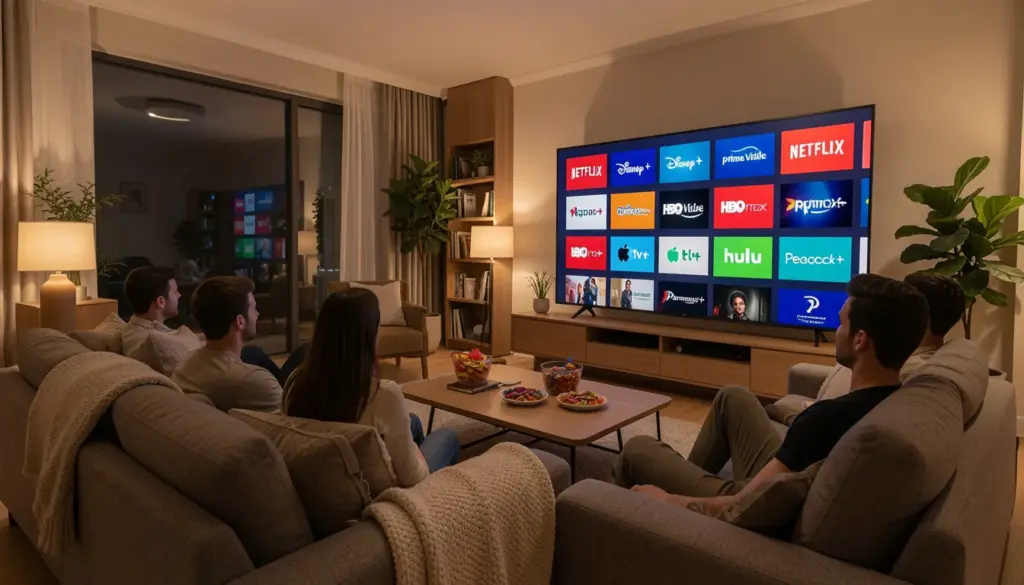
Choosing a streaming service feels like picking between dozens of nearly identical options. Monthly costs add up quickly; each platform promises exclusive content, and canceling one service means missing out on shows everyone’s talking about.
This guide cuts through the confusion. You’ll find clear comparisons of subscription pricing, content libraries, device compatibility, and features across the top streaming platforms. Whether you’re watching alone, sharing with family, or trying to stick to a budget, you’ll discover which services match your specific needs and which ones aren’t worth the monthly charge.
Top Streaming Services Overview
Eight major platforms dominate the streaming landscape, each offering different strengths depending on what matters most to you.
Netflix remains the largest streaming service with the most extensive library of original programming. The platform continues to produce acclaimed series and films across multiple genres, though recent price increases have made it one of the more expensive options.
Disney Plus brings together content from Disney, Pixar, Marvel, Star Wars, and National Geographic. Families with children find exceptional value here, while the platform has expanded its adult-oriented content through integrated access to Hulu in certain subscription tiers.
Amazon Prime Video comes bundled with an Amazon Prime membership, making it a strong value proposition if you already use Prime shipping benefits. The content library mixes original productions with licensed films and shows, plus the option to rent or purchase additional titles.
HBO Max (now simply called Max) combines HBO’s premium programming with content from Warner Bros., DC, Cartoon Network, and other WarnerMedia properties. The service targets viewers seeking high-quality drama series and blockbuster films.
Hulu offers current-season episodes from major networks alongside its growing catalog of original series. The platform provides both ad-supported and ad-free tiers, with the option to add live TV channels for cord-cutters.
Apple TV+ focuses on quality over quantity, producing a smaller but critically acclaimed selection of original series and films. The service works particularly well within the Apple device system.
Peacock from NBCUniversal provides a free tier with limited content and premium tiers for full access to NBC shows, Universal films, and original programming.
Paramount+ brings together content from CBS, MTV, Nickelodeon, and Paramount Pictures, with particularly strong offerings for sports fans and reality TV viewers.
Subscription Cost Comparison
Understanding pricing structures helps you avoid overpaying while getting the content and features you actually need.
Netflix now offers three tiers: Standard with ads ($6.99/month), Standard ($15.49/month), and Premium ($19.99/month). The Premium plan includes 4K streaming and four simultaneous streams, making it suitable for families, while the ad-supported tier provides the same content library at a fraction of the cost for individual viewers willing to watch commercials.
Disney Plus starts at $7.99/month for the ad-supported plan or $13.99/month without ads. The Disney Bundle combines Disney Plus, Hulu, and ESPN+ for $14.99/month with ads or $24.99/month ad-free, delivering substantial savings if you want multiple services.
Amazon Prime Video costs $14.99/month as a standalone subscription or comes included with Amazon Prime at $139/year ($11.58/month). If you regularly use Prime shipping, you’re essentially getting the streaming service for free, making this one of the best overall values.
Max offers two plans: With Ads at $9.99/month and Ad-Free at $15.99/month. An Ultimate Ad-Free plan at $19.99/month adds 4K streaming and four simultaneous streams.
Hulu starts at $7.99/month with ads or $17.99/month without commercials. Adding live TV increases the cost to $76.99/month with ads or $89.99/month ad-free, positioning it as a complete cable replacement.
Apple TV+ remains the cheapest premium service at $9.99/month, though its smaller content library means it works best as a secondary subscription rather than your primary streaming platform.
Peacock offers a free tier with limited content, Premium at $5.99/month, and Premium Plus (ad-free) at $11.99/month. The affordable pricing makes it easy to add as a supplement to other services.
Paramount+ costs $5.99/month with ads or $11.99/month for ad-free access with Showtime included. Annual plans reduce the monthly cost further.
The most budget-friendly approach combines one or two primary services with rotating subscriptions. Many viewers subscribe to a platform for a month to watch specific shows, then cancel until new content releases.
Content Library and Original Programming
The value of a streaming service depends largely on whether its content matches your viewing preferences.
Netflix produces the highest volume of original content, releasing new series and films weekly across genres including drama, comedy, documentary, international programming, and reality TV. The platform’s recommendation algorithm effectively surfaces content based on your viewing history, though the sheer size of the library can feel overwhelming. Recent hits span from prestige dramas to binge-worthy thrillers, but the quality varies significantly between productions.
Disney Plus dominates family entertainment with its unmatched collection of animated classics, Marvel superhero content, and Star Wars productions. The platform has begun expanding into more mature programming, but families with children still find the most consistent value here. New releases arrive less frequently than on Netflix, but each major production receives substantial marketing and typically delivers high production values.
Amazon Prime Video’s content library feels uneven, mixing genuinely excellent original series with forgettable productions. The platform has found success with big-budget fantasy and science fiction shows, though navigating between included content and titles requiring additional rental fees frustrates some users.
Max offers the strongest collection of premium drama series, continuing HBO’s reputation for quality storytelling. The platform combines this prestige content with Warner Bros. theatrical releases, DC superhero content, and extensive back catalogs from various cable networks. Content skews toward adult viewers, with limited options for young children compared to Disney Plus or Paramount+.
Hulu excels at providing next-day access to current network shows, making it valuable for viewers who want to follow broadcast series without cable. Original programming has improved dramatically, with several acclaimed series now competing with Netflix and Max for critical attention.
Apple TV+ produces a small but impressively curated selection of original content. Nearly every series and film receives substantial production budgets and features high-profile talent. The limited library size means you’ll watch everything appealing within a few months, making annual subscriptions less practical than monthly commitments during active watching periods.
Peacock serves as the streaming home for NBCUniversal content, offering comfort-watching classics alongside wrestling, sports, and reality programming. The content library satisfies casual viewers but rarely produces must-see original series.
Paramount+ provides deep catalogs of CBS procedurals, MTV reality shows, and Nickelodeon children’s programming. The platform has invested in several high-profile original series, particularly for fans of the Star Trek franchise.
Device Compatibility and Streaming Quality
Technical compatibility prevents frustration after you’ve already committed to a subscription.
All major streaming services support the most common devices: smart TVs from major manufacturers, streaming media players (Roku, Fire TV, Apple TV, Chromecast), gaming consoles (PlayStation, Xbox), iOS and Android mobile devices, and web browsers. Problems arise primarily with older hardware that hasn’t received recent app updates.
Netflix, Max, Disney Plus, and Apple TV+ deliver 4K resolution and HDR on their premium tiers, assuming your display supports these formats. Amazon Prime Video includes 4K at no additional cost for Prime members. The actual streaming quality depends on your internet connection speed, with most platforms recommending at least 25 Mbps for 4K content.
Simultaneous stream limits matter for households sharing one account. Netflix ranges from two streams on Standard to four on Premium. Disney Plus allows four concurrent streams. Hulu permits two simultaneous streams, or unlimited with the live TV add-on. Max supports two or four streams, depending on your plan. Amazon Prime Video allows three simultaneous streams. Apple TV+ permits six concurrent streams across devices. Peacock supports three simultaneous streams, while Paramount+ allows multiple streams on its premium tier.
Download capabilities for offline viewing work reliably across all major platforms, though some impose limits on how many titles you can store simultaneously or how long downloads remain available before requiring re-verification.
User interface quality varies considerably between platforms. Netflix and Disney Plus generally receive praise for intuitive navigation and effective content discovery. Hulu’s interface has improved, but still frustrates users with its advertising placements. Amazon Prime Video’s integration of rental content within the main interface confuses viewers trying to find included titles. Apple TV+ offers a clean, minimal interface that works well for its smaller library.
Family-Friendly and Kid-Friendly Options
Households with children need different features than individual adult viewers.
Disney Plus leads in child-appropriate content volume and variety. The platform includes robust parental controls, dedicated kids’ profiles with age-appropriate content restrictions, and an interface designed for young users. Parents can set PIN codes to restrict access to content rated above certain levels.
Netflix offers extensive children’s programming alongside its adult content, with kids’ profiles that filter out mature titles. The platform produces numerous original series and films for various age groups, though parents should review content ratings as some “family” productions include themes better suited for teenagers.
Paramount+ provides strong children’s content through its Nickelodeon library, featuring popular animated series and live-action shows. The platform includes parental controls similar to those of other services.
Hulu, Max, and Amazon Prime Video offer children’s content but focus primarily on adult viewers. Their parental control features work adequately but require active management to ensure children don’t encounter inappropriate material.
Apple TV+ produces limited children’s programming, concentrating instead on high-quality family films suitable for co-viewing rather than content designed for unsupervised children’s consumption.
Educational content appears across multiple platforms. Disney Plus includes National Geographic documentaries suitable for school-age children. Amazon Prime Video offers some educational series, while Peacock provides access to select educational programming from NBC’s partnerships.
The most family-friendly approach combines Disney Plus for children’s entertainment with one adult-oriented service for parents, rather than attempting to find a single platform serving all household viewing needs.
Free Trials, Promotions, and Best Value Deals
Strategic subscription management significantly reduces annual streaming costs.
Traditional seven-day or thirty-day free trials have become less common as platforms mature. Most services now offer limited-time promotional pricing for new subscribers rather than extended trial periods. Check directly on service websites for current offers, as promotions change frequently.
Bundling provides the clearest savings opportunity. The Disney Bundle, combining Disney Plus, Hulu, and ESPN+, costs less than subscribing to each service individually. Verizon and other wireless carriers sometimes include streaming subscriptions with premium phone plans. Amazon Prime membership includes Prime Video as part of its overall benefits package.
Annual subscriptions typically discount the monthly rate by 15-20% compared to month-to-month billing. This makes sense for services you know you’ll use consistently throughout the year, like Disney Plus for families with young children or Netflix for regular viewers.
Student discounts exist for some platforms. Hulu offers discounted rates for college students with a valid .edu email address. Apple TV+ comes bundled with Apple Music student subscriptions.
The most cost-effective strategy rotates subscriptions based on content availability. Subscribe to a service when it releases shows you want to watch, then cancel until the next season premieres. This works particularly well for platforms like Apple TV+ with smaller libraries, where you can watch everything appealing within one or two months.
Credit card rewards and cash-back programs sometimes offer statement credits for streaming service purchases. Check whether your credit cards provide benefits for entertainment subscriptions.
Pros and Cons for Different Types of Viewers
Your ideal streaming service depends on your specific viewing habits and priorities.
For binge-watchers seeking maximum content volume, Netflix remains the top choice despite higher costs. The vast library ensures you’ll always find something new, and the platform’s recommendation system improves as it learns your preferences. Amazon Prime Video works as a strong secondary option, especially if you already subscribe to Prime for shipping benefits.
However, Netflix’s content quality varies dramatically between productions. You’ll spend time browsing through mediocre shows to find genuinely excellent series, and the constant content additions make it difficult to maintain a watchlist without shows expiring before you watch them.
Budget-conscious viewers should start with ad-supported tiers from Netflix, Disney Plus, or Hulu. Peacock’s free tier provides surprising value for casual watching. Paramount+ offers affordable access to extensive back catalogs. Rotating one or two paid subscriptions monthly prevents costs from accumulating while maintaining access to new content.
The primary limitation of budget approaches involves accepting advertisements or missing out on certain exclusive content only available on more expensive platforms.
Families with children benefit most from Disney Plus, which delivers unmatched value through its combination of classic animated films, Marvel content, Star Wars series, and Pixar productions. The robust parental controls and dedicated kids’ profiles justify the subscription cost for households where children frequently watch content.
Parents wanting variety for both children and adults might add Hulu or Netflix to access age-appropriate programming alongside adult series. The main drawback of Disney+ involves its limited appeal once children outgrow family-friendly content, typically during their teenage years.
Film enthusiasts prioritizing movie libraries over television series should consider Max for its Warner Bros. theatrical releases and classic film catalog. Amazon Prime Video provides extensive movie options, particularly if you’re willing to rent newer releases. Apple TV+ produces fewer films but typically features high-profile releases with substantial budgets.
The challenge for movie-focused viewers involves fractured rights across platforms. No single service provides comprehensive access to all films you might want to watch, often requiring multiple subscriptions or rental fees.
Sports fans need specialized considerations beyond standard streaming platforms. Peacock includes select live sports, particularly for wrestling and some soccer matches. Paramount+ offers CBS sports programming, including NFL games and Champions League soccer. ESPN+ (available through the Disney Bundle) provides extensive sports content but typically excludes major national broadcasts.
Most serious sports viewers still require cable, live TV streaming services like Hulu + Live TV or YouTube TV, or sports-specific subscriptions beyond standard entertainment platforms.
Viewers seeking prestigious drama and critically acclaimed series gravitate toward Max for HBO programming and high-budget productions. Apple TV+ delivers quality over quantity, with nearly all original series receiving positive critical reception. Netflix produces occasional prestige series amid its broader content volume.
These viewers often maintain multiple subscriptions, rotating based on which platform currently airs shows they follow, rather than committing to a single service year-round.
Final Thoughts
No single streaming service provides everything for everyone, but clear patterns emerge based on your priorities.
For most households, Disney+ delivers the best value if children watch regularly. The combination of classic content, new releases, and family-friendly programming justifies the monthly cost more consistently than any alternative. Adding one adult-oriented service like Netflix or Max creates a complete viewing experience without excessive spending.
Individual viewers should start with Netflix if they watch frequently across multiple genres, or choose Max if they prioritize quality drama over content volume. Budget-conscious subscribers benefit from rotating between services monthly, maintaining one ad-supported platform as their consistent base while adding others temporarily for specific shows.
The ad-supported tiers from major platforms provide legitimate value. The commercial interruptions feel intrusive initially but become tolerable as you adjust, and the cost savings let you afford multiple services simultaneously or redirect funds toward other entertainment.
Avoid subscribing to more than two or three services at once unless you watch substantial hours daily. The pressure to “get your money’s worth” from multiple subscriptions often leads to choice paralysis rather than enjoyment. Quality watching matters more than access to unlimited content you’ll never have time to watch.
Review your subscriptions every few months. Services you signed up for to watch specific shows often continue charging after you’ve stopped actively watching. Cancel liberally—you can always re-subscribe when new content arrives that interests you. Streaming services benefit from customer retention anxiety, but reactivating a canceled subscription takes less than two minutes.
Your ideal combination changes over time as content libraries shift, exclusive shows premiere, and prices adjust. The platform worth your money today might not remain the best choice next year, so stay willing to modify your subscriptions based on current value rather than past satisfaction.