

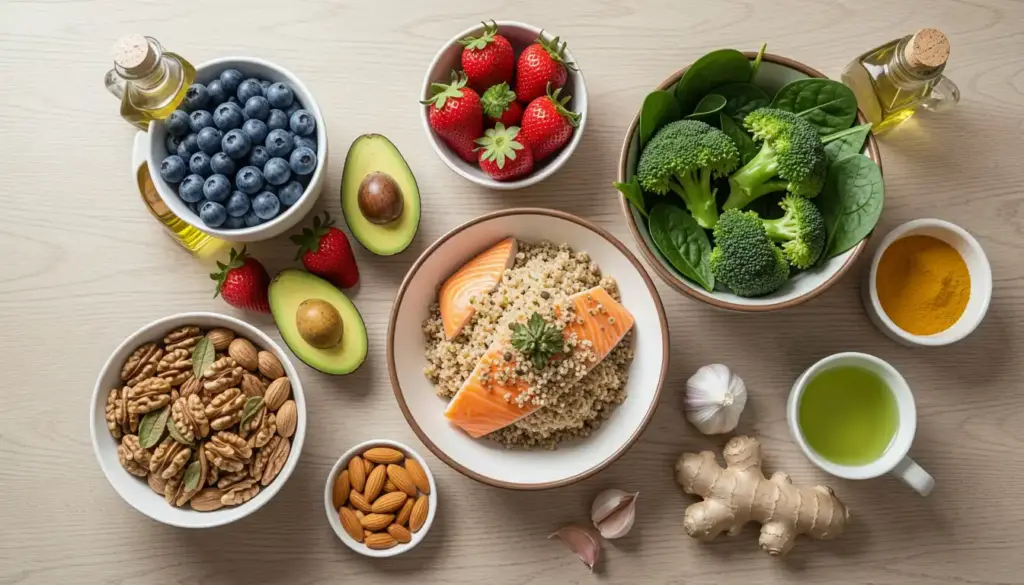
Chronic inflammation is one of the quieter forces behind fatigue, joint discomfort, digestive trouble, and long-term health decline. The frustrating part? Most people don’t realize their daily food choices are either calming it or feeding it.
The good news is that building an anti-inflammatory diet doesn’t require expensive supplements, complicated meal plans, or a nutrition degree. It starts at the grocery store, with simple, whole foods that your body recognizes and responds to well.
This guide gives you a categorized list of 20+ anti-inflammatory foods, a practical grocery shopping system, beginner-friendly meal ideas, and a repeatable daily eating framework — everything you need to start reducing inflammation naturally through food.
What Is Inflammation and Why Your Diet Matters
Inflammation isn’t always a problem. When you cut your finger or catch a cold, your immune system triggers acute inflammation — a short-term response that helps your body heal. That’s normal and necessary.
The issue is chronic inflammation: a low-grade, persistent state where the immune system stays activated even when there’s no real threat. Over time, this contributes to a wide range of health concerns, including cardiovascular disease, type 2 diabetes, arthritis, and digestive disorders.
Diet is one of the most direct levers you have to influence this process. Certain foods contain compounds — antioxidants, omega-3 fatty acids, polyphenols — that interrupt inflammatory signals at the cellular level. Others, like refined sugar and processed oils, do the opposite, triggering the immune system and keeping it in an overactive state.
The way you eat, consistently, over months and years, shapes your body’s baseline level of inflammation. A shift toward nutrient-dense whole foods is one of the most well-supported dietary changes for long-term health.
The Anti-Inflammatory Foods List (20+ Foods)
The following foods are grouped by category to make grocery shopping straightforward. Each entry includes a brief explanation of why it helps and an easy way to use it.
Fruits (Antioxidant-Rich)
Blueberries, strawberries, and raspberries are loaded with anthocyanins — pigments that give berries their color and also act as potent anti-inflammatory compounds. They help neutralize free radicals and reduce oxidative stress in the body. Add a handful to oatmeal, yogurt, or a smoothie.
Oranges and other citrus fruits provide vitamin C, which supports immune function and helps regulate inflammatory responses. Eat them whole rather than juiced to preserve the fiber content.
Cherries, particularly tart cherries, contain high concentrations of antioxidants and have been studied for their role in reducing muscle soreness and joint inflammation. A small bowl as a snack or mixed into overnight oats works well.
Vegetables (Leafy and Cruciferous)
Spinach and kale are two of the most nutrient-dense foods available. They’re rich in vitamins K and E, magnesium, and flavonoids — all of which support immune health and help lower inflammatory markers. Sauté them with garlic or use them as a salad base.
Broccoli belongs to the cruciferous vegetable family and contains sulforaphane, a compound that has been shown to reduce cytokines — proteins that drive inflammation. Roast it, steam it, or toss it into stir-fries.
Bell peppers are among the highest-vitamin C vegetables available. Red peppers in particular contain capsanthin, an antioxidant linked to reduced inflammation. Slice them raw for snacks or add them to any cooked dish.
Healthy Fats
Extra virgin olive oil is central to the Mediterranean diet — one of the most well-researched anti-inflammatory eating patterns in existence. It contains oleocanthal, a compound with properties similar to ibuprofen at the molecular level. Use it as your primary cooking and dressing fat.
Avocados provide monounsaturated fats, fiber, magnesium, and carotenoids, all of which contribute to reducing inflammation and supporting gut health. Half an avocado on toast or alongside eggs is a simple, satisfying addition.
Walnuts and almonds are both rich in healthy fats, antioxidants, and magnesium. Walnuts have a particularly favorable omega-3 profile among nuts. A small handful as a daily snack is enough to make a meaningful difference.
Protein Sources
Fatty fish — salmon, sardines, mackerel, and herring — are among the most concentrated dietary sources of omega-3 fatty acids, specifically EPA and DHA. These compounds directly reduce the production of inflammatory molecules in the body. Aim for two to three servings per week. Baked salmon with roasted vegetables is one of the easiest, most effective anti-inflammatory meals you can prepare.
Legumes — lentils, chickpeas, and black beans — provide plant-based protein along with fiber that feeds beneficial bacteria in the gut microbiome. A healthy gut plays a central role in regulating the immune system and reducing chronic inflammation. Add legumes to soups, grain bowls, or as a side dish.
Whole Grains
Oats are a practical daily staple. They contain beta-glucan, a soluble fiber that supports gut health, helps balance blood sugar levels, and has been associated with lower inflammatory markers. Steel-cut or rolled oats are the least processed options.
Quinoa provides complete protein, fiber, and iron — making it a strong base for grain bowls, salads, or sides. It’s also gluten-free, which matters for people whose digestive systems are sensitive to gluten-containing grains.
Brown rice is a reliable, budget-friendly whole grain that replaces refined white rice well. The fiber content helps prevent blood sugar spikes, which is relevant because unstable blood sugar is a known driver of chronic inflammation.
Herbs and Spices
Turmeric contains curcumin, one of the most studied anti-inflammatory compounds in the plant world. It works by blocking NF-kB, a molecule that activates the genes responsible for producing inflammatory responses. Use it in curries, soups, rice dishes, or warm drinks. Combining it with black pepper significantly improves absorption.
Ginger has been used for centuries for its medicinal properties. It contains gingerol and shogaol, compounds that inhibit inflammatory pathways. Fresh ginger is excellent in teas, stir-fries, and dressings.
Garlic contains sulfur compounds — most notably allicin — that stimulate the immune system and help reduce inflammation-related signals. It’s also one of the most accessible and affordable ingredients you can use daily. Add it to almost any savory dish.
Green tea deserves a mention here for its concentration of EGCG, a polyphenol antioxidant that reduces oxidative stress and inflammatory markers. Replacing one or two daily coffees with green tea is a simple swap with meaningful benefits.
Foods That Cause Inflammation (What to Limit)
Understanding what to reduce is just as useful as knowing what to add. The following foods are the most consistent dietary drivers of chronic inflammation:
Refined sugar and high-fructose corn syrup trigger rapid blood sugar spikes, which in turn activate inflammatory responses. Sugary drinks, packaged desserts, and heavily sweetened cereals are the primary sources to reduce.
Processed and ultra-processed foods — fast food, packaged snacks, deli meats, frozen meals — typically contain refined carbohydrates, industrial seed oils, and additives that promote gut imbalance and immune activation.
Refined carbohydrates like white bread, white pasta, and pastries are stripped of the fiber that slows digestion. Without fiber, they behave similarly to sugar in the body — causing blood sugar swings and inflammatory spikes.
Trans fats and partially hydrogenated oils, still present in some packaged goods, are among the most directly harmful dietary components for inflammation and cardiovascular health.
The goal is not to eliminate these foods, but to reduce how frequently they appear in your routine. Swapping processed snacks for whole-food alternatives five days out of seven makes a measurable difference over time.
How to Build an Anti-Inflammatory Grocery List
The most practical way to shift your diet is to shop differently. A category-based approach takes the guesswork out of grocery trips and keeps your kitchen stocked with anti-inflammatory options throughout the week.
Produce section: Spinach or kale, broccoli, bell peppers, one or two other seasonal vegetables, blueberries or mixed berries, oranges or citrus, cherries (fresh or frozen), avocados, garlic, fresh ginger.
Pantry staples: Extra virgin olive oil, canned or dried lentils/chickpeas/black beans, rolled oats or steel-cut oats, quinoa or brown rice, turmeric, black pepper, green tea.
Protein section: Salmon (fresh or canned), sardines, eggs, walnuts, almonds.
Optional additions: Plain Greek yogurt (probiotic benefit for gut health), dark chocolate 70%+ (contains polyphenols), frozen berries (cost-effective antioxidant source).
Shopping this list consistently eliminates most of the decision-making that leads people back to processed defaults. You don’t need every item every week — rotate based on what’s in season and what’s affordable in your area.
Simple Anti-Inflammatory Meal Ideas for Beginners
You don’t need elaborate recipes to eat well. These combinations use the foods above and take minimal time to prepare.
Breakfast: Rolled oats with blueberries, a small handful of walnuts, and a sprinkle of cinnamon. Or scrambled eggs with sautéed spinach and half an avocado.
Lunch: A grain bowl with quinoa, roasted broccoli and bell peppers, a scoop of chickpeas, and a drizzle of olive oil with lemon. Or a large salad using kale as the base, topped with sliced avocado, cherry tomatoes, walnuts, and a simple olive oil dressing.
Dinner: Baked salmon with a side of roasted vegetables (broccoli, peppers, garlic) and brown rice. Or a lentil soup with turmeric, ginger, garlic, and a squeeze of lemon.
Snacks: A small bowl of mixed berries. A handful of almonds or walnuts. Sliced bell peppers with hummus. A cup of green tea.
These aren’t complex. They’re repeatable, affordable, and built around foods that actively reduce inflammation rather than contribute to it.
A Simple Daily Eating Framework (Beginner-Friendly)
Rather than tracking macros or counting calories, a simple plate method helps you make consistently good food choices without overthinking.
The 4-Part Anti-Inflammatory Plate:
- Fiber (half the plate): leafy greens, vegetables, legumes, or whole grains
- Healthy fat (a portion): olive oil, avocado, or a small handful of nuts
- Quality protein (a portion): fatty fish, legumes, or eggs
- Antioxidant color (wherever possible): berries, colorful vegetables, herbs, and spices
If most of your meals follow this structure — even loosely — your diet will naturally align with an anti-inflammatory eating pattern without requiring rigid meal planning.
Common Mistakes to Avoid
Treating it as an all-or-nothing approach. One meal with processed food doesn’t undo a week of whole-food eating. Consistency over months matters more than perfection day to day.
Relying too heavily on “superfoods.” Eating turmeric daily won’t compensate for a diet built on refined carbohydrates and processed snacks. The whole pattern matters more than any individual food.
Overcomplicating it from the start. Many beginners try to overhaul everything at once and give up within two weeks. A more effective strategy is to make two or three small swaps first, build confidence, then expand.
Ignoring inflammatory triggers outside of food. Chronic stress, poor sleep, and sedentary behavior all increase inflammatory markers. Diet is powerful, but it works best as part of a broader approach to daily health.
Tips for Staying Consistent Long-Term
Habit stacking is one of the most practical tools for consistency. Attach a new food habit to something you already do reliably — add berries to your morning coffee routine, or prepare a batch of grains while cooking dinner.
Batch cooking two or three anti-inflammatory staples on the weekend — a pot of lentils, a tray of roasted vegetables, a batch of brown rice — removes friction during busy weekdays when processed food feels like the easier option.
Budget-friendly priorities: Frozen berries, canned fish, dried legumes, eggs, and seasonal produce are all affordable anti-inflammatory staples. You don’t need the most expensive options to build an effective diet.
Progress over perfection. People who sustain dietary changes long-term tend to focus on what they’re adding rather than what they’re restricting. Each meal that includes an anti-inflammatory food is a positive step, regardless of what else is on the plate.
FAQs
What are the best anti-inflammatory foods to eat daily?
Berries, leafy greens, fatty fish, olive oil, nuts, and turmeric are among the most consistently supported daily options. Including at least two or three of these categories in each day creates a meaningful baseline.
Can diet really reduce chronic inflammation?
Yes — and this is one of the more well-supported areas of nutritional research. Dietary patterns like the Mediterranean diet have been linked to lower levels of C-reactive protein and other inflammatory markers in multiple long-term studies. Results are gradual, typically becoming measurable after several weeks of consistent change.
How long does it take to see results from anti-inflammatory foods?
It varies by individual, but many people notice improvements in energy, digestion, and joint comfort within two to four weeks of consistent dietary changes. Measurable reductions in inflammatory markers typically appear over one to three months.
What foods should I avoid on an anti-inflammatory diet?
The most important items to reduce are refined sugar, ultra-processed foods, refined carbohydrates, and trans fats. These are the dietary patterns most directly linked to elevated chronic inflammation.
Is coffee anti-inflammatory or inflammatory?
Moderate coffee consumption — roughly one to three cups per day — is generally associated with lower inflammatory markers in research, largely due to its polyphenol content. Excessive amounts of coffee loaded with sugar and processed creamers can offset those benefits.
What are good anti-inflammatory snacks?
Mixed berries, a small handful of walnuts or almonds, sliced vegetables with hummus, dark chocolate (70%+), and green tea are all practical, accessible snack options that support an anti-inflammatory eating pattern.
Are anti-inflammatory diets useful for joint pain?
Many people with inflammatory joint conditions — including rheumatoid arthritis and osteoarthritis — report meaningful improvements with dietary changes, particularly after increasing omega-3 intake and reducing processed foods. This doesn’t replace medical treatment, but it’s a meaningful, supportive strategy.