

Most travel budgets fall apart before the trip even begins. Not because people spend too freely on the road, but because they never had a realistic plan to begin with. They book flights, reserve a hotel, and then figure out the rest as they go — which almost always leads to overspending, financial stress, or cutting the trip short.
The good news: building a travel budget that actually holds up is not complicated. It requires a clear method, the right expense categories, and a little research before you book anything.
This guide walks you through a simple 5-step budgeting system, a full expense breakdown, a ready-to-use template, and a real-world example of a 7-day trip budget. By the end, you will know exactly how much your trip will cost — and how to keep it on track.
Why Travel Budget Planning Matters
Skipping the budgeting step is one of the most expensive mistakes a traveler can make. Without a spending plan, costs pile up in ways that are easy to miss: airport meals, local transport, booking fees, unexpected entry charges, and the tendency to spend more when you are not watching a number.
The most common travel budgeting mistakes include:
- Estimating costs too loosely — rounding down on accommodation or ignoring daily food expenses
- Forgetting variable costs — things like taxis, tips, souvenirs, and SIM cards
- Skipping a buffer — leaving no room for delays, missed connections, or medical emergencies
- Budgeting for best-case prices — using the cheapest flight you found once, rather than a realistic average
A solid travel budget does not just tell you how much to save. It also shows you whether the trip is actually affordable before you commit to any bookings.
What Expenses Should You Include in a Travel Budget?
A complete travel budget covers every cost category from departure to return. Breaking down expenses by category is the most reliable way to avoid under-budgeting.
Transportation includes flights, trains, buses, airport transfers, and any local transit you will use daily. This is usually the highest single cost in a trip budget, and prices vary significantly based on how early you book and how flexible your dates are.
Accommodation covers hotels, hostels, guesthouses, and Airbnb rentals. Prices shift based on location, season, and how far in advance you book. Seasonal pricing can double room rates during peak travel periods, so this is worth researching early.
Food and drink are among the most variable expenses on any trip. Eating at local markets costs a fraction of what dining in tourist-area restaurants does. Budget travelers often allocate a daily food amount and track it closely.
Activities and experiences include entrance fees, guided tours, excursions, and entertainment. These are easy to underestimate, especially in cities with many paid attractions.
Miscellaneous and hidden costs tend to be the budget-killers. This category includes travel insurance, visa fees, currency exchange costs, checked baggage fees, tips and gratuities, mobile data, and small daily purchases. These expenses are individually small but collectively significant.
Step-by-Step Guide to Creating a Travel Budget
Step 1 — Define Your Trip Details
Before you can estimate any costs, you need a clear picture of the trip itself. Define your destination, the number of travel days, your travel style (budget, mid-range, or comfort), and how many people are traveling.
Your travel style sets the baseline for everything else. A budget traveler staying in hostels and cooking some meals will have a very different daily spending limit than someone booking private hotels and guided tours.
Step 2 — Estimate Major Costs First
Start with the fixed costs — the ones you can research and book in advance. Flights and accommodation represent the bulk of most trip budgets and are the easiest to estimate accurately using booking platforms.
Search for realistic prices, not the absolute lowest you can find on an ideal date. Use a mid-range estimate so your budget stays grounded. Check a few accommodation options at your target price level and note the average nightly rate.
Fixed costs for a typical trip include:
- Round-trip flights or intercity transport
- Accommodation (nightly rate × number of nights)
- Travel insurance
- Visa fees (if applicable)
Step 3 — Calculate Daily Expenses
Daily expenses cover everything you spend once you arrive: food, local transport, activities, and small purchases. This is where cost-of-living differences between destinations matter most.
A useful approach is to set a daily spending limit and break it into sub-categories:
| Category | Daily Estimate |
|---|---|
| Breakfast | $5–$10 |
| Lunch | $8–$15 |
| Dinner | $12–$25 |
| Local transport | $5–$15 |
| Activities | $10–$30 |
| Miscellaneous | $5–$10 |
Multiply your daily total by the number of days to get your variable cost estimate.
Step 4 — Add a Buffer for Unexpected Costs
Every travel budget needs a contingency amount built in. A reliable rule is to add 10–15% of your total estimated cost as a buffer. This covers flight delays, medical expenses, spontaneous experiences, or anything that falls outside your plan.
Skipping the buffer is the single most common reason travelers overspend. Something unexpected always happens — the buffer is what keeps it from becoming a financial problem.
Step 5 — Calculate Your Total Budget
Once you have your fixed costs, variable costs, and buffer, add them together:
Total Budget = Fixed Costs + (Daily Expenses × Trip Duration) + Buffer (10–15%)
This gives you your pre-trip planning target — the number you need to save before booking, and the ceiling you are working within once you travel.
How to Estimate Travel Costs Before Booking
Estimating costs accurately before booking anything is the most practical skill in travel budgeting — and the one most guides skip over.
Start with flight research. Use tools like Google Flights to check price ranges across different dates. Look at a spread of dates around your target window to understand what realistic prices look like, not just the cheapest outlier.
For accommodation, search your destination on a booking platform and filter by your preferred type (hotel, hostel, Airbnb). Note the average nightly rate at your comfort level — not the cheapest listing you can find, but what you would realistically book.
For daily costs, look up the cost-of-living index for your destination relative to your home country. Travel blogs with expense reports from the same destination are also useful for realistic food and transport estimates.
For activities, check the admission prices for the specific places you plan to visit. Build a rough itinerary and price it out — this prevents the common mistake of budgeting $20/day for activities in a city where major attractions cost $15–$30 each.
How to Create a Daily Travel Budget
The daily travel budget is the number you track while you are actually on the trip. It is your per-day spending limit, and it keeps you financially in control without requiring you to check your total budget constantly.
Formula:
Daily Budget = (Total Variable Budget) ÷ Number of Travel Days
For example, if you have allocated $700 for variable expenses over 7 days, your daily limit is $100. This number becomes your reference point each day.
To make this work in practice, track your daily spending in a notes app, a simple spreadsheet, or an expense tracker app. If you spend $85 on day one, you carry the $15 surplus forward. If you spend $115, you know how to reduce costs the next day.
This method gives you real-time financial control while traveling without requiring a rigid hour-by-hour budget.
Free Travel Budget Template (Copy & Use)
Use this table as your travel budget template. Fill in the estimated and actual costs for each category.
| Category | Estimated Cost | Actual Cost |
|---|---|---|
| FIXED COSTS | ||
| Flights (round-trip) | $ | $ |
| Accommodation (total) | $ | $ |
| Travel insurance | $ | $ |
| Visa fees | $ | $ |
| DAILY VARIABLE COSTS | ||
| Food & drink (per day × days) | $ | $ |
| Local transport (per day × days) | $ | $ |
| Activities (per day × days) | $ | $ |
| Miscellaneous (per day × days) | $ | $ |
| BUFFER (10–15%) | $ | $ |
| TOTAL BUDGET | $ | $ |
How to use this template: Copy it into Google Sheets or Microsoft Excel before your trip. Fill in the estimated column during your pre-trip planning phase. Update the actual column as you spend. The difference between the two columns tells you exactly where you are tracking ahead or behind budget.
Tools to Track Your Travel Expenses
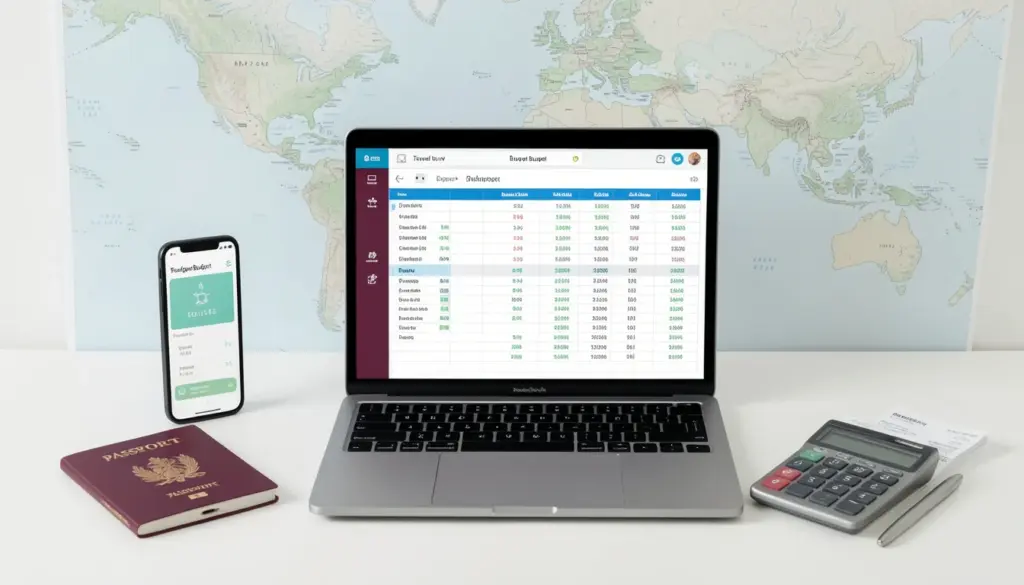
Google Sheets and Microsoft Excel are the most flexible tools for travel budgeting. You can build a custom version of the template above, add formulas (such as daily budget = total ÷ days), and update it from your phone while traveling.
Expense tracker apps designed for travel simplify the process if you prefer not to manage a spreadsheet. Many of these apps allow you to log expenses by category, set a total trip budget, and view your remaining balance at a glance.
For currency conversion, most expense apps handle exchange rate adjustments automatically, which removes one of the more tedious parts of tracking costs across multiple countries.
Whichever tool you choose, the key habit is logging expenses the same day you make them. Waiting until the end of the trip to reconcile costs defeats the purpose of tracking.
Budget Travel Tips to Reduce Costs
Book flights strategically. Midweek departures and returns are typically cheaper than weekend travel. Booking 6–10 weeks in advance for domestic trips and 2–4 months ahead for international travel tends to hit a good price window.
Choose accommodation thoughtfully. Staying slightly outside the main tourist center can cut nightly rates significantly. Hostels with private rooms often offer better value than budget hotels while providing similar amenities.
Eat where locals eat. Markets, food courts, and neighborhood restaurants cost a fraction of tourist-area dining without sacrificing quality. Budgeting for one restaurant meal per day and handling breakfast and lunch more casually is a practical way to keep food costs reasonable.
Use public transport. Taxis and rideshare apps are convenient but expensive for a full trip. Local buses, metro systems, and trains are almost always cheaper and often just as practical.
Avoid hidden travel expenses. Checked baggage fees, airport parking, foreign transaction fees on your bank card, and expensive airport food all add up. Many of these are avoidable with a small amount of planning.
Example: Real Travel Budget Breakdown (7-Day Trip)
Here is a worked example for a solo mid-range traveler on a 7-day international trip.
| Category | Estimated Cost |
|---|---|
| Round-trip flights | $420 |
| Accommodation (7 nights × $55/night) | $385 |
| Travel insurance | $40 |
| Food ($35/day × 7 days) | $245 |
| Local transport ($12/day × 7 days) | $84 |
| Activities ($25/day × 7 days) | $175 |
| Miscellaneous ($10/day × 7 days) | $70 |
| Subtotal | $1,419 |
| Buffer (12%) | $170 |
| Total Budget | $1,589 |
Daily variable spending in this example comes to approximately $82/day, which is the figure to track each day on the trip. Fixed costs are already covered by pre-trip payments, so only the daily variable total requires active monitoring.
This kind of realistic travel budget example shows how a trip that feels expensive upfront often breaks down into very manageable daily numbers.
Common Travel Budget Mistakes to Avoid
Using best-case prices. Building your budget around the cheapest possible flight or the lowest hotel you found once leads to a budget that does not reflect reality. Use realistic mid-range estimates.
Ignoring local transport costs. Getting around within a destination is one of the most consistently underestimated expenses. Price out your expected transport options before you go.
Forgetting pre-departure costs. Travel insurance, visa fees, travel adapters, and new luggage all come before you even reach the airport. These belong in your budget.
Not separating fixed and variable costs. Fixed and variable expenses behave differently. Mixing them makes it harder to track daily spending accurately and adjust in real time.
Treating the budget as a one-time calculation. A travel budget is a living document. Check it before you book, review it mid-trip, and adjust your daily spending limit if something changes.
FAQs
How much money should I budget per day while traveling?
It depends on your destination and travel style. Budget travelers in Southeast Asia might manage on $30–$50/day, while mid-range travel in Western Europe often runs $100–$150/day. Research your specific destination and use the daily budget formula: total variable cost ÷ number of days.
What is a realistic budget for a 7-day trip?
For a solo mid-range international trip, expect $1,200–$2,000 total, including flights, accommodation, food, activities, and a buffer. The exact number depends heavily on the destination and when you book.
How do I estimate travel costs before booking anything?
Research flight prices using Google Flights, check accommodation rates on booking platforms, and look up cost-of-living comparisons for your destination. Use mid-range estimates, not the absolute lowest price available.
Should I budget for emergencies while traveling?
Yes. Add a 10–15% buffer to your total estimated cost before finalizing your budget. Also consider travel insurance to cover larger unexpected expenses like medical emergencies or trip cancellations.
How do I adjust my travel budget for a different destination?
The core framework stays the same, but the numbers change. Use the cost-of-living index for your destination relative to somewhere you know well. A city with a lower cost of living simply lowers your daily variable estimate — the structure of the budget remains identical.
What is the best tool to track travel expenses?
Google Sheets or Microsoft Excel work well for travelers who want full control. If you prefer a dedicated app, look for one that supports multiple currencies and allows you to set a total trip budget alongside daily limits.