

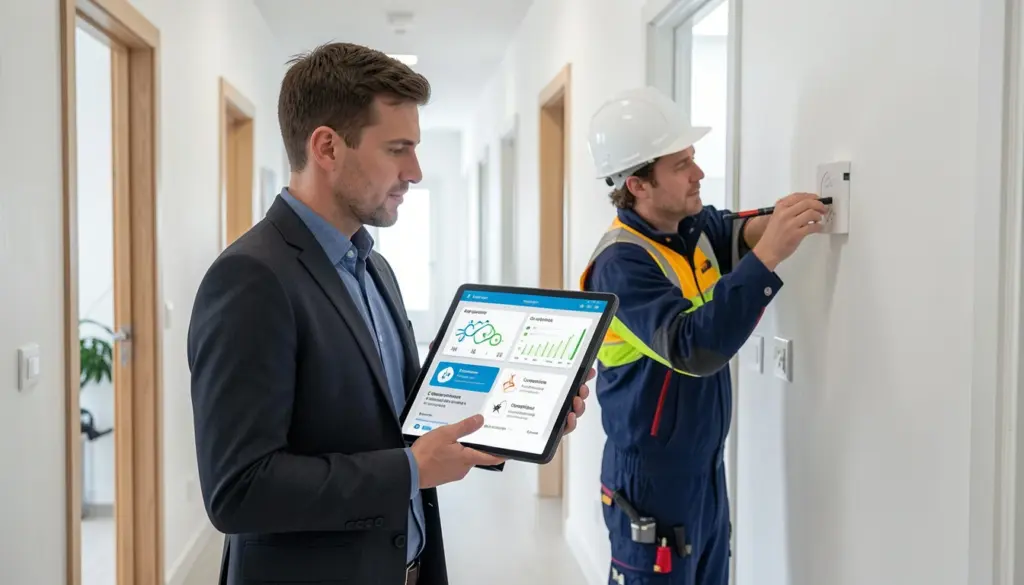
Picture a property manager in Helsinki overseeing a 1970s-era apartment block. She’s dealing with a rodent complaint in one wing, a tenant reporting headaches from poor air quality in another, and a compliance deadline for indoor environment standards next month. She needs one phone call to solve all three problems — not three separate contractors, three invoices, and three sets of technicians unfamiliar with the building.
That’s exactly the gap Anticimex Oy’s yritysostostrategia — its acquisition strategy — is designed to close. And the acquisition of Indoor Quality Service Oy (IQS) sits at the center of it.
What Does Yritysostostrategia Actually Mean?
Yritysosto is the Finnish word for company acquisition or buyout. Strategia is strategy. Together, yritysostostrategia refers to a company’s planned, deliberate approach to growing by purchasing or merging with other businesses — rather than building every new capability from scratch.
In fragmented service industries like pest control and indoor environmental quality, organic growth alone is often too slow. Markets are regional, expertise is specialized, and customer trust takes years to build. Acquisitions compress that timeline. According to McKinsey & Company research, companies with disciplined acquisition programs achieve approximately 19% average annual revenue growth—nearly double the rate of companies relying solely on organic expansion
For Anticimex Oy, the yritysostostrategia is not opportunistic deal-making. It follows a deliberate logic: identify companies with adjacent expertise, acquire them while preserving their local knowledge, then integrate them into a wider service platform that delivers more value to customers than either company could alone.
Anticimex Oy: The Finnish Branch of a Global Pest Control Leader
Anticimex Oy is the Finnish branch of the global Anticimex Group, a company recognized for its preventive pest control solutions. Rather than reacting to infestations after they occur, Anticimex focuses on proactive monitoring and environmentally responsible methods.
The parent group operates across 22 countries with approximately 234 branches, maintaining particularly strong presences in Northern Europe, Australia, and Southeast Asia. EQT, a leading global private equity firm, first acquired Anticimex in 2012 and later transferred controlling ownership to its long-hold impact fund EQT Future in 2021, with the strategic objective of building a scalable platform capable of integrating acquisitions, technologies, and operational expertise. This ownership structure matters — it means Anticimex Oy’s expansion in Finland is not simply a local business decision but part of a coordinated, well-funded growth playbook executed across multiple markets simultaneously.
In addition to pest control, the Anticimex Group offers complementary services in selected markets aimed at creating healthier and more sanitary indoor environments. These services include fire prevention, sanitation, dehumidification, energy inspections, and building inspections related to property sales.
Who Is Indoor Quality Service Oy (IQS)?
Indoor Quality Service Oy (IQS), founded in [verify year], is a Finnish company specializing in indoor air quality (IAQ) management — measuring, diagnosing, and improving air conditions inside buildings through accredited testing protocols aligned with Finnish SFS standards. This includes monitoring for moisture damage, mold, radon, particulate matter, volatile organic compounds (VOCs), and ventilation efficiency.
The acquisition of IQS allowed Anticimex to expand its expertise beyond traditional pest control and enter the growing field of indoor environmental quality. IQS brought with it calibrated equipment, certified technicians, a trained client base in commercial and residential property management, and deep familiarity with Finland’s indoor environment standards — a regulatory terrain that takes years to navigate well.
Why Anticimex Acquired IQS — The Strategic Rationale
The decision to acquire IQS was not about adding headcount. It was about collapsing service silos.
Pest problems and poor indoor air quality often share the same root causes: moisture intrusion, structural gaps, inadequate ventilation, and aging building envelopes. A building with a rodent entry point very often also has a moisture problem. A property with HVAC deficiencies is more likely to develop conditions that attract pests. These issues are physically and causally interconnected—yet Finland’s service market has historically fragmented them across specialized contractors, creating coordination burdens for property managers.
Anticimex brings extensive experience in pest control, while Indoor Quality Service specializes in air quality management. Combining these strengths creates solutions that address the full range of problems in indoor environments.
Beyond the service logic, the acquisition served three commercial purposes:
- Geographic reach: IQS had established client relationships in Finnish regions where Anticimex’s presence was thinner, providing instant market access without cold-start costs.
- Cross-selling: Pest control clients could be offered IAQ audits, and IAQ clients could be offered pest prevention contracts — raising average revenue per customer.
- Regulatory positioning: As Finnish indoor environment standards tighten, clients increasingly need a provider who can handle both compliance areas under a single contract.
How the Integration Works: A Step-by-Step Look
A disciplined integration approach is critical for ensuring that acquired companies continue to deliver high-quality services while benefiting from the resources of a larger organization. In practice, Anticimex’s integration follows a phased model:
Days 1–30 (Stabilize):
- Retain the IQS brand in markets where it holds customer trust, adding “An Anticimex company” endorsement
- Map technician routes, skills, and equipment across both teams
- Freeze pricing for 60 days to prevent customer disruption
- Begin safety, quality, and compliance audits
Days 31–60 (Align):
- Introduce unified standard operating procedures for inspections, IAQ testing, and pest-proofing workflows
- Launch bundled service offers — for example, a combined “IAQ Monitor + Pest Prevention” package with introductory pricing
- Begin cross-training technicians in adjacent skills
Days 61–90 (Build):
- Migrate customer reporting to a shared portal with client-facing dashboards and automated alerts
- Roll out outcome-based service agreements for key accounts
- Begin rationalizing procurement for sensors, protective equipment, and consumables to capture cost savings
This approach preserves what customers valued about IQS while gradually introducing the operational depth of the Anticimex platform.
Finland’s Building Health Market: Why the Timing Was Right
Finland’s building stock is aging. A significant portion of its residential and commercial properties were built between the 1960s and 1980s using construction methods that are now known to cause moisture retention and poor ventilation. Energy-efficiency retrofits — mandated under the EU Green Deal and the Energy Performance of Buildings Directive (EPBD) — create tighter building envelopes, which can paradoxically worsen IAQ if mechanical ventilation and moisture management are not upgraded simultaneously.
Energy-efficiency retrofits and tighter building envelopes elevate moisture and radon risks, intensifying the need for IAQ monitoring. Finland’s aging building stock—increasingly monitored through digital building-management systems—creates persistent demand for preventive services that protect both structural integrity and occupant health.
This demand is not speculative. Finnish legislation—including the Health Protection Act (763/1994), the Decree on Residential Health Conditions (545/2015), and the Finnish Indoor Air and Health Programme 2018–2028—sets strict standards for indoor environments, particularly in schools, healthcare facilities, and public buildings. Property managers are no longer free to ignore air quality complaints — they face legal and reputational consequences if they do. That regulatory pressure, combined with growing tenant and employee awareness of indoor health, has created a client base ready to pay for integrated solutions.
Industry trends as of 2026 show a shift away from isolated service offerings toward integrated building-health platforms that address pest control, IAQ, moisture management, and compliance under unified contracts.
Technology as the Backbone of the Combined Strategy
Anticimex deployed its SMART digital sensor platform across multiple Nordic countries to track pest activity in real time. According to EQT case studies, this biocide-free approach has reduced hazardous chemical usage by up to 100% in SMART-equipped contracts and increased average contract values by approximately 30%. Through targeted acquisitions of regional air quality firms, Anticimex has integrated predictive monitoring systems that support HVAC optimization and regulatory compliance for commercial clients.
The technology layer matters for three reasons. First, it shifts Anticimex from a service provider to a data provider — clients can see their building’s pest and air quality status in real time, not just receive a report after a quarterly visit. Second, it creates switching costs: once a building’s sensor infrastructure is tied to the Anticimex platform, changing providers means re-equipping the entire building. Third, digital reporting supports compliance documentation, which property managers increasingly need to satisfy regulators and insurers.
Anticimex has evolved its strategy by integrating advanced technology into its services. Its SMART digital pest control platform—with over 525,000 deployed devices as of early 2025—represents a competitive shift from reactive to preventive solutions, aligning with global trends in sustainability, IoT-enabled infrastructure, and data-driven facility management.
What Customers Gain From the Combined Model
The most concrete benefit for customers is simplicity. A single contract, a single contact person, and a single reporting system cover what previously required multiple vendors.
Strategic acquisitions like IQS allow Anticimex to expand regional customer access without greenfield startup costs, while integrating specialized expertise and calibrated equipment. Operational synergies—from shared logistics to consolidated procurement—generate efficiencies that can improve service value for clients.
For commercial clients — food processors, logistics operators, healthcare providers — this means fewer compliance gaps and clearer audit trails. For property management companies, it means lower administrative overhead and a provider who understands the full building environment, not just one corner of it. For individual property owners, it means access to professional indoor environment services that were previously only affordable for large organizations.
Common Mistakes in Acquisition Integration — and How Anticimex Avoids Them
Post-acquisition failure is common in service businesses. The most frequent mistakes include:
- Moving too fast on rebranding: Customers loyal to IQS may disengage if the brand disappears overnight. Anticimex’s phased endorsement approach — keeping the IQS name while adding its own — avoids this.
- Losing key people: Technicians and account managers are the relationship. If they leave, the customer relationships leave with them. Retaining IQS staff with clear career paths within the larger organization is essential.
- Forcing uniform pricing immediately: IQS customers had existing contracts. Renegotiating all of them at once creates churn. A 60-day pricing freeze, then careful migration, is the safer path.
- Neglecting technology alignment: If IQS used one field management system and Anticimex used another, forcing an immediate switch would disrupt daily operations. A parallel-run period, then migration, reduces service disruption.
- Underestimating culture differences: A specialist IAQ firm and a pest control company have different professional cultures. Cross-training and joint team projects build mutual understanding more effectively than top-down mandates.
A successful yritysostostrategia requires maintaining local knowledge and customer relationships while benefiting from the resources of a global organization — this balance is what separates well-executed acquisitions from destructive ones.
EQT’s Platform Strategy: The Engine Behind Anticimex’s Growth
EQT’s platform strategy in private equity refers to acquiring a core company and using it as a base from which to make further acquisitions, technologies, and operational improvements — turning a single-service business into a multi-service platform that becomes increasingly difficult for competitors to replicate.
For Anticimex, this means the IQS acquisition is not a one-off event. It is one node in a larger network of acquisitions across the Nordics and beyond. Each acquisition adds service capability, geographic coverage, or technology that strengthens every other part of the platform.
Valuation benchmarks for Nordic service-sector platform strategies often range from 6–8x EBITDA for established service businesses and 2.5–4x revenue for high-growth technology or sensor firms with net revenue retention above 90%—though actual multiples vary by market conditions, growth trajectory, and strategic fit. These benchmarks give Anticimex a disciplined screening framework — not every acquisition candidate passes, and the ones that do must demonstrate clear adjacency to existing pest or IAQ services with cross-sell potential measurable within two years.
Note: Specific financial terms of the Anticimex–IQS acquisition are not publicly disclosed. Strategic framing, operational details, and market context in this article are synthesized from publicly available sources, including Anticimex Group communications, EQT case studies, Finnish regulatory publications, and industry reports current as of April 2026.