

A bathroom renovation is one of the most rewarding home improvement projects you can take on — but it’s also one of the most complex. Between managing plumbing, selecting the right materials, staying within budget, and coordinating contractors, it’s easy to feel overwhelmed before the first tile goes up.
This guide walks you through everything you need to know: from the initial planning phase to material selection, fixture upgrades, cost breakdowns, and the most common mistakes homeowners make. Whether you’re updating a cramped powder room or overhauling a full master bath, the principles here apply across the board.
Why Bathroom Renovation Matters for Modern Homes
Bathrooms are no longer purely functional spaces. A well-designed bathroom directly increases home value, improves daily comfort, and reduces long-term maintenance costs when built with the right materials and systems.
Outdated plumbing systems, poor ventilation, and worn-out surfaces are not just cosmetic issues — they can cause water damage, mold growth, and rising utility bills. A thoughtful renovation addresses all of these while also allowing you to incorporate water efficiency, energy-efficient lighting, and modern storage solutions that make the space genuinely easier to live with.
For most homeowners, the bathroom is also one of the highest-return renovation investments, which makes the effort worthwhile both practically and financially.
Step-by-Step Bathroom Renovation Process
Understanding the full process before you start prevents costly surprises midway through. Renovation work follows a specific order — skipping steps or doing things out of sequence creates problems that are expensive to fix later.
Planning and Budgeting
Start by defining the scope of your renovation. Are you doing a cosmetic refresh (new paint, fixtures, accessories), a mid-level upgrade (new vanity unit, shower enclosure, tiling), or a full gut renovation that involves moving plumbing and electrical wiring?
Once you know the scope, set a realistic budget with a 10–15% contingency for unexpected costs. Hidden water damage, outdated wiring, and structural surprises are common once walls come down. Getting quotes from two or three renovation contractors gives you a realistic price range to work from.
Create a bathroom remodeling checklist that covers: demolition, waterproofing, plumbing upgrades, electrical work, tiling, fixture installation, painting, and final finishes. Having this written out keeps the project on track.
Design and Layout Selection
Before ordering anything, finalize your layout. Changing the position of a toilet, sink, or shower after plumbing is roughed in costs significantly more than planning it correctly from the start.
Consider how you use the space daily. Where do you need storage? Is there enough natural or artificial light? Would a walk-in shower work better than a bathtub in your available square footage? Answering these questions shapes every purchasing decision that follows.
Choose a color palette and finish style — matte, gloss, brushed — and keep it consistent across fixtures, hardware, and tiles. Visual consistency makes even a modest bathroom feel considered and complete.
Execution and Installation
Renovation work follows this sequence: demolition → waterproofing membrane installation → plumbing rough-in → electrical rough-in → wall and floor tiling → fixture installation → painting and finishing.
Waterproofing is non-negotiable in any wet area. A quality waterproofing membrane applied correctly behind tiles prevents long-term water infiltration that destroys structural materials and creates serious mold problems. This step should never be shortchanged.
Tile installation comes before fixtures are set, and all rough plumbing and electrical must be inspected and approved before walls are closed up. Working through this sequence methodically prevents rework.
Bathroom Layout Improvements and Space Optimization
Small bathrooms require particularly careful layout planning. The good news is that spatial constraints often push homeowners toward cleaner, more functional design decisions.
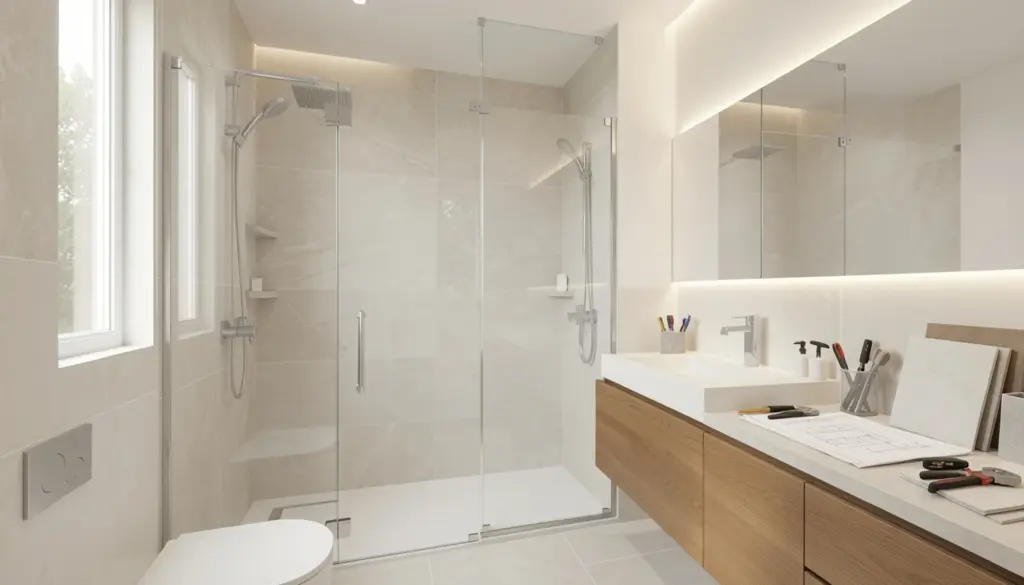
Wall-mounted vanities create visible floor space that makes a small bathroom feel larger without adding square footage. Replacing a bathtub with a walk-in shower in a small bathroom can open up the room considerably, especially when the shower is enclosed with frameless glass rather than opaque panels.
Recessed shelving built into wall cavities provides storage without protruding into the room. Corner sinks and toilets are specifically designed for tight layouts and can free up the central floor area for better movement.
For larger bathrooms, a double vanity unit is one of the most practical upgrades available for shared bathrooms. Separating wet zones (shower, bathtub) from dry zones (vanity, toilet) with strategic layout design also makes the space feel more organized and purposeful.
In any bathroom, good functional layout design comes down to: clear sightlines, adequate clearance around fixtures (typically 21 inches in front of a toilet and 15 inches from the center to any side obstruction), and logical placement of storage where you actually use things.
Choosing the Right Fixtures and Upgrades
Fixtures are where a renovation’s personality comes through, and they have a significant impact on both the usability and long-term maintenance of the space.
- Vanity and sink: A floating vanity is popular in modern bathrooms because it reads as lighter and makes cleaning easier. Undermount sinks are easier to wipe down than drop-in styles. For materials, solid wood with a moisture-resistant finish or PVC board both hold up well in humid environments.
- Shower enclosure: Walk-in showers with frameless glass enclosures have become the standard in modern bathroom design. They open up sightlines, are easier to clean than framed alternatives, and work in bathrooms of almost any size. Thermostatic shower valves that maintain a consistent water temperature are a worthwhile upgrade for daily comfort.
- Toilet: Wall-hung toilets offer the same visual lightness as floating vanities and make floor cleaning straightforward. Dual-flush mechanisms improve water efficiency without sacrificing performance.
- Lighting fixtures: Layered lighting works best in bathrooms — ambient lighting for general use, task lighting at the vanity mirror for grooming, and accent lighting to define the space. LED lighting is now the standard for bathroom fixtures; it uses less energy, runs cooler, and lasts significantly longer than older alternatives.
- Exhaust fan/ventilation system: An undersized or failing ventilation system causes moisture buildup that leads to mold and surface deterioration. A quality exhaust fan with an appropriate CFM rating for your bathroom’s square footage is a basic but critical element.
Material Selection: Tiles, Flooring, and Finishes
Material choice affects how the bathroom looks, how it feels underfoot, and how much maintenance it requires over the years. Getting this right matters.
1. Ceramic tiles
Ceramic tiles are the most affordable option and work well for walls in lower-moisture areas. They’re available in an enormous range of sizes and finishes, but are more porous than porcelain and less suitable for high-traffic shower floors.
2. Porcelain tiles
Porcelain tiles are denser, harder, and more water-resistant than ceramic. They’re the preferred choice for shower floors, wet room walls, and bathroom flooring. Large-format porcelain tiles (600mm x 600mm or larger) reduce grout lines, which means fewer places for moisture and bacteria to accumulate.
3. Natural stone
Natural stone — marble, travertine, slate — adds visual richness but requires sealing and more regular maintenance than ceramic or porcelain. It’s best suited to lower-traffic areas or accent walls where its aesthetic qualities are worth the upkeep trade-off.
For flooring specifically, prioritize slip resistance. Tiles with a higher R-value (anti-slip rating) are important for shower floors and wet area flooring. Heated floor systems installed under tile add comfort and help the floor dry faster, reducing moisture retention.
For walls outside wet zones, moisture-resistant drywall or cement board provides the right substrate for tiling or paint finishes. Avoid standard gypsum board in any bathroom application.
Bathroom Renovation Cost Breakdown
Renovation costs vary widely depending on the size of the bathroom, the materials chosen, and whether you hire professionals or handle some work yourself. Here’s a realistic breakdown by tier:
Budget-Friendly Renovation
Range: $3,000 – $8,000
This covers a cosmetic refresh and basic fixture replacements, including a new vanity, toilet, shower fittings, lighting, and fresh tiling. Structural work, plumbing relocation, and electrical upgrades are not included. Most of this work can be done by a single contractor over one to two weeks.
Budget renovations work best when the existing layout is sound, and the plumbing is in good condition. The goal is to update surfaces and fixtures rather than rebuild the space.
Mid-Range Renovation
Range: $10,000 – $20,000
Mid-range projects typically involve a full bathroom remodel: new shower enclosure or walk-in shower, new vanity unit, updated plumbing fixtures, complete tiling of floors and walls, improved ventilation, and better lighting. Some minor layout changes may be included.
This is where most homeowners land when they want a genuinely improved bathroom without going into full custom territory. Material quality is higher, resulting in a bathroom that should require minimal maintenance for 15+ years.
Luxury Renovation
Range: $25,000 and above
Luxury renovations involve custom cabinetry, high-end porcelain or natural stone, heated floors, smart bathroom features (digital shower controls, integrated lighting systems, heated towel rails), significant structural changes, and premium fixtures throughout.
These projects typically require a specialist renovation contractor with experience in high-end finishes and often take four to eight weeks or longer to complete.
DIY vs Hiring a Professional Contractor
Some bathroom work is genuinely DIY-friendly; other work is not, and attempting it without qualifications creates safety and legal risks.
- Safe for experienced DIYers: Painting, installing accessories (towel rails, toilet roll holders, mirrors), fitting a new vanity, tiling (with proper preparation), and some fixture replacements.
- Requires a licensed professional: Any plumbing that involves moving supply or drain lines, all electrical wiring and outlet installation, structural modifications, and waterproofing of wet areas (in most jurisdictions, waterproofing must be certified).
Hiring the wrong contractor — or no contractor at all for work requiring permits — creates problems at resale. Unpermitted plumbing and electrical work can void home insurance coverage and cause complications when selling. When in doubt, pull the permit and hire the right professional.
Getting multiple quotes and checking references before committing to a contractor is straightforward advice, but many homeowners skip it under time pressure. A short delay upfront saves significantly more time and money than resolving a poor-quality installation later.
Common Bathroom Renovation Mistakes to Avoid
These are the errors that consistently cause cost overruns, delays, and unsatisfactory results:
- Most renovation budgets expand once work begins and hidden issues are discovered. Building in a contingency of at least 15% is not pessimism — it’s experience.
- A beautiful tile that’s slippery when wet, a vanity without adequate storage, or a shower with poor drainage are all failures of practical design. Aesthetics matter, but function must come first.
- This is the single most consequential shortcut in bathroom renovation. Water infiltration behind tiles causes structural damage that can cost more to fix than the entire original renovation.
- Tiles, vanities, shower enclosures, and doors all need precise measurements before ordering. Errors here cause delays and restocking fees.
- Bathrooms without adequate exhaust fan capacity develop moisture problems regardless of how good the waterproofing is. Size your ventilation system properly for the room’s volume.
- Insufficient storage leads to clutter, which undermines even well-designed spaces. Plan storage solutions during the design phase, not as an afterthought.
How Long Does a Bathroom Renovation Take?
Renovation timelines depend on scope, contractor availability, and how quickly decisions are made. Here’s a realistic range:
- Cosmetic refresh: 3–5 days for light work (paint, accessories, fixture swaps), up to two weeks if tiling is involved.
- Full bathroom remodel (mid-range): 3–5 weeks is typical when materials are on hand, and no structural surprises arise. Add one to two weeks for any plumbing or electrical rough-in inspections required by your local authority.
- Luxury or complex renovation: 6–10 weeks, sometimes longer for custom elements with longer lead times.
The biggest delays in bathroom renovations are caused by late material deliveries, decisions made during construction rather than before it, and permit approval wait times. Finalizing all selections — tiles, fixtures, fittings, hardware — before work begins is the single most effective way to keep a renovation on schedule.
FAQs
What is the average cost of a bathroom renovation?
A cosmetic renovation runs $3,000–$8,000. A full mid-range remodel typically costs $10,000–$20,000. Luxury renovations start at $25,000 and can go well beyond that depending on materials and scope.
How long does a bathroom remodel take?
Simple updates take one to two weeks. A full mid-range renovation takes three to five weeks. Complex or luxury renovations can take six to ten weeks or more.
Can I renovate a bathroom on a budget?
Yes, with clear priorities. Focus on what makes the most visible and functional difference: a new vanity, updated fixtures, fresh tiling, and better lighting. Avoid moving plumbing — keeping supply and drain lines in place keeps costs down significantly.
What materials are best for bathroom flooring and walls?
Porcelain tiles are the best all-around choice for both floors and walls in wet areas. They’re durable, water-resistant, and low-maintenance. For flooring, choose tiles with an appropriate anti-slip rating. Ceramic works well for wall areas outside the wet zone.
Do I need a contractor for bathroom renovation?
Any work involving plumbing, electrical wiring, or structural changes requires a licensed professional in most regions. Cosmetic work like painting, accessories, and some fixture replacements can be done independently if you have the skills. When in doubt, consult a contractor before proceeding.
How can I make a small bathroom feel larger?
Use large-format tiles to reduce grout lines, install a wall-mounted vanity to free up floor space, use frameless glass for shower enclosures, and keep the color palette light and consistent. Recessed shelving and good layered lighting also help small bathrooms feel more open.