

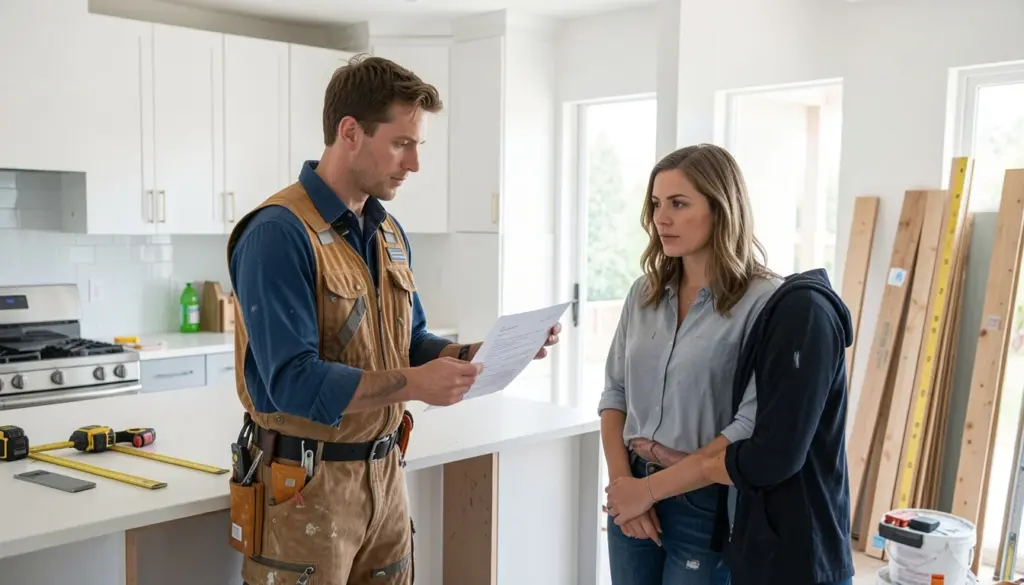
Hiring a home improvement contractor is one of the most financially significant decisions a homeowner can make. Done right, it results in quality work, a smooth process, and a home that gains lasting value. Done wrong, it can cost thousands of dollars, months of delays, and serious stress — sometimes with nothing to show for it.
The unfortunate reality is that contractor scams, poor workmanship, and abandoned projects happen more often than most people expect. Many homeowners are caught off guard simply because they skipped a few critical steps in the vetting process. This guide gives you a clear, step-by-step hiring system so you can move forward with confidence — and protect yourself along the way.
Why Hiring the Right Contractor Matters More Than You Think
A bad contractor doesn’t just deliver subpar work. They can leave a project half-finished, trigger code violations by skipping permits, or disappear entirely after collecting a large upfront payment. Beyond the immediate financial damage, poor construction can affect your home’s structural integrity, reduce its resale value, and create safety hazards that cost far more to fix later.
Home renovation projects are rarely small investments. Even a bathroom remodel or kitchen update can run into the tens of thousands of dollars. At that price point, the difference between a reliable contractor and an unreliable one isn’t just inconvenient — it’s consequential. Taking the time to hire carefully is one of the smartest things you can do before any project begins.
Step 1 — Research and Shortlist Potential Contractors
Start by building a list of candidates before committing to anyone. Personal referrals from trusted friends, neighbors, or family members who have had similar work done are often the most reliable starting point. People who’ve lived through a renovation can tell you about the contractor’s communication style, how they handled problems, and whether the final work matched the original scope.
Beyond referrals, platforms like Angi (formerly HomeAdvisor) and the Better Business Bureau (BBB) allow you to search for local contractors with verified reviews and complaint histories. You can also check your local contractor licensing board’s website to search for professionals in your area who hold valid credentials.
Aim to shortlist at least three contractors for any significant project. Having multiple options gives you a meaningful basis for comparison and prevents you from making a rushed decision under pressure.
Step 2 — How to Vet a Contractor Properly
This is the most important part of the entire process. Before you discuss a single project detail, verify the contractor’s credentials.
Verify Their License
Every state requires contractors to hold a valid license for most types of home improvement work. You can verify a contractor’s license through your state’s contractor licensing board website. Don’t accept a verbal claim or a photocopy — check the license status directly online to confirm it’s active and covers the type of work you need.
Confirm Insurance Coverage
Ask for proof of insurance, specifically general liability and workers’ compensation. Liability insurance protects your property if something is damaged during the project. Workers’ compensation covers any workers injured on your property — without it, you could be held financially responsible for on-site injuries.
Call the insurance provider directly to verify that the policy is current. Policies can lapse, and a contractor may show you a certificate that no longer reflects active coverage.
Check References and Past Work
Ask for at least three references from projects completed within the last two years. When you contact those references, ask specific questions: Was the project completed on time? Did the final cost match the original estimate? How did the contractor handle unexpected issues? Would you hire them again?
If possible, ask to see photos of completed work or visit a finished project in person. A contractor confident in their quality of workmanship will welcome the opportunity.
Step 3 — Best Questions to Ask Contractors Before Hiring
Before signing anything, sit down with each shortlisted contractor and ask these questions directly:
- How long have you been doing this type of work? Experience with your specific project type — a kitchen remodel, roof replacement, or addition — matters more than general years in business.
- Will you be doing the work personally, or will subcontractors be involved? Many contractors use subcontractors, which isn’t automatically a problem, but you should know who will be on your property and whether those subcontractors are also licensed and insured.
- How many projects are you currently managing? A contractor stretched across too many jobs may deprioritize yours, leading to delays.
- What does the project timeline look like? Ask for a realistic start date and estimated completion date, with milestones along the way.
- How do you handle change orders? Any modification to the original scope of work should go through a formal change order process — in writing, with updated pricing and timeline.
- What permits are required, and who pulls them? The contractor should be responsible for obtaining any necessary permits and arranging for inspections. A contractor who suggests skipping permits to save money is not someone you want to work with.
Step 4 — How to Compare Estimates the Right Way
Getting multiple estimates is standard advice — but comparing them correctly is where most homeowners go wrong. A lower number on one estimate doesn’t automatically mean a better deal.
Ask each contractor to provide a detailed written estimate that breaks down the cost of materials, labor, permits, and any contingency allowances. When estimates look dramatically different, the gap usually comes from one of three places: different material quality, different assumptions about the project scope, or intentional lowball pricing designed to get the job done with the expectation of raising costs once work begins.
Look carefully at what each estimate actually includes. Does it specify the brand and grade of materials? Does it account for debris removal? Are permits included? If one contractor’s estimate is significantly lower than the others, ask them to walk you through the breakdown line by line. Transparent pricing is a sign of a professional operation.
Be cautious of any estimate that relies heavily on verbal explanations rather than written documentation. If it isn’t written down, it isn’t a commitment.
Step 5 — What Must Be Included in a Contractor Contract
Never begin work without a signed written contract — for any project, regardless of size. A verbal agreement offers you no real protection if something goes wrong.
A proper contractor contract should include:
- Scope of work — a detailed description of exactly what will be done, including materials, brands, and specifications
- Project timeline — start date, estimated completion date, and key milestones
- Payment schedule — how much is due at each stage, tied to project milestones
- Change order process — how modifications to the scope are handled and documented
- Permit responsibilities — confirmation that the contractor is responsible for permits and inspections
- Warranty information — what the contractor guarantees about their workmanship and for how long
- Dispute resolution clause — what steps will be taken if a disagreement arises, whether through mediation or arbitration
- Termination terms — conditions under which either party can end the contract
Plain, clear language is a good sign. Vague or overly broad contract terms that give the contractor wide discretion without accountability are a warning worth taking seriously.
Step 6 — Safe Payment Practices to Protect Yourself
Payment structure is directly tied to your financial risk. This is where many homeowners lose money.
A reasonable deposit for a home improvement project is typically 10 to 30 percent of the total project cost, depending on the size of the job and local norms. Deposits cover material purchases and mobilization costs. Anything higher than 30 to 50 percent upfront should raise concern — and paying more than half the total cost before meaningful work has begun is a significant risk.
Structure the remaining payments as milestone payments tied to verified progress. For example: a second payment upon framing completion, a third upon electrical or plumbing rough-in, and a final payment only upon project completion and your satisfaction with the work.
Never pay the final balance until you’ve done a thorough walkthrough and confirmed that every item on your punch list — the list of remaining or unfinished items — has been addressed. Keeping a reasonable amount in reserve until final sign-off is standard practice and gives you meaningful leverage if last-minute issues arise.
Avoid paying in cash. Use checks or traceable payment methods, so you have a clear record of every transaction.
Step 7 — Contractor Red Flags You Should Never Ignore
Recognizing warning signs early can save you from serious problems. These are situations where you should walk away:
- No verifiable license or insurance — this is non-negotiable. An unlicensed contractor leaves you legally exposed and is often a sign of inexperience or previous disciplinary action.
- Refuses to provide a written contract — any contractor who resists putting terms in writing is protecting themselves, not you.
- Demands an unusually large upfront payment — a request for 50 percent or more before work begins is a common pattern in contractor fraud.
- Unusually low bid with no clear explanation — dramatically underbidding competitors usually means corners will be cut, cheap materials will be used, or the price will escalate significantly once work starts.
- High-pressure tactics — phrases like “I can only offer this price if you sign today” or “I happen to have leftover materials nearby” are sales pressure techniques, not legitimate offers.
- No physical business address or verifiable local history — storm chasers and transient contractors often target homeowners after severe weather events. Always verify that a contractor has an established, traceable local presence.
- Negative pattern in reviews — occasional complaints are normal for any business, but a consistent pattern of abandoned projects, billing disputes, or unresponsive communication is a serious signal.
Step 8 — What to Do If Things Go Wrong
Even with careful due diligence, problems can arise. Knowing what to do before you’re in that situation is important.
Start by documenting everything from day one. Keep copies of your contract, all written communications, photos of work in progress, and records of every payment. This documentation becomes critical if you need to make a formal complaint or pursue legal action.
If you have a dispute with your contractor, address it directly and in writing first. Clearly state the problem, reference the relevant contract terms, and give the contractor a reasonable opportunity to resolve it. Many issues are resolved at this stage.
If that fails, file a complaint with your state’s contractor licensing board. Licensing boards have the authority to investigate complaints, impose penalties, and, in serious cases, revoke licenses. You can also file a complaint with the Better Business Bureau, though the BBB’s authority is limited to mediation.
For financial disputes above a certain threshold, the small claims court is an option. For larger amounts, consult a construction attorney. Many offer free initial consultations and can advise whether your situation warrants formal legal action.
If your contractor has a bond (a form of financial protection required in many states), you may also be able to make a claim against that bond for incomplete or substandard work.
Final Thoughts
Hiring a home improvement contractor doesn’t need to be a stressful or risky process. The homeowners who get burned are almost always those who skipped one or more steps in the vetting process — took the first estimate, skipped the contract review, or paid too much too early.
The system in this guide isn’t complicated, but it does require patience. Verify credentials before you discuss the project. Get everything in writing. Tie payments to real progress. Pay attention to how a contractor communicates — transparency and responsiveness in the pre-hire stage usually reflect how they’ll behave once work begins.
The right contractor will welcome your questions, provide a clear written agreement without resistance, and give you references they’re proud to share. When you find that person, you’ll be in a position to move forward with confidence — and focus on the project rather than worrying about what might go wrong.
FAQs
How many quotes should I get before hiring a contractor?
Get at least three detailed written estimates. This gives you a realistic sense of the market rate for your project and enough contrast to identify any outlier bids — whether unusually high or suspiciously low.
Should I only hire a licensed contractor?
Yes, for any significant structural, electrical, plumbing, or mechanical work. Licensing requirements exist to protect homeowners, and unlicensed contractors leave you exposed to liability, code violations, and limited recourse if something goes wrong.
What is a reasonable deposit for a contractor?
For most projects, a deposit between 10 and 30 percent of the total cost is reasonable. Higher deposits increase your financial risk if the contractor fails to perform.
Do I need a permit for home improvement work?
Many projects — including additions, structural changes, electrical upgrades, and plumbing work — require permits. Your contractor should advise you on permit requirements and handle the application process. Skipping permits can cause problems when you sell your home.
What should I do if a contractor abandons my project?
File a complaint with your state licensing board immediately, document all evidence, and consult a construction attorney about your legal options. If the contractor is bonded, you may be able to make a claim against their bond.
Can I negotiate with a contractor on price?
Yes, but focus on scope and materials rather than simply asking for a lower number. You can sometimes reduce costs by adjusting specifications, phasing the project, or purchasing certain materials yourself — always with the contractor’s agreement in writing.