

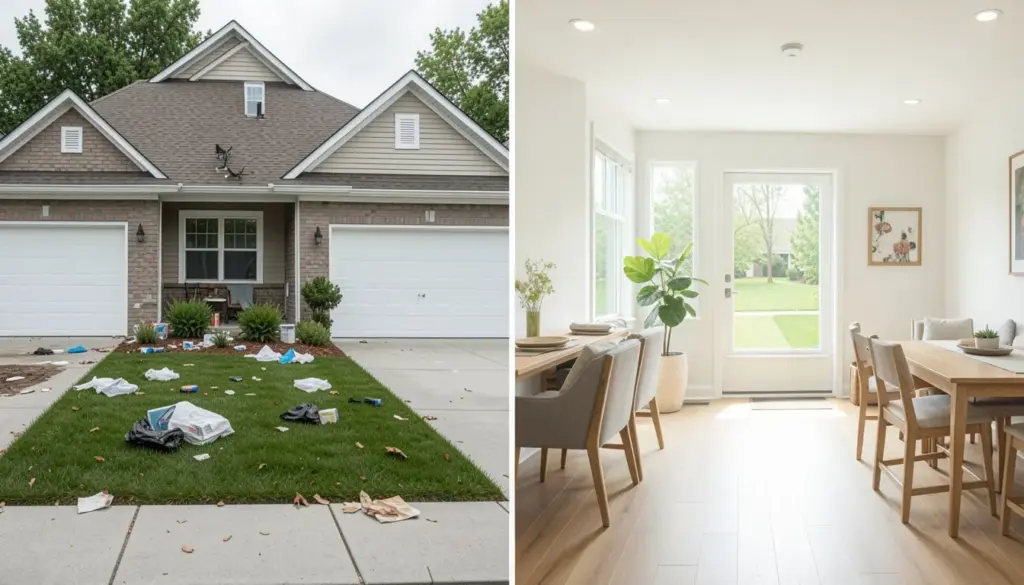
Selling your home is one of the biggest financial moves you’ll make, and the temptation to renovate everything before listing is real. But spending $30,000 on upgrades that only add $10,000 in value is a costly mistake many homeowners make. The smarter approach is understanding which improvements actually pay off — and which ones quietly drain your budget without moving the needle on your listing price.
This guide breaks down home improvement ROI in practical terms: what it means, which projects deliver the best return, what buyers genuinely care about, and how to prioritize upgrades based on what you can actually spend.
What “Home Improvement ROI” Really Means
ROI — return on investment — in a real estate context refers to how much of your renovation spending you recover through a higher sale price. If you spend $5,000 on a bathroom update and your home sells for $6,500 more than it would have otherwise, your ROI is roughly 130%.
The challenge is that renovation ROI is rarely guaranteed. It depends on your local housing market, the condition of your home before upgrades, comparable properties nearby, and how buyers in your area respond to specific features.
The industry concept known as the Cost vs. Value Report (published annually by Remodeling magazine) tracks average renovation costs against the resale value they generate. One consistent pattern across years of this data: smaller, condition-focused improvements almost always outperform large, luxury remodels in percentage terms.
This matters because not all renovations are investments — some are simply expenses. Understanding that distinction before you pick up a contractor’s phone number will save you significant money.
How to Choose the Right Renovations Before Selling
Before deciding on any upgrades, think like a buyer, not a homeowner. Your personal taste is largely irrelevant here. What matters is whether a potential buyer will perceive the home as move-in ready, well-maintained, and priced fairly.
Three questions should guide your decisions:
What is the baseline condition of the home? Fixing visible problems — cracked tiles, leaky faucets, peeling paint — almost always delivers a better return than adding new features on top of an imperfect foundation. Buyers notice what’s wrong before they notice what’s nice.
What do similar homes in your area offer? Your renovations should bring your home up to market expectations, not dramatically above them. Over-improving for your neighborhood tends to produce diminishing returns because buyers compare your price to other homes on the same street.
What is your realistic budget? A $3,000 budget should be spent very differently from a $20,000 budget. Knowing your number in advance helps you prioritize high-impact work over aspirational projects.
Top Home Improvement Projects With the Highest ROI
1. Fresh Interior Paint
Few upgrades deliver as much value per dollar as a full interior repaint. A professionally painted home feels clean, updated, and well-cared for — and buyers respond to that immediately. Stick to neutral tones like warm whites, soft grays, and light greiges. These create a blank canvas that helps buyers visualize their own belongings in the space.
Typical cost: $2,000–$5,000 for a full interior (professional)
ROI insight: Often recoups well above the cost in perceived value and buyer interest
2. Curb Appeal Improvements
The front of your home is the first thing buyers see — online in listing photos and in person during a showing. Overgrown shrubs, a cracked driveway, or a dull entryway immediately create a negative first impression that is hard to overcome, no matter how good the interior looks.
Simple landscaping cleanup, fresh mulch, a new front door, and updated exterior lighting can meaningfully improve buyer perception without major expense. Real estate agents consistently rank curb appeal among the highest-value pre-sale improvements because it shapes the emotional tone of the entire showing.
Typical cost: $500–$5,000, depending on scope.
ROI insight: Strong return; impacts both interest and offer price
3. Minor Kitchen Remodel
A full kitchen gut renovation is rarely worth it before selling. However, a minor kitchen remodel — replacing cabinet hardware, repainting cabinets, updating the faucet, and installing a new backsplash — can refresh the space significantly at a fraction of the cost.
The kitchen is often the room buyers scrutinize most closely. A dated but clean kitchen with fresh cabinet faces and modern fixtures reads very differently from the same kitchen with original 1990s hardware.
Typical cost: $5,000–$15,000 for a minor refresh
ROI insight: Minor remodels consistently outperform major ones in cost recovery
4. Bathroom Updates
Full bathroom additions rarely pay off, but updating an existing bathroom does. Replacing an old vanity, re-caulking the tub, updating fixtures, and adding a new mirror can transform a dated bathroom at a reasonable price. Clean, modern, and functional is the target — not spa-level luxury.
Typical cost: $3,000–$10,000 for a mid-range update
ROI insight: Buyers heavily scrutinize bathrooms; condition directly affects perceived value
5. Flooring Upgrades
Worn carpet, scratched hardwood, or cracked tile draws the eye in every room and makes a home feel older than it might be. Refinishing existing hardwood is almost always worth the cost. Replacing carpet with LVP (luxury vinyl plank) in key areas is another high-return move because it photographs well and reads as durable and modern to buyers.
Typical cost: $2,000–$8,000, depending on scope
ROI insight: High visual impact; worn flooring is a common reason buyers negotiate down
6. Lighting and Fixture Modernization
Replacing outdated lighting fixtures is one of the most underrated pre-sale upgrades. Builders-grade fixtures from the early 2000s immediately date a home. Modern pendant lights, updated bathroom vanity bars, and better recessed lighting make rooms feel finished and current.
Typical cost: $500–$3,000
ROI insight: High impact-to-cost ratio; dramatically improves listing photos
7. Energy-Efficient Improvements
Adding a smart thermostat, upgrading to LED lighting throughout, or replacing an aging water heater with an energy-efficient model can be appealing to buyers — particularly those paying attention to utility costs. These aren’t headline improvements, but they contribute to a home’s overall appeal as move-in ready and low-maintenance.
Typical cost: $500–$5,000, depending on the upgrade
ROI insight: Moderate return, but improves buyer confidence
8. Exterior Repairs and Siding
Peeling paint, rotting wood trim, or damaged siding signals deferred maintenance — which triggers concern in buyers and creates negotiation leverage for lower offers. Addressing exterior repairs before listing removes that risk. While a full siding replacement has moderate ROI, targeted repairs to problem areas are almost always worth completing.
Typical cost: $1,000–$15,000+, depending on scope
ROI insight: Repairs outperform replacements in percentage return; protects listing price
9. Home Staging Enhancements
Staging isn’t just about decorating — it’s about helping buyers emotionally connect with a space. This can range from a full professional staging service to simply decluttering, depersonalizing, and rearranging existing furniture. Staged homes typically sell faster and often receive higher offers because they photograph better and show better.
Typical cost: $500–$3,000 for basic staging assistance
ROI insight: Strong return relative to cost; often reduces time on market
Low-Cost Upgrades With High Impact
If your budget is tight — say, under $2,000 — focus your spending on improvements that directly affect first impressions and buyer perception:
- Deep cleaning: A professionally cleaned home signals care. Cost: $200–$500.
- Hardware replacement: New cabinet pulls, doorknobs, and outlet covers are inexpensive and modernize a space quickly.
- Caulk and grout refresh: Clean grout lines and fresh caulk in bathrooms and kitchens look like upgrades even though they’re maintenance tasks.
- Pressure washing: Driveways, walkways, and exterior siding that are pressure-washed look dramatically cleaner in listing photos.
- Neutral paint touch-ups: Even if a full repaint isn’t feasible, touching up scuffs and repainting one accent wall in a neutral tone helps.
These are not flashy, but they address what buyers notice — and what appraisers document.
Renovations That Usually Have Low ROI
Some renovation projects feel exciting, but rarely recover their costs:
Major kitchen or bathroom additions: Adding a second bathroom or completely gutting and rebuilding a kitchen costs significantly more than it typically adds to resale value, especially in mid-range markets.
Swimming pools: Pools are polarizing. Many buyers — particularly families with young children or buyers who don’t want maintenance costs — view them as a liability rather than an asset. In most U.S. markets, pools do not add commensurate value to their installation cost.
Highly personalized upgrades: A custom wine cellar, a themed game room, or a very specific interior design aesthetic narrows your buyer pool rather than expanding it. The more personal the upgrade, the less universal its appeal.
Garage conversions: Converting a garage into a living space removes something many buyers specifically want. This is a common low-ROI trap that can actually reduce your home’s marketability.
The pattern here is consistent: upgrades that reflect highly personal preferences, add complexity to the property, or appeal to a narrow segment of buyers tend to underperform in resale value.
Cost vs. Value: How to Prioritize Your Budget
A practical way to approach renovation planning is to organize improvements into ROI tiers:
High ROI (typically 80–130%+ cost recovery): Interior paint, curb appeal cleanup, minor kitchen refresh, staged presentation, deep cleaning, flooring refinishing
Moderate ROI (typically 50–80% cost recovery): Bathroom updates, lighting modernization, energy-efficient additions, exterior repairs, new front door
Lower ROI (typically below 50% cost recovery): Major kitchen remodels, additions, pools, luxury finishes, full bathroom additions
Scenario-Based Planning:
- Budget of $2,000–$5,000: Focus entirely on paint, deep clean, pressure washing, hardware updates, and staging prep. These offer the best return per dollar at this level.
- Budget of $10,000–$15,000: Add a minor kitchen refresh (cabinet paint + hardware + backsplash), updated bathroom fixtures, and flooring work in high-traffic areas.
- Budget of $20,000–$30,000: Consider a mid-range bathroom remodel, exterior siding repairs, landscaping improvements, and upgraded kitchen appliances — but be careful not to over-improve relative to neighborhood comparables.
Before committing to any major work, consult a local real estate agent or request a Comparative Market Analysis (CMA). An agent can tell you specifically what buyers in your market expect at your price point, which prevents you from spending money on upgrades that won’t actually affect your sale price.
What Buyers Actually Look For
Understanding buyer psychology clarifies why certain improvements work, and others don’t.
First impressions are disproportionately powerful. Research in consumer psychology consistently shows that people make rapid emotional judgments within the first few seconds of seeing something. For home buyers, that means the listing photo, the street view on arrival, and the first step through the front door all carry enormous weight.
Move-in readiness is a major factor. Most buyers — especially first-time buyers — are already managing the stress of a mortgage, a move, and a transition. A home that feels ready to live in immediately commands more interest than one that signals a to-do list. This is why condition-focused improvements (fixing, cleaning, painting) often outperform feature-adding improvements (building, expanding, upgrading to luxury).
Neutral design increases the buyer pool. A home decorated in bold, specific colors or unusual design choices appeals to fewer buyers. Neutral tones, clean lines, and simple finishes let buyers project their own vision onto the space — which is exactly what you want when you’re trying to attract the widest possible audience.
Perceived maintenance quality affects offers. Buyers — and their inspectors — look for signs of how well a home has been maintained. Small issues like dripping faucets, sticking doors, or dirty grout signal larger concerns about what might be hidden. Addressing these before listing removes negotiating leverage from buyers.
Final Checklist Before Listing Your Home
Use this as a working guide during the 30–60 days before your home goes on the market:
Condition & Repairs:
- Fix all visible damage (cracks, leaks, broken fixtures)
- Address any deferred maintenance items
- Ensure all doors, windows, and locks function properly
Cleaning & Presentation:
- Schedule a professional deep clean
- Declutter every room (consider renting a storage unit)
- Depersonalize: remove family photos, personal collections
- Clean or replace window treatments
Curb Appeal:
- Mow, edge, and clean up landscaping
- Pressure wash the driveway and exterior
- Inspect and touch up exterior paint
- Add fresh mulch and seasonal plants if the budget allows
Interior Updates:
- Repaint in neutral tones where needed
- Replace outdated fixtures and hardware
- Refinish or deep clean the flooring
- Update lighting in key rooms
Final Preparation:
- Consult your real estate agent for market-specific recommendations
- Review comparable sales in your neighborhood
- Request a pre-listing home inspection to surface issues before buyers find them
FAQs
What home improvements give the best ROI before selling?
Interior painting, curb appeal improvements, minor kitchen refreshes, bathroom updates, and professional staging consistently rank among the highest-return pre-sale upgrades. These address what buyers notice first and respond to most strongly.
Should I renovate my house before putting it on the market?
It depends on the condition. If your home has visible maintenance issues, dated finishes, or poor curb appeal, targeted improvements will likely increase both interest and sale price. If your home is already in good condition, the priority should shift to cleaning, staging, and minor touch-ups rather than major renovations.
How much should I spend on renovations before selling?
A commonly cited guideline is to keep pre-sale renovation spending within 1–3% of your home’s expected sale price. More importantly, consult a local real estate agent to understand what upgrades your specific market rewards — not all improvements have equal value in all areas.
Is a kitchen remodel worth it before selling?
A full kitchen remodel rarely is — the cost typically exceeds the value it adds. A minor kitchen refresh (new cabinet paint, updated hardware, modern backsplash, new faucet) at a fraction of the cost is almost always the better choice.
Do small upgrades really affect property value?
Yes — sometimes significantly. Small upgrades that improve perceived cleanliness, maintenance quality, and move-in readiness affect buyer perception directly, which influences both the offers you receive and how quickly you sell.
What renovations should I avoid before selling?
Avoid highly personalized projects, add features with limited buyer appeal (like pools in certain markets), or cost far more than they return. Over-personalized design, luxury additions, and garage conversions are among the most common low-ROI traps.
Does curb appeal really affect sale price?
Consistently, yes. First impressions shape buyer enthusiasm before they even step inside. Homes with strong curb appeal tend to attract more showings, generate stronger interest, and often receive higher offers than comparable homes with neglected exteriors.
How do I prioritize renovations with a limited budget?
Start with repairs, then cleaning and staging, then cosmetic updates like paint and hardware. Address the things buyers are most likely to notice and most likely to use as negotiation points — visible damage, dated finishes, and poor curb appeal. These have the highest impact per dollar at any budget level.