

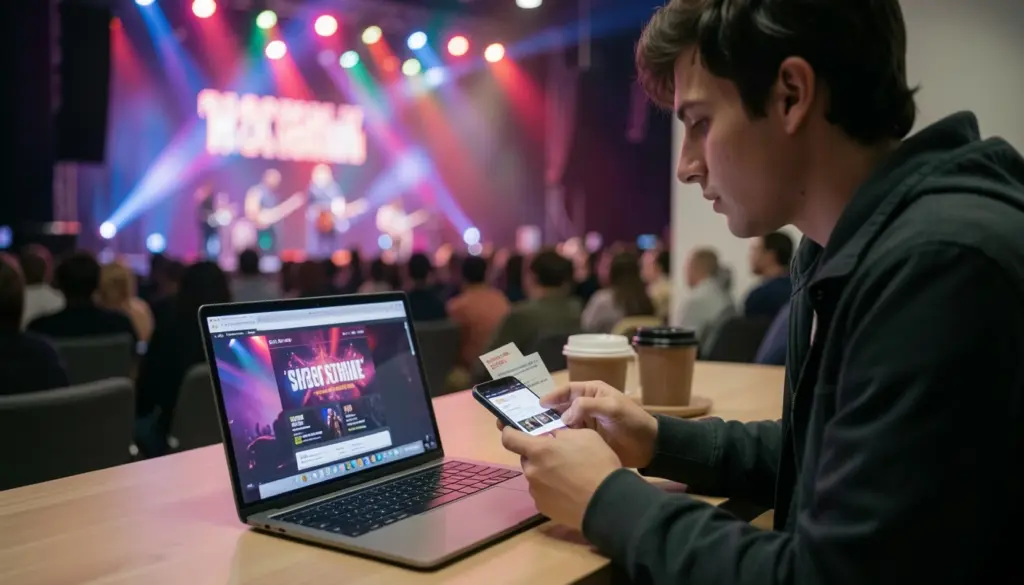
You found out your favorite artist is coming to town. You open a ticketing site, and within minutes, you’re staring at seats that cost three times the face value — or worse, the show is already sold out. This happens to thousands of people every year, not because good tickets don’t exist, but because most people don’t know how the system works.
This guide walks you through the entire process — from understanding how ticket sales are structured to choosing the right seats, avoiding scams, and actually securing your spot without overpaying. Whether you’re attending your first show or just tired of getting burned, this is the buying strategy you’ve been missing.
How Concert Ticketing Actually Works
Before you can buy smartly, it helps to understand what’s happening behind the scenes.
When an artist announces a tour, tickets are distributed through a primary market — official platforms like Ticketmaster or Live Nation that sell directly to the public at face value. These are the tickets you want first. The problem is that demand often far exceeds supply, especially for popular artists, which causes tickets to disappear within minutes.
This is partly due to ticket bots — automated software that bulk-purchases tickets the moment they go on sale. Scalpers then list these on resale marketplaces like StubHub or Vivid Seats at heavily inflated prices. This is why you’ll sometimes see tickets available immediately after sellout — just at two or three times the original cost.
There’s also a secondary market of verified resale tickets, which are legitimate but still carry a markup. Platforms like SeatGeek aggregate listings from multiple sources, letting you compare prices across sellers in one place.
Understanding this two-tier structure — primary sale vs. resale market — is the foundation of every smart ticket decision.
Best Platforms and Apps to Buy Concert Tickets
Not every platform is created equal, and the right choice depends on what you’re trying to do.
For official tickets at face value:
- Ticketmaster — the largest primary ticketing platform; handles most major venue sales
- Live Nation — often integrated with Ticketmaster; best for Live Nation-promoted events
- AXS — used by many arenas and amphitheaters; has its own mobile ticketing app
For resale and price comparison:
- StubHub — one of the oldest and largest resale marketplaces- offers a fan protect guarantee
- SeatGeek — aggregates listings with a Deal Score that helps you evaluate pricing
- Vivid Seats — another reliable resale platform with buyer protections
Always start with the official platform for any event. Only move to resale if official tickets are gone and you’re comfortable paying above face value. When buying resale, stick to well-known marketplaces that offer purchase guarantees — this protects you if tickets turn out to be invalid.
For mobile convenience, most of these platforms have apps that support digital ticket transfer and QR code ticket systems, which are now standard at most venues.
When to Buy Concert Tickets for the Best Price
Timing is the single most important factor in what you’ll pay — and most people get this completely wrong.
Presale Tickets: Your First Real Chance
Presale tickets are released before the general public sale, usually 24–72 hours earlier. Access typically requires a presale access code, which you can get through:
- Artist fan club memberships
- Credit card presales (Citi, American Express, etc.)
- Venue or radio station presales
- Spotify or streaming platform presales (common for popular artists)
Signing up for an artist’s mailing list or fan club is one of the most reliable ways to get presale access. These tickets sell at face value and give you access before bots and the general rush.
General Sale: Move Fast
The general public sale opens to everyone, and for high-demand shows, this is where things get chaotic. Have your account created, payment method saved, and seats pre-selected before the sale opens. Ticketing platforms often use virtual waiting rooms — enter early and don’t close the tab.
Dynamic Pricing: Why Prices Change
Many primary platforms now use dynamic pricing, meaning ticket prices adjust based on demand — similar to how airline fares work. A ticket priced at $80 on announcement day may cost $200 by general sale if demand spikes. Buying early, especially during presales, is the most reliable way to avoid this.
Last-Minute Buying: When It Works
For lower-demand shows or large venues with remaining inventory, prices sometimes drop in the days before the event. Resale platforms often see price reductions as sellers try to unload unsold tickets. This strategy is risky for popular acts but can work well for mid-tier artists or festivals with large capacities.
How to Choose the Best Seats at a Concert
Good seats aren’t always the most expensive ones. The right choice depends on the venue, the artist, and what experience you want.
Reading a Venue Seating Chart
Every venue publishes a seat map, usually visible on the ticketing platform before purchase. Study it before selecting. Look at the stage orientation, any obstructed view sections, and the distance from the floor to upper tiers.
Floor vs. Lower Bowl vs. Upper Sections
- Floor (General Admission): Standing-only, closest to the stage. Best for high-energy shows, but you’ll stand the entire time and may get pushed around in crowds.
- Lower Bowl/Reserved Floor: Seated with a clear sightline. Often, the best balance of proximity and comfort.
- Upper Sections: Much cheaper and sometimes offer a full panoramic view of the stage setup, lighting, and production. Underrated for production-heavy shows.
Indoor vs. Outdoor Venues
Outdoor amphitheaters often have lawn sections — affordable general admission areas on a grassy hill behind reserved seats. The sound quality can vary, but the atmosphere is often relaxed. Indoor arenas have more controlled acoustics, and the “best” seat depends heavily on the stage placement and speaker configuration.
For front row or VIP concert tickets, check if the artist offers a fan club package or VIP upgrade directly through their official site — these often include premium seating before it hits public sale.
How to Avoid Ticket Scams and Fake Tickets
Ticket fraud is a real problem, particularly on informal resale channels. Here’s how to protect yourself.
Red Flags to Watch For
- Tickets sold via Facebook Marketplace, Craigslist, or personal social media accounts
- Sellers asking for payment via wire transfer, Zelle, or gift cards
- Ticket prices are significantly below the market rate (too good to be true)
- No purchase protection or refund policy
Stick to Verified Ticket Sellers
Verified resale means the platform has confirmed the tickets are valid and will honor a replacement or refund if they’re not. StubHub, SeatGeek, and Vivid Seats all offer this. Avoid any third-party seller that isn’t backed by a known marketplace.
Check for Digital Ticket Transfer
Most legitimate tickets are now delivered digitally — either through an app or as a transferable QR code. If a seller sends you a screenshot of a ticket instead of an official transfer, that’s a major warning sign. Screenshots can be duplicated and sold to multiple buyers.
Safe Buying Checklist
- Buy from official platforms or verified resale marketplaces
- Use a credit card (offers chargeback protection)
- Confirm the venue and date match exactly
- Download the official app for the venue or platform before the event
- Never share your ticket QR code publicly before the show
Step-by-Step: How to Buy Concert Tickets Successfully
Here’s a repeatable process that covers every phase of the ticket-buying window.
Phase 1 — Preparation (Before Sale Opens)
- Follow the artist on all platforms and sign up for their mailing list
- Check for presale opportunities (fan club, credit card, Spotify)
- Create accounts on Ticketmaster, AXS, and one resale platform
- Save your payment method in advance
- Research the venue’s seating chart and decide on your preferred sections
Phase 2 — Purchase Timing (Sale Day)
- Get the presale code if available and buy during the presale window
- If attending a general sale: log in 15–20 minutes early and enter any queue as soon as it opens
- Have 2–3 seat options in mind in case your first choice is gone
- Complete checkout quickly — held seats have a short timer
- Check your email immediately for the confirmation and save the ticket to your app
Phase 3 — Post-Purchase
- Transfer tickets to your phone’s digital wallet or the venue’s official app
- Screenshot the confirmation as a backup
- If plans change, check the platform’s resale policy — many let you relist tickets directly
- Arrive at the venue with the digital ticket ready; some venues require the purchasing account holder’s phone number
Smart Strategies to Save Money on Concert Tickets
You don’t have to pay scalper prices to attend a great show.
Set price alerts. SeatGeek and Google allow you to track ticket prices over time. If you’re flexible on timing, waiting for a price drop on the resale market can save significantly.
Consider multiple dates. When artists play multiple nights in the same city, the second or third night often has lower demand and cheaper resale prices.
Look at nearby cities. Driving an hour or two to a neighboring venue can cut costs — especially for stadium shows where smaller venues in the same region see less demand.
Buy group tickets early. Buying 4+ tickets together often gets you better placement and sometimes preferred access windows. It also reduces per-person cost if you split fees.
Watch for face-value fan sales. Some artists now run verified fan pre-registration (Ticketmaster Verified Fan, for example), which limits bot purchases and gives real fans access to face-value tickets. Register whenever you see this offered.
Common Mistakes to Avoid When Buying Concert Tickets
Even experienced concert-goers make these errors.
Waiting for the general sale. If presales are available, there’s almost no reason to wait. Presales offer the same or better seats at face value, with less competition.
Using unreliable platforms. Any site you’ve never heard of that’s selling tickets to a sold-out show should be treated with deep skepticism. The risk of receiving invalid or counterfeit tickets is very real.
Ignoring the seat selection strategy. Clicking the first available option without reviewing the seat map often results in obstructed views, positions behind sound equipment, or seats far from the stage. Take 60 seconds to check the chart.
Assuming last-minute always means cheaper. For high-demand concerts, resale prices sometimes go up as the event approaches, not down. For popular artists, early buying almost always wins on both price and selection.
Overlooking fees. Ticketing platforms charge service fees that can add 20–30% to the ticket price. Before comparing platforms, click through to checkout to see the final price — not just the listed price.
FAQs
How do I buy concert tickets without getting scammed?
Buy from official platforms (Ticketmaster, AXS) or verified resale marketplaces (StubHub, SeatGeek, Vivid Seats). Avoid informal sellers on social media and never pay with cash transfer apps that don’t offer buyer protection.
What is the best time to buy concert tickets for cheap?
Presales offer the best face-value prices. For resale, prices sometimes drop in the week before the show for lower-demand events, but popular acts rarely get cheaper as the date approaches.
Are resale concert tickets safe to buy?
Yes, when purchased through verified platforms that guarantee ticket validity. Look for platforms that offer a money-back guarantee if tickets are invalid at the gate.
How do presale tickets for concerts work?
Presales open before the public sale and require a code or account access. Sources include artist fan clubs, credit card partnerships, streaming platforms, and venue memberships. They sell at face value.
What is the best app for concert tickets?
For official tickets, Ticketmaster and AXS are the primary apps. For resale comparison, SeatGeek’s Deal Score feature makes it easy to identify fair pricing at a glance.
Why are concert ticket prices so high?
A combination of high demand, dynamic pricing by primary platforms, and resale markup drives prices up. Buying early through official channels — especially presales — is the most effective way to pay close to face value.
Can I get a refund on concert tickets?
Most primary sales are non-refundable unless the event is cancelled or postponed. Resale platform policies vary — check the terms before purchasing. Some platforms offer optional refund protection at checkout.
How do I beat ticket bots for concerts?
Use presale access codes when available, sign up for Ticketmaster Verified Fan registration, and have your account and payment details ready before sale time. Bots are less effective during presales because of code requirements.