

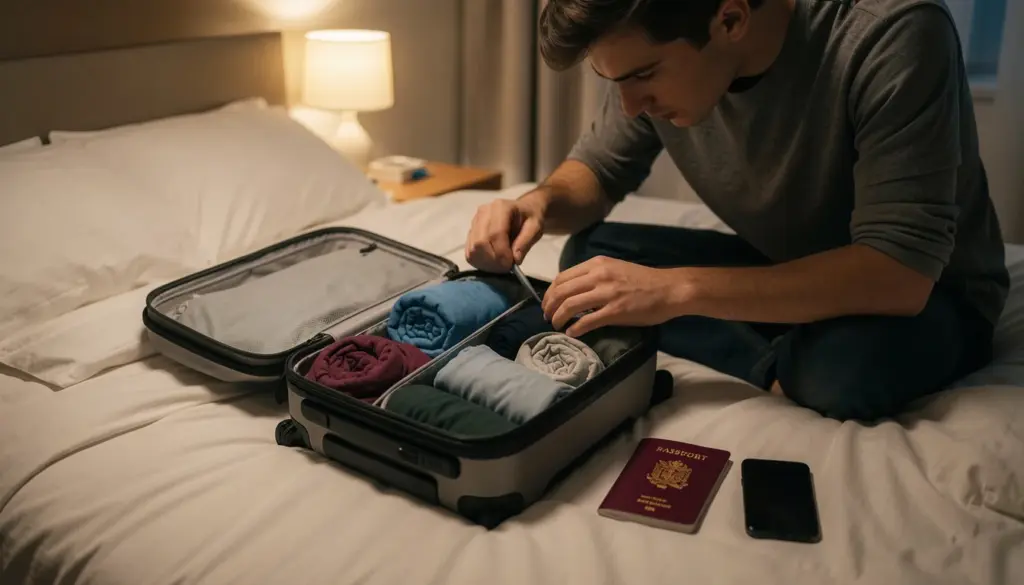
Standing in front of an open suitcase at midnight before your flight, trying to squeeze in “just one more outfit”—sound familiar? Most travelers carry twice what they need, paying extra baggage fees and wrestling with heavy luggage through airports. There’s a better approach.
This guide teaches you a simple, repeatable system for packing light using only a carry-on bag. You’ll learn exactly what to bring, how to choose versatile items, and which packing techniques actually save space. By the end, you’ll have a practical checklist you can use for any trip, whether you’re traveling for a weekend or two weeks.
Why Packing Light Changes Your Travel Experience
Traveling with just a carry-on bag offers benefits that go beyond avoiding checked baggage fees. You gain genuine freedom of movement—no waiting at baggage claim, no anxiety about lost luggage, and the ability to catch tight connections without worry.
Packing light forces you to make intentional choices about what you truly need. This clarity reduces decision fatigue during your trip and helps you focus on experiences rather than belongings. You’ll move through airports faster, navigate public transportation with ease, and spend less time managing your stuff.
The financial savings add up quickly. Beyond avoiding baggage fees, you’ll find it easier to use budget airlines, grab last-minute ride-shares, and choose accommodations without worrying about luggage storage. Most travelers who switch to carry-on only wonder why they didn’t make the change sooner.
The Carry-On Only Method Explained
The carry-on only method centers on a simple principle: bring essentials that serve multiple purposes, then plan to do laundry if needed. Instead of packing for every possible scenario, you pack a flexible foundation that adapts to different situations.
This approach relies on three core rules. First, every item must justify its space—if you’re not certain you’ll use something, leave it behind. Second, prioritize versatile clothing that works in multiple outfit combinations. Third, accept airline carry-on limits as helpful constraints rather than restrictions to fight against.
The method works because modern travel rarely requires the variety of clothing we think it does. A capsule wardrobe of mix-and-match pieces gives you more outfit options than a stuffed suitcase of single-use items. Combined with strategic packing techniques, you can comfortably travel for weeks with just a carry-on bag.
Step-by-Step System to Pack Light for Any Trip
Step 1: Choose the Right Carry-On Bag
Your bag choice determines everything else. Look for a carry-on that meets airline size restrictions (typically 22 x 14 x 9 inches) and includes both structure and compression capability. A quality travel backpack or rolling suitcase with compression straps helps you maximize space without exceeding weight limits.
Consider your travel style when selecting a bag. Backpacks work better for destinations with cobblestone streets or stairs, while wheeled luggage suits business travel or trips with smooth surfaces. Some travelers prefer hybrid bags that convert between backpack and rolling modes.
Step 2: Plan Your Outfits (Capsule Wardrobe)
Building a capsule wardrobe means selecting clothing items that all coordinate with each other. Choose a color palette of two or three neutral colors (black, navy, gray, khaki) that allow every top to pair with every bottom. This approach multiplies your outfit combinations while minimizing the number of items you pack.
Focus on lightweight, quick-drying fabrics that resist wrinkles. Merino wool, synthetic blends, and wrinkle-resistant cotton work well for travel. These materials perform better than regular cotton, dry faster after washing, and take up less space in your bag.
Step 3: Limit Clothing Using the Rule of 3
The Rule of 3 provides a practical formula for most trips: pack three tops, three bottoms, and three sets of undergarments and socks. This gives you nine possible outfit combinations, enough for a week of travel when you plan to do laundry once.
For longer trips, add one or two extra items rather than doubling your entire wardrobe. A single additional top expands your options significantly when combined with your existing bottoms. Remember that you’ll wear one complete outfit during travel, so it doesn’t count against your packing space.
Step 4: Pick Travel-Size Essentials
Toiletries represent a common source of overpacking. Follow the TSA 3-1-1 rule: liquids must be in containers of 3.4 ounces (100ml) or less, all fitting in one quart-sized clear bag. Purchase travel-size versions of your regular products or transfer them into reusable containers.
Many items you think you need are available at your destination. Hotels provide soap and shampoo, while pharmacies worldwide sell basic toiletries. Bring only the specialty items you can’t easily replace, such as specific medications or prescription skincare products.
Step 5: Eliminate Non-Essential Items
Challenge every item with this question: “What happens if I don’t bring this?” Often, the answer reveals the item isn’t necessary. That “just in case” outfit, the extra pair of shoes you might wear, or the book you’ve been meaning to read—these items rarely justify their space.
Create two categories: absolute essentials and nice-to-haves. Pack all essentials first, then evaluate whether nice-to-haves fit in the remaining space. If your bag feels tight, remove items from the nice-to-have category until you achieve comfortable room for compression.
Smart Packing Techniques to Maximize Space
Rolling versus folding remains a constant debate among travelers. Rolling works better for casual clothing like t-shirts, jeans, and underwear—it prevents wrinkles and allows you to see everything at a glance. Folding suits, dress shirts, blazers, and formal wear that need to maintain crisp lines.
Packing cubes transform how you organize a carry-on bag. These rectangular organizers compress clothing while keeping categories separate (tops in one cube, bottoms in another, undergarments in a third). The compression feature alone can save 20-30% of your packing space while preventing items from shifting during travel.
The layering strategy helps you adapt to different weather conditions without packing separate outfits. Bring a base layer, a mid-layer (like a sweater or fleece), and an outer shell (windbreaker or light jacket). These three layers handle temperatures from warm to cold, and you can wear them individually or combine them as needed.
For shoes, wear your bulkiest pair during travel and pack only one additional pair. Stuff socks and small items inside shoes to use that dead space. Place shoes in shower caps or plastic bags to keep them separate from clothing.
Minimalist Packing List (Beginner-Friendly Checklist)
Clothing:
- 3 tops (mix of t-shirts and button-downs)
- 3 bottoms (combination of pants, shorts, or skirts)
- 1 dress or an additional versatile piece
- 3 sets of undergarments
- 3 pairs of socks
- 1 sleepwear set
- 1 lightweight jacket or sweater
- 1 weather-appropriate outer layer
Toiletries:
- Travel-size shampoo and body wash
- Toothbrush and toothpaste
- Deodorant
- Skincare basics (moisturizer, sunscreen)
- Medications and prescriptions
- Small first-aid kit (bandages, pain reliever)
Tech & Documents:
- Smartphone and charger
- Passport and ID
- Credit cards and a small amount of cash
- Travel insurance documents
- Boarding passes (digital when possible)
- Universal power adapter (for international travel)
Travel Essentials:
- Reusable water bottle
- Small daypack or tote bag
- Sunglasses
- Travel pillow (inflatable to save space)
- Ziplock bags (various sizes)
How to Pack Light for Different Types of Trips
Weekend Trips (2-3 Days)
For short getaways, pack even lighter than the standard list. Two outfits, plus what you wear traveling, give you enough variety. Skip the extra shoes entirely—wear comfortable walking shoes that work for both day and evening activities. Most weekend destinations allow you to repeat outfits without concern.
One-Week Travel
A week-long trip represents the sweet spot for carry-on only packing. The standard minimalist packing list handles this duration perfectly. Plan to do laundry once midweek, either at your accommodation or using a local laundromat. This approach keeps your bag light while ensuring fresh clothing throughout your trip.
International Travel
International trips require slightly more planning, but don’t need more clothing. Focus on versatile, neutral pieces that blend in with local dress codes. Research your destination’s climate and cultural norms before packing. Add a universal power adapter and check visa requirements, but resist the urge to pack more clothing just because you’re traveling farther.
Different Climates
Cold-weather destinations challenge carry-on-only packers, but layering solves most problems. A quality down jacket compresses to fist-size but provides serious warmth. Merino wool base layers work under regular clothing without adding bulk. For hot climates, pack lightweight, breathable fabrics that dry quickly after washing.
Common Packing Mistakes and How to Avoid Them
Packing “just in case” scenarios leads to overstuffed bags. That formal outfit for an unlikely fancy dinner, backup electronics you’ll never use, or multiple options for the same function waste valuable space. Trust that you can purchase or improvise if an unexpected situation arises.
Bringing new shoes seems reasonable until they cause blisters halfway through your trip. Always travel in broken-in footwear that you’ve tested for comfort during long walks. Save new purchases for after your return home.
Ignoring airline carry-on restrictions creates problems at the gate. Measure your bag when empty, then verify it still fits within limits after packing. Some budget airlines strictly enforce size and weight restrictions, checking bags at the counter if they exceed published limits.
Forgetting about laundry options results in overpacking clothing. Most accommodations offer laundry facilities or services. Even hotels without laundry rooms provide access to nearby laundromats. Quick hand-washing in your room works for small items like undergarments and socks.
Your Go-To Carry-On Packing Checklist
Before every trip, run through this verification checklist:
Three Days Before:
- Check the weather forecast for the destination
- Confirm airline baggage allowance
- Review the packing list and remove non-essentials
- Wash and prepare clothing items
One Day Before:
- Lay out everything you plan to pack
- Apply the “remove 25% rule”—eliminate a quarter of what you laid out
- Roll clothing and organize into packing cubes
- Verify passport validity and required documents
Packing Day:
- Pack the heaviest items (shoes, toiletries) at the bottom near the wheels
- Fill dead space with small items
- Keep essentials (documents, medications, chargers) easily accessible
- Test bag weight and compression
- Confirm everything fits within airline dimensions
FAQs
How do I pack light for a 7-day trip?
Use the Rule of 3 (three tops, three bottoms, three undergarments) and plan to do laundry once during your week. This combination provides enough outfit variety while keeping your bag manageable. Choose quick-drying fabrics that you can wash in a hotel sink if needed.
What should I not pack when traveling?
Avoid bulky towels (hotels provide them), multiple shoe options, full-size toiletries, “just in case” formal wear, and anything you haven’t used on previous trips. Books can be replaced with e-readers, and most electronics have digital alternatives that save weight.
Is it possible to travel with just one bag?
Absolutely. Thousands of travelers use only a carry-on for trips lasting weeks or months. The key involves choosing versatile clothing, accepting you’ll do laundry regularly, and trusting you can purchase forgotten items at your destination. Most one-bag travelers report they enjoy traveling more with less luggage.
How many outfits should I pack for a week?
Pack three complete outfits (plus what you wear traveling), then plan to do laundry midweek. This gives you six to seven days of clothing options through mixing and matching pieces. Wearing items twice before washing is perfectly acceptable during travel.
What size bag is best for carry-on travel?
Choose a bag that meets standard airline carry-on dimensions (22 x 14 x 9 inches or 56 x 36 x 23 cm). A 35-45 liter backpack or a standard wheeled carry-on suitcase provides enough space for a week or more of travel when packed efficiently.
How do packing cubes help with packing light?
Packing cubes compress clothing to save 20-30% of space while organizing items by category. They prevent clothes from shifting during travel, make finding specific items easier, and help you visualize exactly what you’ve packed. The compression feature turns chaos into organized efficiency.
How can I pack light for different weather conditions?
Use a layering system instead of packing separate outfits for each temperature. Bring a base layer, mid-layer (sweater or fleece), and weather-resistant outer shell. These three components combine to handle various conditions while occupying minimal space. Choose materials that work across temperature ranges.