

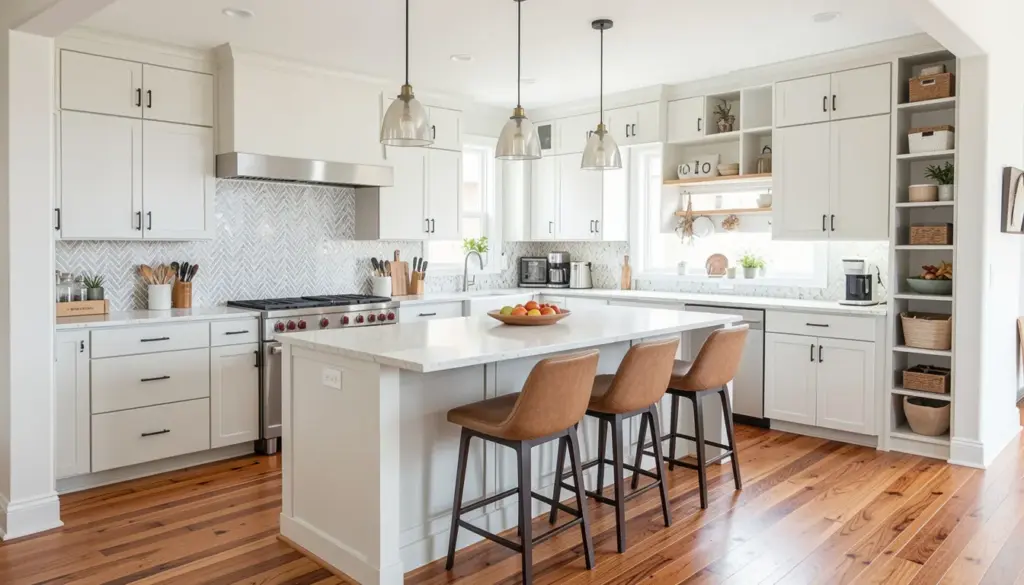
A kitchen remodel is one of the most rewarding home improvement projects you can take on — but without proper planning, it can quickly become one of the most stressful. Whether you’re updating a cramped galley kitchen or transforming an outdated space into an open-concept layout, the decisions you make before the first cabinet comes off the wall will shape everything that follows.
This guide walks you through the full kitchen renovation process: from setting goals and building a realistic budget, to choosing materials, hiring the right people, and avoiding the mistakes that cost homeowners the most time and money.
What Is Kitchen Remodeling and Why Does It Matter?
Kitchen remodeling refers to the process of renovating or upgrading your kitchen’s layout, finishes, appliances, or structural elements. It can range from a minor refresh — new cabinet hardware, a backsplash update, fresh paint — to a full gut renovation involving plumbing reroutes, electrical upgrades, and entirely new cabinetry.
Beyond aesthetics, a well-planned kitchen renovation improves daily functionality, increases your home’s resale value, and often delivers a strong return on investment. According to most real estate and remodeling data, a midrange kitchen remodel consistently ranks among the top ROI home improvement projects. More practically, a kitchen that works well for how you actually cook and live makes everyday life noticeably better.
Step-by-Step Kitchen Remodeling Planning
Good planning is the difference between a renovation that finishes on budget and one that derails halfway through. Rushing into design choices without a clear plan leads to costly changes mid-project.
Define Your Goals and Priorities
Start by asking what’s actually not working about your current kitchen. Is it storage? Traffic flow? Outdated appliances? Lack of counter space? Write down the problems you’re solving, not just the aesthetics you want. This helps you make spending decisions that deliver real results rather than cosmetic-only improvements.
Be specific about what success looks like. Do you want better workflow efficiency for cooking? More seating? An island? An open-concept connection to the living room? Knowing your priorities helps you allocate your budget to the changes that matter most.
Assess Your Current Kitchen Space
Before drawing up any plans, measure everything. Note where your plumbing supply and drain lines run, where your electrical panels and outlets are, and where load-bearing walls sit. Moving plumbing and electrical adds high cost to any renovation — sometimes doubling the budget for that portion of the work.
Take stock of what’s worth keeping. Sometimes cabinets are structurally sound and just need new doors or a fresh coat of paint. Appliances that still function well may not need replacing. Identifying what stays and what goes is a core part of renovation planning.
Create a Remodeling Checklist
A kitchen remodel checklist keeps the project organized and prevents things from falling through the cracks. Your checklist should cover:
- Finalizing design and layout decisions before ordering materials
- Obtaining required permits and approvals
- Confirming contractor schedules and lead times for custom orders
- Setting up a temporary kitchen space during construction
- Scheduling inspections at required milestones
Having this mapped out in advance prevents the project delays that typically happen when materials arrive before the space is ready, or when a contractor can’t proceed without an inspection sign-off.
Kitchen Remodeling Budgeting Explained
Cost is the primary concern for most homeowners approaching a kitchen renovation — and understandably so. Kitchen remodels cover an enormous range, from $10,000 for a modest cosmetic refresh to $80,000+ for a full high-end renovation with custom cabinetry and premium appliances.
Average Cost Breakdown
Here’s a general breakdown of where money goes in a typical midrange kitchen remodel:
Cabinetry: 25–35% of total budget. This is usually the largest single expense. Semi-custom options from retailers like IKEA, Home Depot, or Lowe’s offer a good balance between cost and quality. Fully custom cabinetry dramatically increases this portion.
Labor: 20–35%. Includes demolition, installation, and any trade work (plumbing, electrical, HVAC adjustments). Labor costs vary significantly by region.
Appliances: 10–15%. Energy-efficient appliances carry a higher upfront cost but reduce long-term utility bills.
Countertops: 10–15%. Quartz countertops and granite countertops are the two most popular choices. Quartz tends to be more uniform and lower maintenance; granite offers natural variation at a comparable price point.
Flooring: 5–10%. Tile, hardwood, and luxury vinyl plank are common choices with varying cost and durability trade-offs.
Backsplash, lighting, fixtures, and permits: The remaining 10–15%.
How to Set a Realistic Budget
A reliable rule of thumb: plan to spend 5–15% of your home’s current value on a kitchen remodel. Spending more rarely produces proportional returns when you sell. Spending significantly less may leave the kitchen feeling inconsistent with the rest of the home.
Build a contingency fund of 10–20% on top of your planned budget. Hidden issues — old plumbing, outdated wiring, water damage under the subfloor — are common discoveries once demolition begins. Having that buffer prevents you from making rushed, cost-cutting decisions mid-renovation.
Ways to Save Money Without Compromising Quality
Several cost-effective renovation strategies don’t sacrifice the result. Keeping your existing kitchen layout — meaning no plumbing moves — is one of the highest-impact budget decisions you can make. Switching from a custom to a semi-custom or modular kitchen system (such as IKEA’s kitchen line) can save thousands while still producing a polished look.
Refacing existing cabinet boxes rather than replacing them entirely is another high-value approach when the underlying structure is sound. Similarly, choosing mid-grade countertop materials over premium slabs can free up budget for higher-impact items like appliances or lighting.
Key Kitchen Design Considerations
Good kitchen design balances modern kitchen aesthetics with practical, day-to-day functionality. A kitchen that looks beautiful in photos but creates constant frustration while cooking is not a success.
Choosing the Right Layout
The most common kitchen layouts — L-shape, U-shape, galley, and open-concept with an island — each suit different space sizes and cooking habits. The classic design principle behind any layout is the work triangle: the relationship between the stove, refrigerator, and sink. When these three points are well-positioned, the kitchen feels intuitive and reduces unnecessary movement while cooking.
For small kitchen remodeling ideas, a galley or L-shape layout often maximizes counter space and storage more effectively than trying to force an island into a tight footprint. An open-concept kitchen works best when the adjacent living or dining area can genuinely absorb the expanded space.
Storage and Cabinet Planning
Storage is consistently underestimated during renovation planning. Consider your actual cooking habits: do you have large pots and pans that need deep drawers? A pantry cabinet? Dedicated appliance storage so countertops stay clear? Cabinetry and storage solutions should be planned around how you use the kitchen, not just how it photographs.
Pull-out shelves, drawer organizers, and corner cabinet solutions (like lazy Susans or magic corner systems) dramatically improve space utilization in kitchens where every inch counts.
Lighting and Appliance Placement
Layered lighting design — combining task lighting (under-cabinet lights), ambient lighting (ceiling fixtures), and accent lighting — transforms how a kitchen looks and functions. A single overhead light is one of the most common kitchen design shortcomings, leaving prep areas shadowed and the overall space feeling flat.
Appliance placement should follow workflow logic. The refrigerator should be accessible from both the cooking zone and the entry point of the kitchen. The dishwasher should be adjacent to the sink. Placing the microwave at eye level or in a dedicated cabinet keeps countertop space open.
Choosing Materials and Finishes
The materials you choose determine how your kitchen looks, how it holds up over time, and a significant portion of the total cost.
Cabinets are available in stock (ready-made), semi-custom, and fully custom formats. For most homeowners, semi-custom provides the best balance of cost, quality, and customization. Solid wood construction and plywood box interiors hold up better than particleboard over time.
Countertops are largely a trade-off between cost, maintenance, and aesthetics. Quartz is non-porous, scratch-resistant, and requires minimal upkeep. Granite is naturally heat-resistant and offers a unique visual character. Butcher block adds warmth but requires regular sealing. Laminate remains the most affordable option and has improved significantly in appearance.
Flooring needs to withstand heavy foot traffic, spills, and regular cleaning. Porcelain tile, hardwood, and luxury vinyl plank are the top performers. Large-format tiles reduce grout lines and are easier to clean. Hardwood adds warmth but requires care around moisture.
Backsplash is where many homeowners express the most design personality. Subway tile remains a classic that ages well. Larger format tiles, natural stone, and patterned cement tiles can become the visual focal point of the kitchen. Budget accordingly — tile costs vary widely based on material and installation complexity.
Hiring Professionals vs DIY Remodeling
The contractor vs DIY question comes down to scope, skill level, and budget — and it’s rarely all-or-nothing.
When to hire a contractor: Any work involving plumbing, electrical systems, structural changes, or gas lines should be handled by licensed professionals. Beyond legal requirements, these are areas where mistakes carry real safety and financial consequences. A general contractor can also manage the coordination of multiple trades, handle permits and approvals, and keep the project on timeline.
When hiring, get at least three quotes, verify licenses and insurance, check references, and make sure your contractor agreement clearly outlines the scope of work, payment schedule, timeline, and how changes are handled. Vague contracts are a primary source of renovation disputes.
When DIY makes sense: Cosmetic work — painting, installing a backsplash, swapping fixtures, or assembling flat-pack cabinetry — is manageable for homeowners with basic skills and proper preparation. This can meaningfully reduce labor costs. However, be honest about your time and capabilities; an unfinished DIY project can delay the entire renovation.
Timeline and What to Expect During Renovation
A common question homeowners have is how long a kitchen remodel actually takes. The honest answer is: longer than most contractors initially estimate.
A minor kitchen refresh (new countertops, appliances, paint) can take 1–3 weeks. A mid-size remodel involving new cabinetry, flooring, and some layout changes typically runs 4–8 weeks. A full gut renovation with structural changes can extend to 3–5 months.
The renovation timeline is often stretched by material lead times — custom cabinets can take 6–12 weeks to manufacture and deliver — and by inspection scheduling. Planning the project phases carefully, ordering materials before demolition begins, and confirming contractor availability in advance all reduce unnecessary delays.
During construction, you’ll need a temporary kitchen setup: a microwave, mini-fridge, electric kettle, and access to a nearby bathroom sink covers most daily needs.
Common Kitchen Remodeling Mistakes to Avoid
Most costly renovation mistakes are avoidable with better upfront planning.
Underestimating the budget. Many homeowners start with a tight estimate and no contingency, then face difficult choices when hidden issues emerge. Always build in a buffer.
Changing decisions mid-project. Swapping cabinet styles or countertop materials after orders have been placed is expensive and causes major delays. Finalize every selection before demolition starts.
Ignoring the work triangle. Prioritizing aesthetics over layout logic creates a kitchen that looks great but works poorly. Always design around how the space functions.
Skipping permits. Unpermitted work can create issues when selling your home and may not pass inspection after the fact. Check with your local authority on what requires permits — electrical, plumbing, and structural work almost always do.
Over-improving for the neighborhood. A $100,000 kitchen in a neighborhood where homes sell for $300,000 rarely recovers that investment. Match the renovation scope to the realistic market value of your home.
Tips for a Successful Kitchen Remodel
A few practical principles make a real difference in how smoothly a renovation goes:
Plan the full design before purchasing anything. Every material selection should be made together — cabinets, countertops, flooring, backsplash, and hardware — so the overall palette is cohesive.
Invest in the things you touch every day. Cabinet hardware, faucets, and drawer pulls are handled constantly. Mid-grade or higher quality in these areas pays off in durability and feel.
Visit showrooms and see materials in person. Samples look different under showroom lighting than in your actual kitchen. Bring home samples and live with them for a few days before committing.
Communicate consistently with your contractor. A brief weekly check-in prevents small miscommunications from becoming expensive surprises.
FAQs
What should I know before starting a kitchen remodel?
Understand your priorities, set a realistic budget with a contingency buffer, and finalize all material selections before work begins. Changing decisions mid-project is one of the most common sources of cost overruns and delays.
How much does a kitchen renovation cost?
Costs vary widely based on scope, materials, and location. A minor cosmetic update may run $10,000–$20,000. A midrange full remodel typically costs $30,000–$60,000. High-end custom renovations can exceed $80,000–$100,000.
Do I need permits for a kitchen remodel?
Most structural, electrical, and plumbing work requires permits. Even if a contractor says it’s not necessary, check with your local building department directly. Unpermitted work can complicate home sales and insurance claims.
How long does a kitchen remodel take?
Minor updates: 1–3 weeks. Standard full remodels: 4–8 weeks. Major gut renovations: 3–5 months. Custom cabinet lead times are often the biggest scheduling factor.
Should I hire a contractor or do it myself?
DIY is reasonable for cosmetic work. Any project involving plumbing, electrical, gas, or structural changes should be handled by licensed professionals. A hybrid approach — hiring trades for technical work and doing cosmetic tasks yourself — is a common cost-saving strategy.
Which kitchen layout works best for small spaces?
Galley and L-shaped layouts typically deliver the most functional storage and counter space in compact kitchens. Avoid forcing an island into a small footprint — it often creates more obstruction than utility.
What adds the most value in a kitchen renovation?
Updated cabinetry, new countertops, modern appliances, and improved lighting consistently deliver the strongest return on investment. Structural changes (like opening a wall for an open-concept layout) can also significantly increase perceived value, though at a higher cost.