

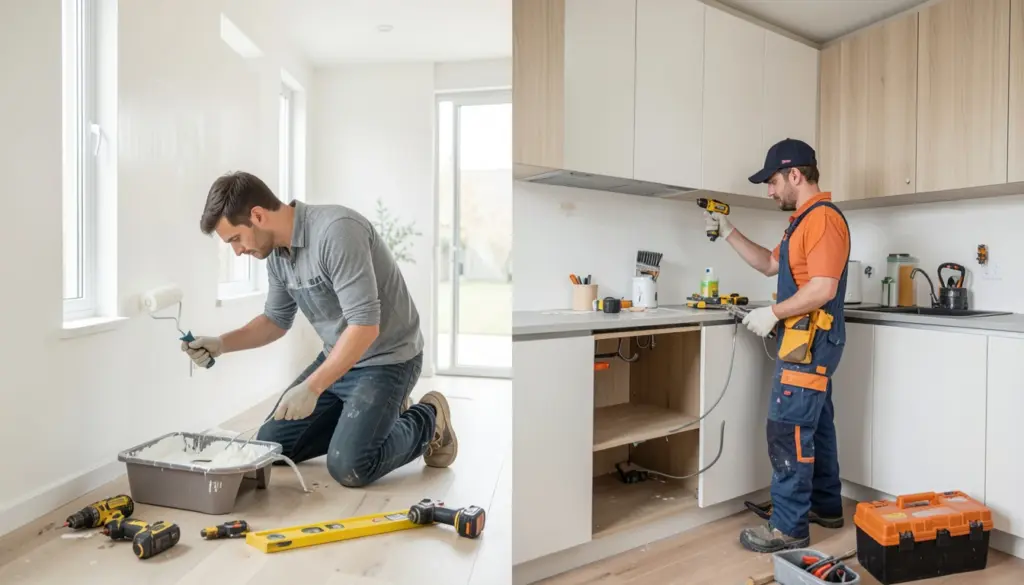
Every homeowner eventually faces the same crossroads: you’ve got a project on your hands, and you need to decide whether to grab your tools or pick up the phone. The choice between doing it yourself and hiring a professional contractor affects your budget, your timeline, your safety, and — in some cases — your home’s long-term value.
Neither option is universally better. The right choice depends on the nature of the project, your existing skills, the time you have available, and what you can realistically afford. This guide breaks down both sides clearly so you can make a confident, well-informed decision before your next renovation.
What Is DIY Home Improvement?
DIY home improvement refers to any renovation, repair, or upgrade that a homeowner completes without hiring outside labor. Instead of bringing in a contractor or specialist, you plan the project, gather materials, and do the work yourself.
Common DIY projects include painting interior walls, installing shelving, replacing cabinet hardware, laying laminate flooring, patching drywall, and basic landscaping. These tasks typically require standard home improvement tools, some patience, and a willingness to learn.
Homeowners choose DIY for several reasons. Some want to save money on labor costs. Others genuinely enjoy working with their hands. And many simply take pride in improving their own homes through personal effort.
What Does Hiring Professional Contractors Mean?
Hiring a professional means bringing in a licensed, experienced contractor or specialist to handle the work on your behalf. Depending on the project, this might be a general contractor who manages the full scope of a renovation, or a specialist such as an electrician, plumber, or structural engineer.
Professionals bring technical expertise, proper tools, and industry knowledge to each job. They understand local building codes, handle construction permits, and coordinate the moving parts of complex projects. A reputable contractor also carries insurance, which protects both parties if something goes wrong during the work.
The renovation process typically involves an initial consultation, a written estimate, a project timeline, and a final walkthrough. For larger remodels, contractors may also manage subcontractors, inspections, and material sourcing.
Pros and Cons of DIY Home Improvement
Advantages of DIY Projects
The most obvious benefit is cost savings. When you do the work yourself, you eliminate labor costs — and for many projects, labor represents 40 to 60 percent of the total bill. That difference can be substantial on a renovation budget.
DIY also gives you complete control over the project. You decide the materials, the schedule, and the level of finish. There’s no waiting on contractor availability or adjusting your timeline around someone else’s workload.
For homeowners who enjoy hands-on work, DIY carries real satisfaction. Completing a project yourself builds practical skills you can apply to future work. Cosmetic upgrades like fresh paint, new fixtures, or updated hardware are also relatively low-risk areas where a careful beginner can produce genuinely good results.
Challenges and Risks of DIY
DIY carries hidden costs that many homeowners underestimate going in. Tool investment alone can be significant — power tools, safety equipment, and specialty hardware add up quickly. If you make a mistake, materials need to be repurchased, and the work needs to be redone, which can push your total cost above what a professional would have charged.
Time is another underrated factor. A professional crew might complete a bathroom remodel in a week; the same project done on evenings and weekends might stretch across several months. That gap has an opportunity cost — time spent on renovations is time not spent elsewhere.
Construction safety is also a genuine concern. Working at height, handling power tools without proper training, or disturbing materials like asbestos or old wiring creates real physical risk. Mistakes in structural or systems-related work can compromise your home’s safety and may be expensive to fix.
Pros and Cons of Hiring Professionals
Benefits of Professional Expertise
Professional contractors bring a level of skill and experience that most homeowners simply can’t replicate on their first attempt. That expertise shows in the quality and long-term durability of the finished work. A properly tiled shower or correctly wired electrical panel will perform reliably for years; an amateur attempt at the same job may require repair much sooner.
Professionals also understand permit requirements and local building codes. This matters more than many homeowners realize — unpermitted work can create complications when you sell the property, and some types of unlicensed work can void your homeowner’s insurance.
For complex projects involving structural work, plumbing systems, or electrical systems, professional craftsmanship isn’t just a quality preference — it’s often a legal requirement.
Potential Downsides of Hiring Contractors
The primary drawback is cost. Labor fees significantly increase the price of any renovation project, and the final bill sometimes exceeds the original estimate when unexpected issues arise behind walls or under floors.
Finding a reliable contractor also takes effort. Vetting credentials, checking references, and comparing quotes requires time and attention. Poor hiring decisions can lead to delays, subpar work, or difficult disputes.
Scheduling can also be a challenge. Reputable contractors are often booked weeks or months in advance, which means your project timeline depends on their availability rather than yours.
Cost Comparison: DIY vs Professional Home Improvement
On the surface, DIY appears cheaper because you’re only paying for materials. In practice, the true cost comparison is more nuanced.
For straightforward cosmetic projects — painting, basic landscaping, or installing shelving — DIY can save a meaningful amount of money with minimal risk. The materials are inexpensive, the margin for error is low, and the skills required are easy to develop.
For technical or large-scale projects, the calculation shifts. A homeowner attempting a kitchen remodel without adequate experience might spend almost as much on materials and corrective fixes as they would have paid for professional labor — but end up with lower-quality results and a longer project timeline.
There are also long-term cost considerations. Professional work on critical systems often comes with warranties and is completed to code, which can prevent costly repairs down the road. DIY errors in plumbing or electrical work can cause water damage, electrical hazards, or failed inspections that require expensive remediation.
A useful way to think about it: calculate the cost of materials plus a realistic estimate of your time, then compare that total honestly against contractor quotes. For many complex projects, the difference is smaller than expected.
Home Improvement Projects Suitable for DIY
Many home improvement projects are well within reach for a homeowner with basic skills and the right preparation. These include:
Painting — Interior and exterior painting is one of the best DIY candidates. The materials are affordable, the technique is learnable, and the risk of serious error is low.
Installing shelving and storage — Wall-mounted shelves, closet organizers, and basic cabinetry hardware are good beginner projects.
Flooring (certain types) — Laminate flooring and some vinyl plank products are designed for DIY installation with interlocking click systems.
Minor repairs — Patching drywall, replacing outlet covers, caulking around tubs, fixing door hinges, and similar maintenance tasks are straightforward with basic instructions.
Landscaping — Garden beds, basic lawn care, planting trees and shrubs, and building simple garden borders are all manageable without professional help.
Fixture replacement — Swapping out faucets, light fixtures, or cabinet hardware typically requires only basic plumbing or electrical knowledge, though homeowners should confirm their comfort level before working with wiring.
Projects That Usually Require Professional Contractors
Some home improvement work should not be attempted without proper training, licensing, or both. These include:
Electrical work — Adding circuits, upgrading a panel, or rewiring any part of your home carries a serious safety risk if done incorrectly. Most jurisdictions require licensed electricians for this type of work, and for good reason.
Plumbing upgrades — Routine fixes like replacing a showerhead are DIY-friendly, but anything involving new pipe runs, water heaters, or moving drain lines requires professional plumbing knowledge and usually a permit.
Structural changes — Removing or modifying load-bearing walls, adding room additions, or changing the structural configuration of your home requires engineering knowledge and permits. Errors here can compromise your home’s structural integrity.
Roofing — Roof replacement involves working at height, handling heavy materials, and ensuring a weatherproof seal. Mistakes lead to leaks and serious water damage. Most homeowners are better served by professional roofers.
Major kitchen or bathroom remodels — When a remodel involves moving walls, rerouting plumbing, or rewiring electrical, it crosses into territory that demands professional coordination across multiple trades.
HVAC installation — Heating and cooling systems require technical knowledge and refrigerant handling certification in most regions.
How to Decide Between DIY and Hiring Professionals
When you’re evaluating a project, run through these questions honestly:
What is the project complexity? Cosmetic work is generally DIY-appropriate. Anything involving structural systems, electrical, or plumbing deserves careful consideration.
Does it require permits? If the project needs a building permit, check whether your municipality allows homeowner-pulled permits. Some do, but the work must still meet code. Others require licensed contractors.
What are the safety risks? Working at height, handling electrical systems, or dealing with hazardous materials (like old insulation or lead paint) requires proper safety knowledge and equipment.
Do you have the tools and skills? Be realistic. Watching a tutorial is not the same as having hands-on experience. Consider whether a skill gap could lead to costly rework.
What is your available time? If your schedule is limited, a project that takes a professional two days might take you three months. That extended timeline has real costs, especially for kitchens or bathrooms you use daily.
What is your budget? Get contractor quotes before assuming DIY is cheaper. Factor in tool costs, material waste from learning, and the value of your time.
Common DIY Mistakes Homeowners Should Avoid
Even on appropriate DIY projects, certain mistakes come up repeatedly:
Skipping surface preparation — Painting without proper cleaning or priming leads to peeling and poor results.
Underestimating material quantities — Buying too little tile, flooring, or paint mid-project creates color and batch matching problems.
Ignoring permit requirements — Assuming a project doesn’t need a permit without checking can create legal and financial problems when you sell your home.
Rushing the planning phase — Jumping straight into work without measuring carefully, understanding the full scope, or gathering the right tools leads to avoidable errors.
Overlooking safety equipment — Eye protection, dust masks, and gloves are not optional on many projects. Construction safety practices exist because the risks are real.
Taking on too much at once — Starting multiple projects simultaneously, or beginning a project without a clear path to completion, creates unnecessary stress and unfinished work.
FAQs
Is DIY home improvement cheaper than hiring a contractor?
For cosmetic and low-skill projects, DIY typically saves a meaningful amount. For technical work, the savings are often smaller than expected once you factor in tools, potential mistakes, and time. Always compare total costs honestly before deciding.
What home projects should homeowners not attempt themselves?
Electrical panel work, structural modifications, full plumbing system changes, roofing, and major remodels involving multiple trades are generally best left to licensed professionals for safety and code compliance reasons.
Do DIY home renovations increase home value?
Well-executed DIY upgrades — particularly painting, landscaping, and cosmetic improvements — can increase perceived value. However, unpermitted work or poor-quality DIY on critical systems can actually hurt resale value or complicate a sale.
How do I decide between DIY and hiring a professional?
Evaluate project complexity, safety risk, permit requirements, your available skills and tools, your timeline, and the realistic total cost of each option. When in doubt on technical work, get a professional quote before committing either way.
What mistakes do DIY homeowners make most often?
Skipping prep work, underestimating materials, ignoring permit requirements, rushing into projects without proper planning, and taking on work that exceeds their skill level are among the most common and costly missteps.
Is hiring professionals always faster than DIY?
In most cases, yes — especially for complex projects. A professional crew working full days will typically complete work far faster than a homeowner working part-time. Contractor scheduling and availability can create delays before the project starts, but the total project duration is usually shorter once work begins.