

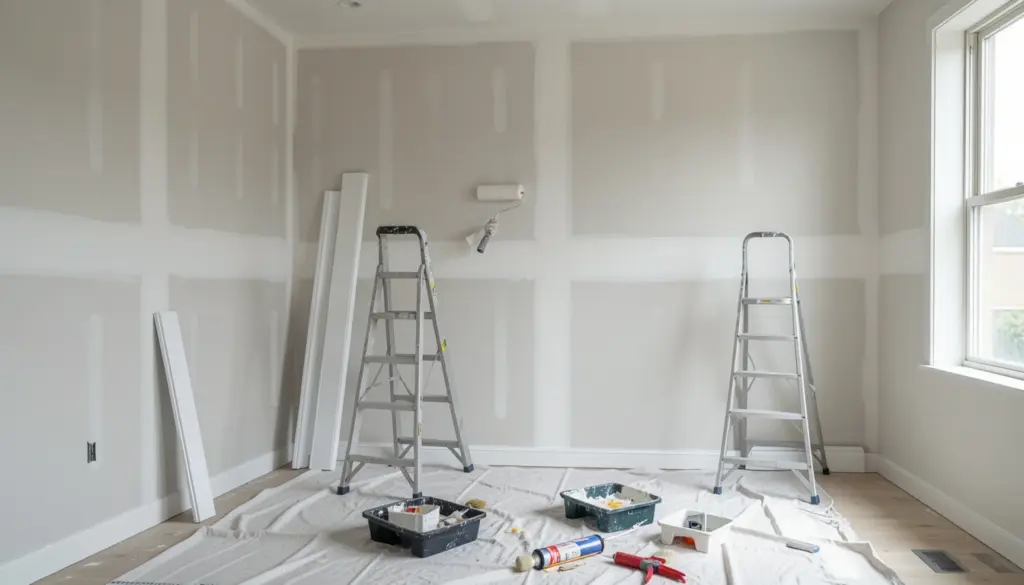
Most home renovation projects go wrong not because of poor materials or weak skills, but because the work happens in the wrong order. A freshly painted wall that gets dented by trim installation. Baseboards are nailed in before the floor is laid. Ceilings are textured after the paint has already dried. These are the kinds of costly mistakes that come from skipping a proper finishing plan.
Interior home finishing is the phase where a construction shell transforms into a livable, polished space. It covers everything from hanging drywall and taping joints to rolling on the final coat of paint and nailing down the last piece of crown molding. When done correctly — in the right sequence, with the right preparation — the results look professional and last for decades.
This guide walks you through the complete interior finishing process: what to do, when to do it, and how to avoid the most common mistakes that trip up beginners and experienced DIYers alike.
What Is Interior Home Finishing?
Interior home finishing refers to all the surface work that takes place after the structural, electrical, and plumbing rough-ins are complete. At this stage, the bones of the building are in place — framing, wiring, pipes — and the focus shifts to what people will actually see and touch.
The four core components of interior finishing are:
- Drywall (also called gypsum board) — forms the walls and ceiling surfaces
- Paint — protects and decorates finished surfaces
- Trim and molding — covers gaps, adds detail, and finishes edges
- Ceiling work — includes texture application, painting, and edge finishing
Each of these components depends on the previous one being done correctly. That’s what makes sequencing so critical in this phase of work.
The Correct Order of Interior Finishing Work
Getting the sequence right is the most important decision in the finishing phase. Here is the standard professional order:
- Drywall installation and finishing
- Wall and surface preparation
- Ceiling painting
- Wall painting
- Trim and molding installation
- Final touch-ups and caulking
Why does this order matter? Because each step creates conditions for the next. Drywall must be fully dry and sanded before primer goes on. Walls should be painted before trim is installed — so you don’t have to cut in carefully along the baseboard edge. Ceilings get painted first because drips onto the walls can be corrected when the walls are painted afterward.
Skipping ahead or reversing steps creates rework. Rework costs time, materials, and finish quality.
Step 1 – Drywall Installation and Finishing
Drywall is the foundation of every finished interior surface. Whatever goes wrong here — uneven joints, unfilled gaps, rough seams — will show through the paint. No amount of primer or extra coats will hide poorly finished drywall.
Hanging the Sheets
Drywall sheets are fastened to wall studs and ceiling joists using drywall screws. Use a stud finder to locate framing members before you begin. Sheets should be hung horizontally on walls when possible, as this creates fewer joints and a stronger installation. Keep fasteners slightly below the surface — this creates a small dimple that gets filled later.
Taping and Mudding
Once the sheets are hung, every joint, corner, and screw dimple needs to be covered with joint compound (commonly called “mud”). Tape is embedded in the first coat of mud along seams to reinforce the joint and prevent cracking. After the first coat dries fully — typically 24 hours — apply a second coat, feathering the edges outward. A third coat may be needed for a truly smooth result.
Inside corners use paper tape. Outside corners get a metal or plastic corner bead, which gives a clean, durable edge.
Sanding for a Smooth Finish
Once the final mud coat is dry, sand the entire surface using 120-grit sandpaper. This is where most beginners rush — and regret it. Thorough sanding removes ridges, bumps, and tool marks. After sanding, wipe down the walls with a damp cloth to remove dust before priming.
Proper drying time between coats cannot be skipped. Wet mud under a dry surface cracks and shrinks, creating visible lines in the finished paint.
Step 2 – Preparing Walls Before Painting
Even after drywall finishing, the wall surface needs additional preparation before paint goes on. Skipping this step is one of the most common interior finishing mistakes.
Start by inspecting the walls under raking light — a flashlight held at a low angle reveals surface imperfections that overhead lighting misses. Fill any remaining dents or low spots with lightweight spackle or a thin skim coat of joint compound. Sand again once dry.
Next, apply a coat of drywall primer. Primer serves two critical purposes: it seals the porous drywall paper so paint absorbs evenly, and it improves adhesion so the topcoats bond properly. Painting directly over bare drywall — even sanded, finished drywall — results in uneven sheen, blotchy color, and higher paint consumption.
Allow the primer to dry completely before sanding lightly with 150-grit sandpaper. This final sanding removes any raised grain or brush marks in the primer, leaving a surface that’s ready for a consistent, smooth paint finish.
Step 3 – How to Paint Walls Professionally
With properly primed walls, painting becomes much more straightforward. The difference between a professional-grade finish and an amateur one usually comes down to preparation (already handled), tool choice, and technique.
Tools and Materials
Use a high-quality roller cover — a 3/8″ nap for smooth walls, 1/2″ nap for slightly textured surfaces. Cheap roller covers leave lint in the paint and create uneven texture. For cutting in, use an angled brush (2″ to 2.5″) with firm, flexible bristles. A painter’s tape is useful for protecting trim and adjacent surfaces, though with practice, freehand cutting becomes faster and cleaner.
Cutting In First
Cutting in means painting the edges — along the ceiling, corners, and trim lines — with a brush before rolling the main field. Work in sections of about 3–4 feet at a time. Cut in while the edge is still wet, then immediately follow with the roller. This technique, called “wet edge painting,” prevents visible lap lines between the brush and roller sections.
Rolling the Walls
Load the roller evenly and apply paint in a “W” or “M” pattern, then fill in without lifting the roller. This distributes paint evenly and avoids heavy buildup in one area. Maintain a wet edge as you work across the wall. Two coats of paint are standard — the first to establish coverage, the second to create consistent color and sheen.
Choosing Paint Finishes
Paint finish types affect both appearance and durability. Matte finishes hide imperfections well but are harder to clean. Satin finishes balance washability with a soft sheen — a common choice for living rooms and bedrooms. Semi-gloss and gloss finishes are highly durable and moisture-resistant, making them ideal for kitchens, bathrooms, and trim work.
Step 4 – Interior Trim and Molding Installation
Trim installation happens after painting — not before. This sequence allows you to paint the walls freely without worrying about getting paint on the trim, and lets you touch up any scuffs on the trim itself as a final step.
Types of Interior Trim
The most common types include:
- Baseboards — run along the bottom of walls where they meet the floor
- Crown molding — installed at the junction of walls and ceilings for a finished, formal look
- Door and window casing — frames, openings, and covers the gap between the drywall and the door or window jamb
- Chair rail and wainscoting — decorative molding placed horizontally on walls
Each type requires different cutting angles and installation methods.
Measuring, Cutting, and Installing
Accurate measuring is essential. For inside corners, use coped joints rather than mitered ones — coping one piece to fit over the profile of another gives a tighter, more durable joint as the wood expands and contracts seasonally. Outside corners use 45-degree mitered cuts.
Use a miter saw for clean, precise cuts. Attach trim with a finish nailer or brad nailer, driving nails into studs or the framing behind the drywall. Set nails slightly below the surface with a nail set tool, then fill the holes with wood filler.
Caulking and Finishing
Once trim is nailed in place, caulk all gaps — between the trim and wall, around door casings, and at inside corners. Use paintable latex caulk. Smooth it with a wet finger for a clean, tight bead. After the caulk dries, apply a final coat of trim paint (typically semi-gloss) to give the molding a crisp, finished appearance.
Step 5 – Ceiling Finishing Techniques
Ceilings are painted before walls for a simple reason: paint drips down. Any ceiling paint that falls onto the walls gets covered when you paint the walls afterward.
Smooth vs. Textured Ceilings
Smooth ceilings require the same careful drywall finishing as walls — taping, mudding, sanding, and priming. They look clean and modern but highlight any imperfections. Textured ceilings — popcorn, knockdown, or orange peel — are more forgiving of minor surface flaws, which is why they became popular in residential construction.
To apply knockdown texture, thin joint compound with water to a consistency slightly thicker than paint, apply it randomly with a roller or hopper sprayer, then “knock it down” by lightly dragging a wide knife across the surface before it fully dries. The result is a mottled, slightly raised pattern.
Painting Ceilings
Use flat ceiling paint — its low sheen reduces the visibility of surface imperfections under light. Roll in one direction first, then cross-roll perpendicular to the first pass. Work in manageable sections and maintain a wet edge to avoid lap marks.
For ceiling edges, cut in carefully along the wall-ceiling junction. A steady hand and a quality brush make this easier. If the ceiling and wall will be different colors, let the ceiling paint dry fully before taping off and painting the walls below.
Common Interior Finishing Mistakes to Avoid
Even experienced renovators make these errors. Knowing them in advance helps you avoid costly rework.
Skipping the sanding steps. Both after drywall finishing and after priming, sanding is what creates a truly smooth, professional surface. Rushing past it always shows in the final result.
Painting over wet drywall. Joint compound must be completely dry before priming or painting. A grayish, slightly damp appearance indicates the mud isn’t ready. Painting too early traps moisture and leads to bubbling or cracking.
Installing trim before painting walls. This forces careful cutting-in work along every piece of trim — a time-consuming task that also increases the chance of paint getting onto the trim. The correct sequence is: paint walls first, then install and paint trim.
Skipping primer. Bare drywall paper absorbs paint unevenly. Without primer, you’ll use significantly more paint to achieve coverage, and the finish will still look uneven in certain lighting.
Poor caulk application. Uncaulked gaps between trim and walls look unfinished and allow moisture intrusion over time. Take the time to caulk all joints before the final trim paint coat goes on.
Using cheap tools. Low-quality rollers and brushes leave lint, streaks, and uneven texture. Professional results come partly from proper tools — they’re worth the investment even for a single project.
Tools and Materials Checklist for Interior Finishing
For drywall work: Stud finder, drywall screws, screw gun, drywall knife, mud pan, corner bead, joint compound, drywall tape, sanding sponge, sandpaper (120-grit and 150-grit)
For painting: Roller frame and covers (various nap sizes), angled brushes, paint tray, painter’s tape, drop cloths, drywall primer, interior latex paint, extension pole
For trim installation: Miter saw, finish nailer or brad nailer, nail set, wood filler, caulk gun, paintable latex caulk, level or laser level, tape measure
Having these tools ready before you start each phase avoids mid-project delays and keeps the workflow moving efficiently.
FAQs
What is the correct order of interior finishing work?
The standard sequence is: drywall installation → drywall finishing (tape, mud, sand) → wall priming → ceiling painting → wall painting → trim installation → caulking and trim painting → final touch-ups.
How long should drywall dry before painting?
Joint compound must dry completely — typically 24 hours per coat under normal conditions. Thicker applications may need longer. The compound changes from dark to light gray when dry. Never paint over mud that still appears damp or dark.
Should you paint walls before or after installing trim?
Paint walls first. This allows you to roll and brush freely without worrying about protecting the trim. Once the walls are done, install the trim and paint it separately. It’s much easier to cut in along a painted wall than to paint around installed trim.
How do you get a smooth wall finish without streaks?
Proper surface preparation is the main factor — sanded, primed walls accept paint evenly. Use a quality roller with the correct nap size. Maintain a wet edge as you work, and avoid overworking the paint once it begins to dry. Two thin coats produce a smoother result than one heavy coat.
What type of paint finish is best for interior walls?
Satin finish is the most versatile choice for living areas — it’s washable, durable, and has a subtle sheen that doesn’t highlight imperfections. Use matte for ceilings and low-traffic areas. Use semi-gloss or gloss for trim, doors, and moisture-prone areas like bathrooms and kitchens.
How do you finish ceiling edges cleanly?
Cut in carefully using an angled brush along the wall-ceiling line. Work in short strokes with a steady hand. If precision is difficult, apply painter’s tape to the wall just below the ceiling line before cutting in, then remove the tape while the paint is still wet for a clean edge.
What tools are essential for interior finishing work?
At minimum: a stud finder, drywall knife, mud pan, sanding tools, roller kit with quality covers, angled brushes, miter saw, finish nailer, caulk gun, and a spirit level or laser level. These cover the core tasks across all finishing phases.