

Most home improvements are straightforward — a fresh coat of paint, new flooring, updated fixtures. But the moment a project touches the structural system of a house, everything changes. The stakes go up, the complexity increases, and the margin for error shrinks considerably.
Structural home improvements involve changes to the elements that hold a building together: load-bearing walls, foundations, beams, columns, and the systems that transfer weight from the roof to the ground. Unlike cosmetic upgrades, these changes affect the physical integrity of the property itself. Done correctly, they can transform a home and significantly increase its value. Done poorly, they can cause catastrophic and expensive damage.
This guide walks you through everything you need to know before planning or approving structural work — from identifying load-bearing walls to evaluating foundation problems, understanding your legal obligations, and knowing when a project is simply not worth pursuing.
What Are Structural Home Improvements?
Structural home improvements are any modifications that affect the load path of a building — the route through which weight travels from the roof down through floors, walls, and columns to the foundation and ultimately the ground.
Examples of structural work include:
- Removing or modifying a load-bearing wall
- Repairing or replacing a foundation
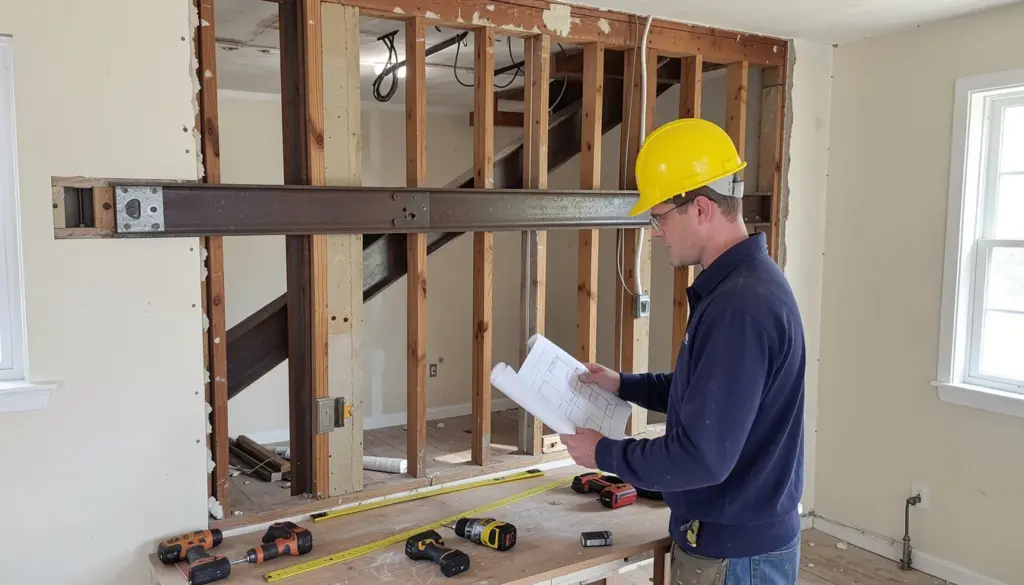
- Installing steel beams (RSJs or I-beams) to carry additional loads
- Adding a floor extension or loft conversion that changes the roof load
- Underpinning an existing foundation
- Modifying shear walls (walls that resist lateral wind and seismic forces)
Contrast this with cosmetic improvements — painting, tiling, replacing cabinetry, installing new windows in existing openings — which have no meaningful effect on structural load distribution.
Understanding this distinction matters because structural and cosmetic work follow completely different rules in terms of planning, permits, professional involvement, and risk.
Understanding Load-Bearing Walls and Structural Systems
A house is not simply a box of rooms held together by drywall. It is a carefully engineered system where every component plays a role in distributing weight. Floors carry furniture and people. Walls carry floors and roofs. Foundations carry everything and transfer it to the soil below.
Load-bearing walls sit within this chain. They receive weight from above — usually from floor joists, roof rafters, or upper-story walls — and transfer it downward. Removing or altering one of these walls without proper support disrupts the entire load path and can cause serious structural failure.
Non-load-bearing walls (also called partition walls) simply divide space. They carry no significant load from above, which means they can typically be removed with minimal structural concern.
How to Identify a Load-Bearing Wall
No single rule reliably identifies a load-bearing wall without professional assessment, but there are strong indicators:
- Location: Walls that run perpendicular to floor joists are more likely to be load-bearing. Walls positioned in the centre of a house often carry roof loads.
- Position above the foundation: If a wall sits directly above a basement wall, beam, or foundation, it is likely structural.
- Exterior walls: Most exterior walls are load-bearing, though not always in every section.
- Multiple-story alignment: A wall that stacks directly above another wall on a lower floor is a strong indicator of a load path.
The only reliable confirmation comes from a structural engineer reviewing the building’s original drawings or conducting an on-site assessment. Never assume a wall is non-load-bearing based on appearance alone.
What Happens When You Remove One
The consequences of removing a load-bearing wall without proper replacement support are serious. Without a beam to pick up the load, the structure above begins to sag. Cracks appear in ceilings and adjacent walls. Doors and windows start to bind. In severe cases, floors above can partially collapse.
Even when the removal is planned correctly, a steel beam and new columns must be installed to carry the original load. The beam must be sized by an engineer based on the span, load type, and materials involved. A beam that is undersized — even slightly — can deflect over time and cause ongoing structural problems.
Foundation Issues and Repair Methods
The foundation is the most critical structural element in any building. It bears the entire weight of the structure and transfers it to the soil. When a foundation fails, the effects ripple through every part of the house.
There are several common foundation types: slab-on-grade (a concrete pad poured directly on the ground), crawl space (a raised foundation with accessible space underneath), and full basement (a below-grade enclosed space). Each has specific vulnerabilities based on soil conditions, drainage, and construction quality.
Signs of Serious Foundation Problems
Not every crack in a wall or floor indicates a foundation problem, but certain signs demand immediate professional attention:
- Diagonal cracks running from the corners of doors or windows, especially widening at one end
- Horizontal cracks in basement or crawl space walls (a sign of lateral soil pressure)
- Floors that slope or feel uneven, especially in older homes
- Doors and windows that stick or no longer close properly throughout the house
- Gaps between walls and ceilings, or between exterior brickwork and the main structure
- Foundation settlement — visible tilting or sinking on one side of the structure
Minor vertical hairline cracks in concrete are usually the result of normal curing and shrinkage. Wide cracks, horizontal cracks, or cracks with displacement between the two sides are a different matter entirely.
Common Repair Techniques
Underpinning is the process of extending a foundation deeper into stable soil or rock. It is used when the original foundation sits on weak or shifting soil, when a neighbouring excavation has undermined it, or when a building is being extended upward. Traditional underpinning involves excavating in sections beneath the existing foundation and filling with concrete. Alternatives include helical piers and push piers, which are steel elements driven to load-bearing depth.
Slab repair addresses cracks, voids, or settlement in concrete slab foundations. Techniques include mudjacking (injecting a grout mixture to lift and level the slab) and polyurethane foam injection, which is lighter and faster. Severely damaged slabs may require partial or full replacement.
Waterproofing and drainage correction address many foundation problems that stem from water infiltration rather than pure structural failure. Improving grading, installing French drains, and sealing foundation walls can stop progressive deterioration before it requires major structural intervention.
When You Need a Structural Engineer
A structural engineer is a licensed professional trained to analyse forces within buildings and design solutions that ensure safety. Their role is distinct from that of an architect (who handles design and layout) and a contractor (who handles physical construction).
You need a structural engineer when:
- You are removing or modifying any wall suspected of being load-bearing
- You are adding a floor, loft, or substantial extension
- You have identified foundation cracking or settlement
- You are purchasing a property with visible structural concerns
- A building inspector has flagged structural issues
- Your local authority or building control requires an engineer’s sign-off on a permit application
In many jurisdictions, a structural engineer’s sign-off is a legal requirement for certain types of work, not simply a recommendation. Submitting permit applications for structural modifications without engineering drawings can result in rejection, fines, or forced removal of completed work.
Structural engineers also protect homeowners from contractors who may, either through error or to cut costs, undersize beams, skip necessary columns, or take shortcuts that pass visual inspection but compromise long-term structural safety.
Permits, Building Codes, and Legal Considerations
Building codes exist to ensure that structures are safe for occupancy. They specify minimum standards for materials, connections, load capacities, and construction methods. Permits are the mechanism through which local authorities verify that planned work meets these standards before construction begins and after it is complete.
Skipping permits on structural work is one of the most financially damaging decisions a homeowner can make. The consequences include:
- Forced removal of completed work that fails to meet code
- Liability if the unpermitted work later causes injury or damage
- Complications when selling — mortgage lenders and buyers may require proof of permitted work, and unpermitted structural changes can block a sale
- Insurance exclusions — damage linked to unpermitted structural changes may not be covered
The permit process typically requires submitting detailed plans (often including structural drawings), paying a fee, having inspections at defined stages of construction, and receiving a final sign-off. The process varies by location, but for any structural work, it is best approached as non-negotiable.
Costs, Risks, and Timelines of Structural Renovations
Structural work is expensive relative to cosmetic renovation, and the costs are difficult to estimate without a thorough inspection. Hidden problems — deteriorated joists, contaminated soil, unexpected underground obstructions — frequently emerge once work begins and drive costs upward.
Typical cost ranges (these vary significantly by region and project scope):
- Load-bearing wall removal with beam installation: $5,000–$20,000+, depending on span and load
- Foundation crack repair: $500–$3,000 for minor cracks; $10,000–$30,000+ for underpinning or major repairs
- Structural engineer fees: $500–$3,000+, depending on scope and number of site visits
- Permits: $200–$2,000+ depending on jurisdiction and project size
Timeline expectations also vary. A straightforward beam installation might take a few days once permits are issued. Foundation underpinning can take weeks. Factor in permit processing time (which can range from days to months), contractor availability, and the near-inevitability of unforeseen delays once structural work is underway.
The most significant hidden risk in structural renovation is incomplete discovery before work begins. An inspection that identifies the obvious problem but misses a secondary issue can lead to budget overruns that double or triple the original estimates. For any major structural project, commissioning a thorough pre-renovation inspection — not just a visual walk-through — is a sound investment.
Structural Risk Assessment: When to Proceed or Walk Away
Not every structural problem is worth solving, and not every structural project is worth starting. A clear-headed risk assessment before committing to major work can save significant money and stress.
A useful way to think about structural projects is through a three-level framework:
Level 1 — Safe to Proceed (with proper process) The structural scope is clearly defined, a licensed structural engineer has reviewed and designed the solution, permits are obtainable, and the cost is proportional to the property’s value. Examples: planned load-bearing wall removal with engineering support, minor foundation crack stabilisation.
Level 2 — Proceed with Caution (engineer required, risks present). Significant structural issues are present but addressable. The project requires a full engineering assessment, detailed cost investigation, and contingency budgeting for unknowns. Examples: foundation settlement in an otherwise sound building, complex beam work in an older structure with mixed materials.
Level 3 — High Risk (reconsider or walk away). The structural problems are extensive, costs are likely to exceed the property’s value uplift, or the condition of the building makes a comprehensive assessment difficult before committing. Red flags include multiple intersecting structural failures, evidence of previous unpermitted structural work, severe foundation movement, or a property where every uncovered element reveals a new problem.
Walk-away scenarios for buyers:
- Foundation damage that a seller is unwilling to address or price-adjust for
- Evidence of structural modifications done without permits that cannot be retroactively approved
- A home inspection report that identifies structural concerns the inspector cannot fully evaluate (because walls, floors, or foundations are inaccessible)
- Settlement cracks combined with drainage problems that have not been corrected — solving the structure without fixing the cause is a short-term solution
Structural Renovation Checklist for Homeowners
Before beginning any structural project, work through these steps:
- Commission a professional inspection — not just a general home inspection, but one that specifically evaluates the structural elements relevant to your planned work.
- Identify whether the work is structural or cosmetic — confirm with a structural engineer if there is any uncertainty.
- Determine permit requirements — contact your local building authority before hiring contractors.
- Hire a licensed structural engineer — obtain engineered drawings for any load-bearing or foundation work.
- Get multiple contractor quotes — based on the engineering drawings, not rough verbal estimates.
- Budget for contingencies — assume a 20–30% buffer for unforeseen discoveries during structural work.
- Confirm insurance coverage — check that your homeowner’s policy covers structural renovation work and any temporary exposures during construction.
- Verify contractor licensing and references — structural work requires contractors with relevant experience; this is not the place to work with untested tradespeople.
- Stage inspections during the work — do not allow structural elements to be closed up (covered by drywall or flooring) before an inspector has signed off on that stage.
- Obtain the final permit sign-off — keep this documentation permanently; you will likely need it when you sell.
FAQs
How do I know if a wall is load-bearing?
You cannot reliably determine this without a professional assessment. Strong indicators include walls that run perpendicular to floor joists, walls positioned above foundation beams, and walls in the centre of the house. A structural engineer reviewing your building’s drawings or conducting an on-site assessment is the only reliable confirmation.
Can I remove a load-bearing wall without damaging my house?
Yes, but only when the work is properly engineered and executed. The wall must be replaced by an appropriate steel or engineered timber beam, supported at each end by columns or posts capable of transferring the load to the foundation. An undersized or poorly supported beam will cause long-term structural problems.
When do I legally need a structural engineer?
This depends on your jurisdiction, but structural modifications — including load-bearing wall removal, foundation work, and extensions — typically require engineering drawings as part of the permit application. Even where it is not legally mandatory, hiring a structural engineer for these types of projects is strongly advisable.
What are the most serious signs of foundation problems?
Horizontal cracks in basement or crawl space walls, diagonal cracks radiating from door and window corners, floors that slope or feel uneven, and visible tilting of the structure are all serious indicators. A structural engineer or foundation specialist should evaluate these promptly.
Is it safe to buy a house with foundation issues?
It depends on the type and severity of the problem. Some foundation issues are minor and inexpensive to address. Others indicate ongoing soil movement or drainage problems that will require repeated intervention. A structural inspection by a qualified engineer — separate from a general home inspection — is essential before purchasing any property with visible foundation concerns.
What happens if structural work is done without permits?
Unpermitted structural work can result in forced removal or correction of the work, complications when selling the property, insurance exclusions, and potential liability if the work causes harm. In many cases, retroactive permitting is possible but requires exposing the work for inspection, which means opening up finished walls and floors.
How long does structural renovation typically take?
Timelines vary considerably. Permit approval alone can take weeks to months, depending on the jurisdiction and the complexity of the application. Physical work for a single beam installation might take a few days. Foundation underpinning projects can run for several weeks. Always add time for unforeseen discoveries, material lead times, and inspection scheduling when planning a structural project.